
What happens when you stop retatrutide? The honest guide.
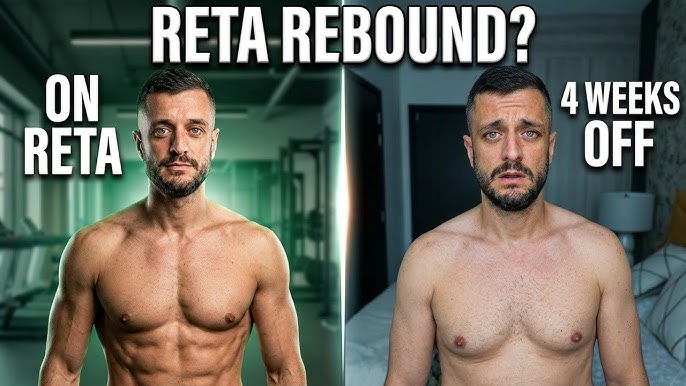
Stop retatrutide and what happens next? This is the question that nobody talks about during the excitement of starting treatment — but it is arguably the most important question of all. Retatrutide produces extraordinary weight loss while you are taking it. The harder question is what happens when you stop retatrutide and the triple-receptor activation that has been suppressing your appetite, increasing your energy expenditure, and reshaping your metabolism ceases. The honest answer is that without preparation, most of the weight comes back. But with the right strategy, a significant portion of your results can be maintained long term.
This guide covers what happens when you stop retatrutide at every stage: the biological timeline, the appetite changes, the weight regain data from comparable GLP-1 medications, whether tapering helps, how to prepare for discontinuation, the maintenance strategies that work, and whether long-term or indefinite use is an option. The information here is based on GLP-1 class discontinuation data and is consistent with general weight management guidance from the NHS.
Stop retatrutide timeline — what happens week by week
| Timepoint after you stop retatrutide | What happens |
|---|---|
| Days 1–7 | Medication still active at diminishing levels. No noticeable change in appetite or weight. |
| Weeks 1–2 | Retatrutide clears your system. Appetite begins returning. Gastric emptying normalises — meals feel less filling. |
| Weeks 2–4 | Appetite noticeably increased. Food noise returns. Portions feel inadequate. Cravings for calorie-dense foods may intensify. |
| Weeks 4–8 | Appetite fully returned to pre-treatment baseline for most users. Energy expenditure from glucagon receptor activation has ceased. |
| Months 2–6 | Without intervention, gradual weight regain begins. Rate depends on eating habits and activity level established during treatment. |
| Months 6–18 | Regain accelerates if pre-treatment eating patterns resume. GLP-1 class data suggests 50–70% of lost weight regained in this window without maintenance strategies. |
When you stop retatrutide, your body responds to significant weight loss by increasing hunger hormones, decreasing satiety signals, and reducing resting metabolic rate — a biological response called metabolic adaptation. This is not weakness or failure. It is your body’s evolved response to what it interprets as a famine. Understanding this biology is essential because it means that maintaining weight loss after you stop retatrutide requires active, sustained effort — the weight will not stay off by itself.
Stop retatrutide regain data — what the research shows
Specific discontinuation data for retatrutide has not been published — the phase 2 trial did not include a follow-up phase after treatment ended. However, extensive data exists for other GLP-1 medications, and the biological principles are the same. Here is what the comparable data tells us about what to expect when you stop retatrutide:
| Study | Medication | Weight regained after stopping | Timeframe |
|---|---|---|---|
| STEP 1 Extension | Semaglutide 2.4 mg | ~67% of lost weight regained | 1 year after stopping |
| SURMOUNT-4 | Tirzepatide | ~50% of lost weight regained | 1 year after stopping |
| GLP-1 meta-analyses | Various | 50–70% typical range | 12–18 months |
The pattern is consistent across all GLP-1 medications: when you stop treatment, a significant portion of weight returns. This is not a flaw of retatrutide specifically — it reflects the reality that obesity is a chronic metabolic condition, and pharmacological treatment works while it is being administered. When you stop retatrutide, the metabolic and hormonal environment that drove weight gain before treatment still exists — it was managed by the medication, not cured by it.
When you stop retatrutide, you do not return to the body you had before you gained weight. You return to the hormonal environment that caused the weight gain in the first place — except now your body has additional metabolic adaptations from the weight loss itself. This is why maintenance is harder than weight loss, and why preparation before you stop retatrutide is essential.
Metabolic realityStop retatrutide safely — tapering vs sudden stop
No established tapering protocol exists for retatrutide. However, there are practical arguments for gradual dose reduction versus abrupt cessation when you decide to stop retatrutide:
| Approach | How it works | Advantages | Disadvantages |
|---|---|---|---|
| Abrupt stop | Final injection at full dose, then nothing | Simple. No extended purchase needed. | Appetite returns rapidly. Harder to establish new eating habits under pressure. |
| Gradual taper | 12 mg → 8 mg → 4 mg → 2 mg over 4–8 weeks | Appetite returns gradually. More time to adjust eating habits. | Extended treatment period. Additional cost. Not evidence-based. |
| Step-down to maintenance medication | Transition from retatrutide to semaglutide or tirzepatide | Continued appetite support at lower cost. Established long-term safety data. | Not a true stop. Ongoing medication cost. |
If you plan to stop retatrutide completely, a 4-week taper (12 → 8 → 4 → stop) gives your appetite time to return gradually while you practice the eating habits that will sustain your results. The taper itself does not prevent regain — but it provides a transition window that abrupt cessation does not. Alternatively, stepping down to a lower-cost maintenance medication like semaglutide provides ongoing support without the higher cost of retatrutide.
Stop retatrutide successfully — the maintenance strategy
The window between deciding to stop retatrutide and actually stopping is your most important preparation period. Everything you do in the final 4–8 weeks of treatment determines how much of your result you keep. Here is the strategy that gives you the best chance of maintaining your weight loss:
1. Establish your calorie maintenance level
Before you stop retatrutide, you need to know how many calories your body requires at your new weight to neither gain nor lose. This is your maintenance calorie target. For most people who have lost significant weight, this is lower than they expect — metabolic adaptation means your body is more efficient at your new weight than it was before treatment. A rough estimate is 22–26 calories per kilogram of current body weight per day. For an 80 kg person, this is approximately 1,760–2,080 calories daily.
2. Practice maintenance eating while still on treatment
During the final 4–6 weeks before you stop retatrutide, deliberately eat at your maintenance calorie level rather than in deficit. The medication will still be supporting appetite control, making it easier to establish the portion sizes and meal patterns that you will need to sustain without pharmacological support. This is practice with training wheels — by the time you stop retatrutide, the eating habits should feel familiar.
3. Lock in protein targets
Protein remains critical after you stop retatrutide — possibly more critical than during treatment. Aim for 1.4–1.6 g per kilogram of body weight daily. Protein is the most satiating macronutrient, meaning it helps control appetite naturally when the medication is no longer doing it. It also preserves the muscle mass you have worked to protect during treatment, which in turn maintains your metabolic rate.
4. Continue resistance training
The resistance training programme you established during treatment should continue indefinitely after you stop retatrutide. Two to three sessions per week of compound movements maintains muscle, supports metabolic rate, and provides a structural habit that anchors your maintenance routine. Do not reduce training frequency after stopping — if anything, it becomes more important.
5. Implement a weight monitoring system
Weigh yourself weekly at the same time under the same conditions. Set an action threshold — a weight 2–3 kg above your end-of-treatment weight. If you cross that threshold, immediately return to deficit eating (not medication) for 2–4 weeks to course-correct before the regain accumulates. This catch-it-early approach prevents the gradual creep that turns 2 kg of regain into 15 kg over a year.
6. Maintain daily step targets
7,000–10,000 steps daily is a sustainable, non-negotiable habit that burns 200–400 calories per day without the recovery demands of intense exercise. After you stop retatrutide, this daily activity becomes your metabolic buffer — the difference between a slight calorie surplus that causes slow regain and the maintenance level that preserves your result.
Stop retatrutide or continue? — the long-term question
The question of whether to stop retatrutide at all deserves honest consideration. Approved GLP-1 medications like semaglutide and tirzepatide are designed for long-term or indefinite use — reflecting the medical consensus that obesity is a chronic condition requiring ongoing treatment, much like hypertension or diabetes. If retatrutide receives regulatory approval, it would likely follow the same model.
For users of research-grade retatrutide, the decision to continue long term is more complex. Long-term safety data beyond 48 weeks does not exist. The glucagon receptor component introduces pharmacology that has not been studied over multiple years. Users choosing to continue indefinitely do so without the safety assurance that regulatory approval would provide. This is a personal risk-benefit calculation that each user must make for themselves.
| Option | Pros | Cons |
|---|---|---|
| Stop retatrutide completely | No ongoing cost. No ongoing medication risk. Tests your maintenance habits. | High regain probability (50–70%). Appetite returns fully. Requires strong discipline. |
| Reduce to maintenance dose (4–8 mg) | Continued appetite support at lower cost. Reduced side effect burden. | No long-term safety data at any dose. Ongoing cost. |
| Switch to approved GLP-1 | Established safety data. NHS availability for eligible patients. Lower cost. | Less potent appetite suppression. May regain some weight during transition. |
| Continue at full dose indefinitely | Maximum weight maintenance. Full appetite control. | Highest cost. No long-term safety data. Ongoing risk of unknown long-term effects. |
The decision to stop retatrutide is not a single moment — it is a transition that should be planned, prepared for, and executed with the same attention you gave to starting treatment. The medication did the hard work of creating the weight loss. Maintaining it is your work — and it starts before you take your last injection, not after.
Mymetabolism perspectiveResearch disclaimer: Retatrutide is not approved for human use by any regulatory body. It is currently in phase 3 clinical trials. Research-grade retatrutide products, including Synedica pen formats, are intended for research purposes only. The discontinuation guidance in this article is based on GLP-1 class data and general metabolic principles — retatrutide-specific discontinuation data has not been published. The information in this article is for educational purposes and does not constitute medical advice. Always consult a qualified healthcare professional before stopping any medication or research compound. Mymetabolism supplies research-grade peptides verified by HPLC at 99%+ purity with a Certificate of Analysis on every batch.
Common questions — stop retatrutide
Still on your journey?
HPLC-verified retatrutide at 99%+ purity, COA on every batch, free UK shipping. Vials and Synedica pen formats available.
Browse Retatrutide →