
Retatrutide after bariatric surgery — 6 vital facts.
Retatrutide after bariatric surgery is a search that reflects a genuinely important and growing area of clinical practice — using GLP-1 class medications to manage weight regain or insufficient weight loss following gastric sleeve, gastric bypass, or other bariatric procedures.
This guide explains what the established research on GLP-1 medications after bariatric surgery actually shows, why this matters for the retatrutide conversation specifically, and the safety considerations unique to this patient population. This is educational content — retatrutide is not an approved medicine, and nothing here constitutes medical advice. General information on obesity treatment is available through the NHS.
See our full range of GLP-1 treatments with 24/7 expert support.
Explore Mounjaro →Retatrutide after bariatric surgery — fact 1: weight regain is common
Weight regain after bariatric surgery affects a substantial proportion of patients within 2 to 5 years post-operatively. While procedures like Roux-en-Y gastric bypass and sleeve gastrectomy produce dramatic initial weight loss, physiological adaptations and behavioural factors can gradually undermine those results over time.
This is a well-recognised clinical challenge within bariatric medicine, not a sign of surgical failure or personal shortcoming. The body’s metabolic and hormonal adaptations to weight loss are powerful and long-lasting, which is precisely why the retatrutide after bariatric surgery conversation exists — patients and clinicians alike are looking for effective tools to address this predictable challenge.
Retatrutide after bariatric surgery — fact 2: GLP-1s are already established here
Before addressing retatrutide specifically, it is worth understanding that using GLP-1 class medications after bariatric surgery is not a fringe or experimental idea — it is already supported by clinical guidelines. Recommendations from the American Society for Metabolic and Bariatric Surgery and the Endocrine Society support considering these medications for weight regain when specific clinical criteria are met, generally involving a BMI at or above 27 with associated comorbidities, or 30 without, alongside insufficient response to lifestyle changes alone.
This established clinical pathway is directly relevant to the retatrutide after bariatric surgery question, because it demonstrates the general principle — pharmacological support after surgery for weight regain — already has a genuine evidence base and clinical acceptance, even though retatrutide itself has not yet been studied in this specific context.
Retatrutide after bariatric surgery — fact 3: what the evidence shows
A systematic review and meta-analysis pooling data from 10 studies and 769 participants found that GLP-1 receptor agonists effectively promoted weight loss among people experiencing weight regain after bariatric surgery, with statistically significant results compared to placebo, particularly in the short term.
Semaglutide specifically has demonstrated 10 to 15 percent weight reduction in this post-surgical population, and separate research suggests that starting GLP-1 treatment shortly after surgery — rather than waiting until significant regain has already occurred — may help prevent weight regain from happening in the first place, rather than only treating it after the fact.
| Finding | Detail |
|---|---|
| Meta-analysis scope | 10 studies, 769 participants, 392 treated with GLP-1RAs |
| Semaglutide result | 10–15% weight reduction in post-bariatric patients |
| Most common side effect | Nausea, significantly higher than placebo |
| Timing insight | Earlier initiation after surgery may help prevent regain, not just treat it |
A separate, related line of research has also examined the reverse sequence — starting GLP-1 treatment before bariatric surgery rather than after. Findings presented at a major bariatric surgery conference showed that patients who used GLP-1 medications prior to surgery and then proceeded with the procedure achieved substantially greater total weight loss than either approach alone, with prior medication use not compromising surgical effectiveness. This reinforces the broader principle that pharmacological and surgical approaches to weight management can complement each other effectively, whichever order they occur in.
Retatrutide after bariatric surgery — how procedure type matters
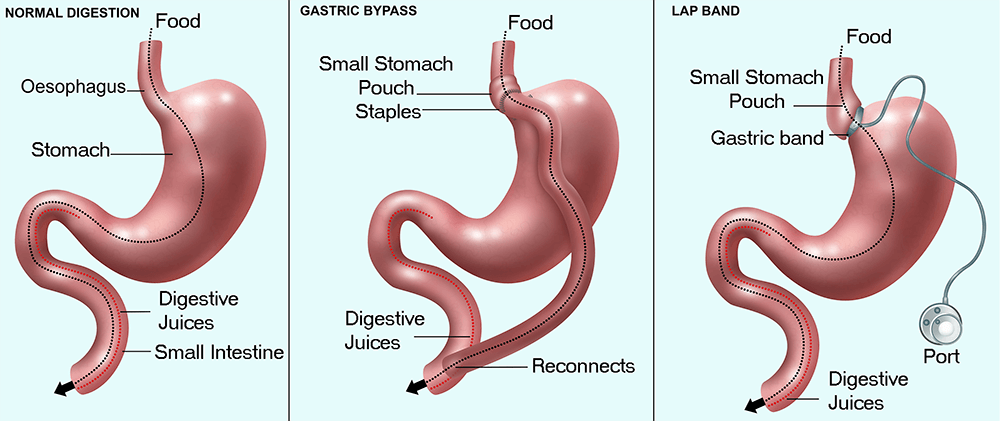
Not all bariatric procedures alter digestive anatomy in the same way, and this matters for how any GLP-1 class medication, including a future approved retatrutide, might be tolerated or dosed. Sleeve gastrectomy removes a portion of the stomach but leaves the digestive pathway largely intact, while gastric bypass reroutes the digestive tract entirely, bypassing part of the stomach and small intestine.
These anatomical differences can influence how orally administered medications are absorbed — though GLP-1 class medications like retatrutide are injectable, sidestepping the oral absorption concerns relevant to pills. They can, however, still influence how the digestive system responds to the appetite and gastric emptying effects that these medications produce, since a surgically altered stomach already behaves differently to begin with.
- Sleeve gastrectomy patients often report more pronounced gastrointestinal sensitivity to GLP-1 medications, given the already-reduced stomach volume.
- Gastric bypass patients may experience different symptom patterns due to the altered digestive pathway, requiring individualised monitoring.
- Revisional surgery patients — those who have had more than one bariatric procedure — represent a more complex picture requiring particularly close specialist involvement.
Retatrutide after bariatric surgery — fact 4: where retatrutide fits
This is the key distinction to understand: the strong evidence described above relates to already-approved GLP-1 medications — semaglutide, liraglutide, dulaglutide, and tirzepatide — not to retatrutide specifically. No published study has evaluated retatrutide’s use in a post-bariatric surgery population.
Given retatrutide’s mechanistic similarity to these medications, and its notably strong weight loss results in its own general trials, it is a reasonable candidate for future research in this specific population once it is approved. But reasonable candidacy is not the same as demonstrated evidence — the retatrutide after bariatric surgery question remains, for now, a logical extrapolation rather than a proven finding.
Everything encouraging in the retatrutide after bariatric surgery conversation is inferred from data on other, already-approved GLP-1 medications used in this population — not from retatrutide-specific trials, which do not yet exist. This gap should be understood clearly by anyone following this topic.
Retatrutide after bariatric surgery — fact 5: unique safety considerations
Bariatric surgery fundamentally alters stomach anatomy and digestive function, which adds an important layer of consideration to any GLP-1 class medication, since gastrointestinal side effects — already common with these medications generally — deserve particular attention in a post-surgical population.
Standard contraindications for GLP-1 use, including certain gastrointestinal disorders and symptoms, apply with heightened relevance given the altered anatomy that bariatric surgery produces. Nausea, already the most frequently reported side effect of GLP-1 medications generally, appeared significantly more often in the GLP-1 treatment group compared to placebo within post-bariatric research specifically.
Retatrutide after bariatric surgery — fact 6: involve your surgical team
Anyone who has undergone bariatric surgery and is interested in retatrutide — once approved — or any GLP-1 class medication in the meantime, should discuss this specifically with the surgical or bariatric medical team who understands their individual surgical history and current anatomy, not just a general prescriber unfamiliar with their procedure.
- Your specific surgical procedure — gastric bypass, sleeve gastrectomy, and other procedures alter anatomy differently, which may affect medication tolerance.
- Time since surgery — research suggests timing relative to surgery may influence both effectiveness and appropriate approach.
- Any ongoing surgical complications — these should be fully resolved or well-managed before adding a new medication.
- Your current weight trajectory — whether you are experiencing regain, insufficient loss, or successful maintenance changes the clinical picture significantly.
Retatrutide after bariatric surgery sits at the intersection of two genuinely promising areas — a medication with unusually strong trial results, and a clinical population where GLP-1 medications already have an established evidence base. The missing piece is simply retatrutide-specific data in this exact context, which time and further research will eventually provide.
Our clinical guidanceFor more on retatrutide’s current status, read our guide on retatrutide’s regulatory status. Explore our Mounjaro product page for an approved option with established post-bariatric evidence, or read patient reviews.
This article is for informational and research purposes only and does not constitute medical advice. Retatrutide is not currently approved as a medicine and has not been studied specifically in a post-bariatric surgery population. Evidence described for GLP-1 medications after bariatric surgery relates to already-approved medications, not retatrutide directly. Always consult your bariatric surgical or medical team before considering any GLP-1 class medication after weight loss surgery.
Common questions — retatrutide after bariatric surgery
Explore approved options with established evidence.
UK-based, MHRA-compliant supply with 24/7 expert support to help you navigate treatment decisions today.
Explore Mounjaro →