
CagriReta vs retatrutide — 7 critical differences.
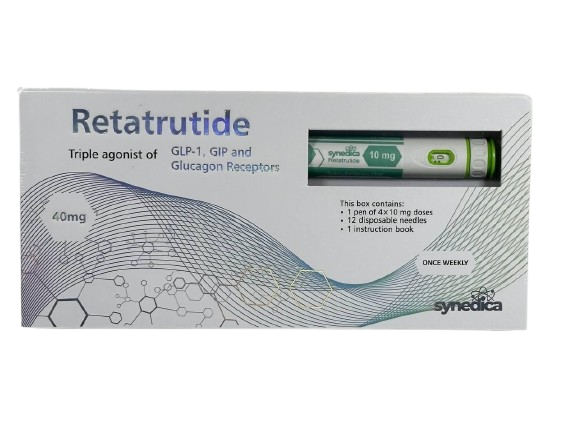
CagriReta vs retatrutide is one of the most important comparisons in next-generation weight loss research — because these two compounds represent different strategic bets on how to push fat loss beyond the GLP-1 ceiling. Retatrutide adds a third receptor (glucagon) to the GLP-1/GIP foundation. CagriReta takes a different path entirely, combining retatrutide’s triple mechanism with cagrilintide — an amylin analogue that activates a completely separate neurological appetite circuit.
This guide breaks down the complete CagriReta vs retatrutide picture: what each compound is, what the published evidence actually shows for each, the mechanistic differences that matter, approval timelines, side effect profiles, and which one may be the better choice for different research goals. We stock both — this comparison is built on published data, not preference. General research information is available through the MHRA.
CagriReta and Synedica Retatrutide — transparent sourcing, COA documentation, 24/7 support.
Explore Retatrutide → Explore CagriReta →CagriReta vs Retatrutide — fact 1: what each compound actually is
The CagriReta vs retatrutide comparison starts with a structural difference that shapes everything else. Retatrutide (LY3437943) is a single synthetic peptide molecule — one compound activating three receptors (GLP-1, GIP, glucagon) simultaneously. It is Eli Lilly’s next-generation obesity compound, now in Phase 3 trials with TRIUMPH-1/2/3/4 all reporting positive results.
CagriReta is a combination stack — cagrilintide (an amylin analogue from Novo Nordisk) combined with retatrutide. It is not a single approved formulation but rather two separate compounds used together in research protocols. The name reflects the combination: Cagri (cagrilintide) + Reta (retatrutide). In clinical research, Novo Nordisk has studied cagrilintide combined with semaglutide (CagriSema) in Phase 3 trials, providing the most relevant comparative data for the cagrilintide component’s contribution. Cagrilintide combined specifically with retatrutide does not yet have published Phase 3 data of its own.
CagriReta vs Retatrutide — fact 2: the mechanistic difference
The CagriReta vs retatrutide mechanistic distinction is the most important difference between them — because it determines whether they are alternatives or complements.
Retatrutide alone: GLP-1 receptor activation (appetite suppression, gastric emptying, insulin secretion) + GIP receptor activation (energy regulation, fat tissue effects) + Glucagon receptor activation (energy expenditure, hepatic fat oxidation). Three metabolic hormone pathways all in a single weekly injection.
CagriReta adds a fourth pathway: amylin receptor activation through cagrilintide. Amylin is a hormone released by the pancreatic beta cells alongside insulin. It suppresses appetite through the area postrema in the brainstem — a neurological circuit completely separate from GLP-1 signalling. This is the crucial mechanistic point in the CagriReta vs retatrutide comparison: CagriReta doesn’t just add more of the same mechanism, it adds a genuinely different neurological pathway. For researchers who have reached the ceiling of GLP-1/GIP/glucagon activation on retatrutide alone, adding amylin pathway stimulation through cagrilintide represents a genuinely additive rather than duplicative intervention.
| Compound | Receptors activated | Weight loss pathways |
|---|---|---|
| Retatrutide alone | GLP-1 + GIP + Glucagon | 3 pathways |
| CagriReta (cagrilintide + retatrutide) | GLP-1 + GIP + Glucagon + Amylin | 4 pathways |
| CagriSema (reference) | GLP-1 + Amylin | 2 pathways — Phase 3 completed |
CagriReta vs Retatrutide — fact 3: efficacy data compared
The CagriReta vs retatrutide efficacy comparison requires separating what we know from what we can reasonably infer. Retatrutide alone has the strongest direct evidence:
- TRIUMPH-4 (December 2025): 28.7% weight loss at 68 weeks at 12mg
- TRIUMPH-1 (May 2026): 25.0% at 80 weeks, 30.3% at 104 weeks at 12mg
- TRIUMPH-2 and TRIUMPH-3 (July 2026): Both confirmed positive topline results
For CagriReta specifically — cagrilintide combined with retatrutide — no Phase 3 data has been published. The closest reference point is CagriSema’s Phase 3 data: REDEFINE-1 showed 22.7% weight loss at 68 weeks. Critically, CagriSema’s result came at the same timepoint where retatrutide alone showed 28.7% — suggesting that in this particular comparison, adding cagrilintide to semaglutide produced less than retatrutide alone produced without it.
However, this is not a fair CagriReta vs retatrutide comparison — because CagriReta combines cagrilintide with retatrutide, not with semaglutide. The mechanistic rationale for CagriReta is that cagrilintide’s amylin pathway provides genuinely additive effect on top of retatrutide’s triple mechanism, which is a different proposition from adding it to semaglutide’s single GLP-1 mechanism. Published data for this specific combination does not yet exist.
CagriReta vs Retatrutide — fact 4: side effect profiles
The CagriReta vs retatrutide side effect comparison has one notable differentiator: dysesthesia. The retatrutide Phase 3 trials identified abnormal skin sensations (tingling, burning, prickling) in up to 20.9% of participants on the 12mg dose — a new signal not seen at this rate in Phase 2. This is specific to retatrutide’s mechanism and is the compound’s most distinctive safety consideration.
CagriSema’s Phase 3 data did not show a comparable dysesthesia signal — the cagrilintide component does not independently cause this side effect. In the CagriReta combination, the dysesthesia risk from the retatrutide component would be expected to remain present, since cagrilintide does not appear to mitigate it.
Both compounds share the expected GLP-1 class gastrointestinal side effects for the retatrutide component: nausea, diarrhoea, constipation, vomiting. Cagrilintide independently can cause nausea and injection site reactions. In the CagriReta combination, GI side effects may be more pronounced than retatrutide alone due to the additive GI effect of two compounds with overlapping nausea profiles.
CagriReta vs Retatrutide — fact 5: approval timelines
The CagriReta vs retatrutide approval landscape is asymmetric. Retatrutide alone has a clear regulatory path: Eli Lilly plans FDA submission Q1 2027, with MHRA approval realistic in the 2027-2028 window. For the full timeline, read our guide on when will retatrutide be approved UK.
CagriSema — the reference combination — was filed with the FDA by Novo Nordisk in December 2025, with a decision expected in 2026-2027. This actually means CagriSema (the cagrilintide + semaglutide version) is likely to reach approved-medicine status before retatrutide alone. However, CagriReta specifically — cagrilintide combined with retatrutide — does not have its own regulatory filing or timeline. As a research combination, it currently exists entirely in the research compound space without a defined path to approval as a specific product.
CagriReta vs Retatrutide — fact 6: CagriReta is a stack, not a competitor
A fundamental reframing for the CagriReta vs retatrutide discussion: these compounds are not true alternatives — one of them (CagriReta) contains the other (retatrutide). CagriReta is a stack built on top of retatrutide, not a replacement for it. Choosing between them is not choosing between two competing weight loss compounds; it is choosing between retatrutide alone and retatrutide plus the additional amylin pathway activation of cagrilintide.
This makes the CagriReta vs retatrutide decision straightforward in principle: start with retatrutide alone, evaluate results at maintenance dose over 3-6 months, and consider adding cagrilintide through the CagriReta combination if results plateau before reaching your research goals. The retatrutide alone path is the more established, more evidenced option. CagriReta as a combination is the more advanced protocol for researchers who want to explore the additional amylin mechanism on top of an established retatrutide base.
CagriReta vs Retatrutide — fact 7: how to choose
The honest CagriReta vs retatrutide decision framework:
- Start with retatrutide alone if: you are beginning a research protocol, want the most-evidenced option in Phase 3, prefer a simpler single-compound approach, or are in the dose escalation phase where adding a second compound adds complexity without established benefit at lower doses.
- Consider CagriReta if: you have reached retatrutide maintenance dose (8-12mg) and results have plateaued, you specifically want to explore amylin pathway activation as an additive mechanism, or you are an experienced researcher comfortable managing a two-compound protocol with distinct escalation schedules for each component.
- Regardless of choice: both compounds require responsible research protocols, clear documentation of administration and observations, and awareness that neither has marketing authorisation as a medicine anywhere.
The CagriReta vs retatrutide comparison resolves once you understand what CagriReta actually is: not a competitor to retatrutide, but an extension of it. Retatrutide is the foundation. CagriReta is retatrutide plus a fourth appetite pathway for researchers who want to go further.
Our research guidanceExplore our Synedica Retatrutide product page and our CagriReta product page — both available with COA documentation and 24/7 support. For the full retatrutide data picture, read retatrutide phase 3 results explained.
Neither retatrutide nor cagrilintide (CagriReta) is approved as a medicine in the UK or anywhere else. Both are research compounds for laboratory use only. This article is for informational and research purposes only. All efficacy data is drawn from published Phase 2 and Phase 3 clinical trials. Never combine research compounds without appropriate research protocol planning and healthcare provider awareness.
Common questions — CagriReta vs retatrutide
Explore CagriReta and Retatrutide — both available now.
Transparent sourcing, COA documentation, 24/7 support — for your research journey.
Explore Synedica Retatrutide →