
Retatrutide and fatty liver — 7 critical facts.
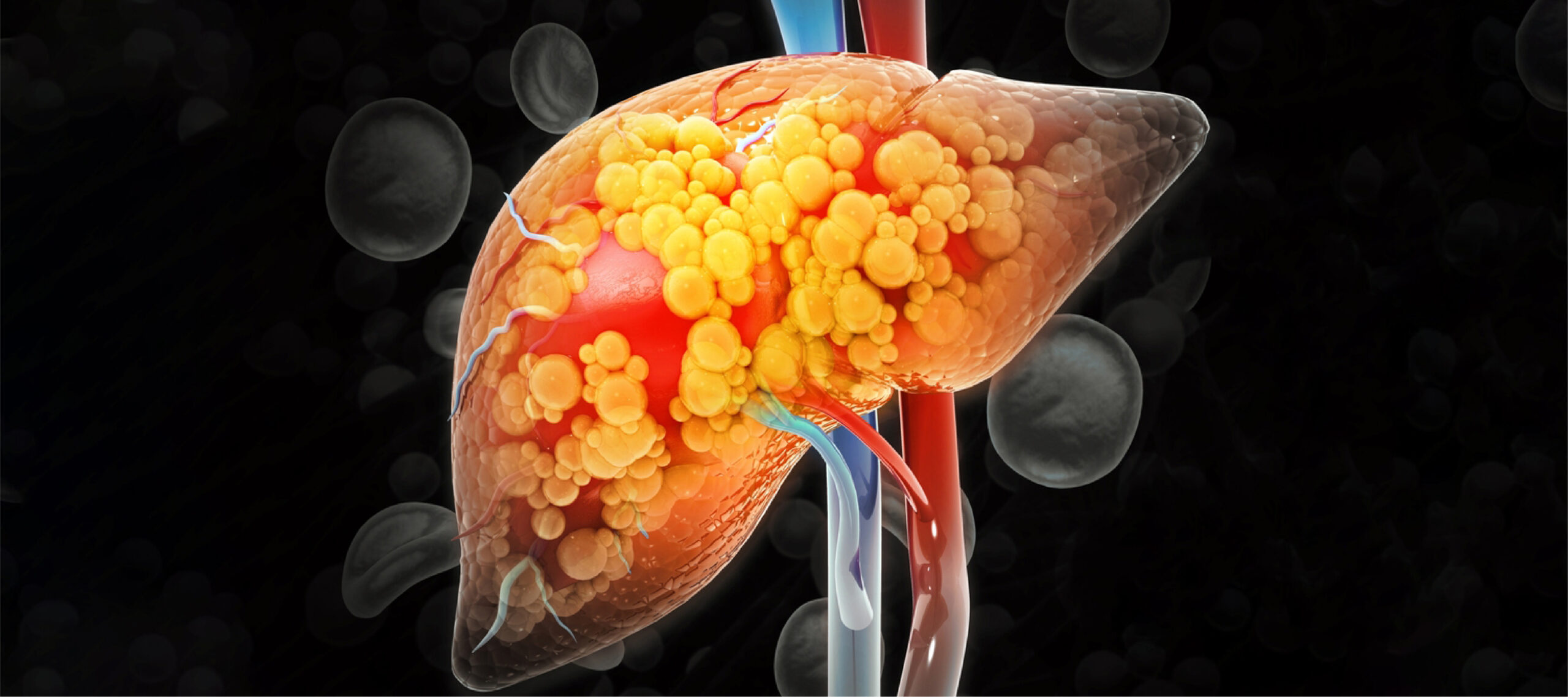
Retatrutide and fatty liver disease may be the most clinically significant combination in the entire GLP-1 research landscape right now. Phase 2a data published in Nature Medicine in 2024 showed retatrutide reducing liver fat content by 86% at 48 weeks — the most dramatic result ever recorded for a pharmacological treatment of fatty liver disease, surpassing every other drug in this category tested to date.
This guide covers everything known about retatrutide and fatty liver: what the trial data actually shows, why retatrutide’s triple mechanism gives it a unique advantage in this indication, how it compares to semaglutide and tirzepatide, what the ongoing Phase 3 trial needs to prove, and what it means for anyone researching retatrutide who also has metabolic liver disease. General liver health information is available through the British Liver Trust.
Transparent sourcing and quality documentation for your research.
Explore Retatrutide →Retatrutide and Fatty Liver — fact 1: understanding MASLD and MASH
Before examining the retatrutide and fatty liver data, understanding the disease it’s targeting matters. What most people still call “fatty liver” or NAFLD has recently been renamed MASLD — metabolic dysfunction-associated steatotic liver disease. The name change, endorsed by experts from 56 countries, reflects better understanding of the disease: it’s not simply the absence of alcohol but a condition actively driven by metabolic dysfunction including obesity, insulin resistance, and type 2 diabetes.
MASLD sits on a spectrum. Simple steatosis — excess fat in the liver — is the mildest form. When fat accumulation is accompanied by inflammation and hepatocyte injury, it becomes MASH (metabolic dysfunction-associated steatohepatitis, formerly NASH). MASH can progress to fibrosis, and in 20-30% of cases over 10-20 years, to cirrhosis. The retatrutide and fatty liver research targets the entire spectrum, with particular significance for the MASH stage where actual tissue damage is occurring.
Until very recently, there were no approved pharmacological treatments specifically targeting MASLD. The standard clinical advice — lose weight and exercise — is effective in principle but difficult to sustain at the degree required. GLP-1 class medications changed this landscape, and retatrutide’s liver data suggests it may go significantly further than its predecessors.
Retatrutide and Fatty Liver — fact 2: what the Phase 2 data actually shows
The Phase 2a retatrutide and fatty liver sub-study, led by Harrison et al. and published in Nature Medicine in 2024, produced results that genuinely stunned hepatologists. At 48 weeks, retatrutide reduced liver fat content by 86% as measured by MRI-based liver fat quantification — the most rigorous imaging method available.
More striking than the percentage reduction was the resolution rate: 93% of participants achieved normal liver fat levels by week 48. To put this in context, a reduction to normal liver fat from confirmed fatty liver disease in over nine out of ten patients had not previously been demonstrated for any drug. The effect correlated with changes in body weight, abdominal fat, and metabolic markers.
| Metric | Retatrutide (Phase 2a) |
|---|---|
| Liver fat reduction | 86% at 48 weeks |
| Normal liver fat achieved | 93% of participants |
| Duration of study | 48 weeks |
| Measurement method | MRI-PDFF (gold standard imaging) |
| Publication | Nature Medicine, 2024 (Harrison et al.) |
Retatrutide and Fatty Liver — fact 3: why the triple mechanism matters
The retatrutide and fatty liver data isn’t just impressive in magnitude — it has a mechanistic explanation that positions retatrutide as genuinely distinct from its predecessors. Most GLP-1 class drugs reduce liver fat primarily as a consequence of weight loss and improved insulin sensitivity. Retatrutide adds a third mechanism that directly targets hepatic fat metabolism: glucagon receptor activation.
Glucagon receptors are highly expressed in the liver, and glucagon receptor activation directly stimulates hepatic fat oxidation — the process by which the liver burns its stored fat. This gives retatrutide a direct hepatic fat-clearing mechanism that neither semaglutide (GLP-1 only) nor tirzepatide (GLP-1 and GIP) possesses to the same degree.
This mechanistic distinction is the reason hepatologists have paid particular attention to the retatrutide and fatty liver data — not just because the numbers are impressive, but because the drug appears to be doing something genuinely different from its predecessors rather than simply producing better results through more aggressive weight loss.
Retatrutide and Fatty Liver — fact 4: how it compares to other drugs
The retatrutide and fatty liver data becomes most meaningful in comparative context. Both semaglutide and tirzepatide have published MASH trial data:
| Drug | Mechanism | Key liver result | Trial phase |
|---|---|---|---|
| Semaglutide (ESSENCE) | GLP-1 | 62.9% MASH resolution | Phase 3 |
| Semaglutide (Phase 3 biopsy) | GLP-1 | 29.7% MASH resolution at 72 weeks | Phase 3 |
| Tirzepatide (SYNERGY-NASH) | GLP-1 + GIP | 62-73.3% MASH resolution | Phase 2 |
| Retatrutide | GLP-1 + GIP + Glucagon | 86% liver fat reduction, 93% normalisation | Phase 2a |
An important caveat: the Phase 2a retatrutide data measured liver fat content by imaging rather than MASH resolution by liver biopsy. Imaging confirms fat reduction but doesn’t directly measure inflammation resolution or fibrosis improvement — the histological endpoints that matter most for regulatory approval. The Phase 3 trial is designed to address this gap.
Retatrutide and Fatty Liver — fact 5: what Phase 3 needs to prove
The dedicated retatrutide and fatty liver Phase 3 trial (NCT06859268) is currently underway with results expected in 2026. This trial is specifically designed to evaluate whether retatrutide’s dramatic imaging-based liver fat reductions translate into what actually matters clinically: histological disease modification.
Where Phase 2a measured liver fat by MRI, the Phase 3 trial includes liver biopsy endpoints — measuring actual MASH resolution and fibrosis improvement. These are the endpoints required for regulatory approval of a MASH-specific indication, because imaging-confirmed fat reduction and biopsy-confirmed disease resolution don’t always correlate perfectly.
If the Phase 3 retatrutide and fatty liver trial confirms the Phase 2 signal — and translates the imaging results into biopsy-confirmed MASH resolution and fibrosis regression — it would represent the most significant advance in MASH treatment since the disease was formally defined.
Retatrutide and Fatty Liver — fact 6: who this affects
The scale of the retatrutide and fatty liver opportunity reflects the scale of MASLD itself. Approximately 1 in 3 adults in the UK has some degree of metabolic fatty liver disease — making it the most common liver condition in the country. Most people with MASLD don’t know they have it, because the condition is largely silent until it progresses to more advanced stages.
The condition is particularly prevalent among people with obesity, type 2 diabetes, or insulin resistance — precisely the populations most likely to be researching retatrutide for weight management. This overlap means that for many people, the retatrutide and fatty liver benefit may be a secondary but clinically significant outcome of treatment they’re already pursuing for weight loss.
Retatrutide and Fatty Liver — fact 7: timeline to availability
Retatrutide is not approved for any indication, including retatrutide and fatty liver disease, anywhere in the world. The Phase 3 MASLD trial results are expected in 2026. If positive, Eli Lilly would need to submit a regulatory dossier and undergo review — a process that typically takes 1-2 years after Phase 3 data is submitted.
The most optimistic timeline for any retatrutide and fatty liver indication in the UK would be 2028 or later, following MHRA review and NICE appraisal. The obesity indication would likely receive approval first, with the MASLD-specific indication following as a separate regulatory submission.
The retatrutide and fatty liver data is the most exciting development in hepatology in a decade — not just because the numbers are exceptional, but because the glucagon receptor mechanism suggests retatrutide may be doing something genuinely different from every other drug in this space. Whether Phase 3 confirms it determines whether this becomes a treatment story or remains a remarkable Phase 2 signal.
Our research guidanceFor the full retatrutide research picture, read our guide on retatrutide Phase 3 results explained. For the UK approval timeline, see our when will retatrutide be approved UK guide. Explore our Synedica Retatrutide product page.
Retatrutide is not approved as a medicine anywhere. This article is for research and informational purposes only. The liver fat reduction data referenced is from the Phase 2a sub-study published in Nature Medicine (Harrison et al., 2024). Phase 3 results are pending. Anyone with confirmed or suspected liver disease should consult a hepatologist or gastroenterologist for appropriate clinical management.
Common questions — retatrutide and fatty liver
Explore verified retatrutide sourcing.
Transparent sourcing, quality documentation and 24/7 support for your research journey.
Explore Retatrutide →