
Mounjaro hair loss — 7 proven tips to prevent and reverse hair thinning.
Mounjaro hair loss is one of the most searched and most anxiously discussed side effects of tirzepatide treatment — and the most important thing to know is that it is almost always temporary and preventable. Hair thinning during Mounjaro treatment is not caused by the medication directly damaging hair follicles. It is caused by the physiological stress of rapid weight loss, which triggers a condition called telogen effluvium — a reversible form of diffuse shedding that resolves as the body adapts to its new state. Understanding this mechanism is what allows you to prevent Mounjaro hair loss before it starts, or reverse it if it has already begun.
All clinical data in this guide is drawn from the SURMOUNT weight management trials, a 2025 meta-analysis of eight tirzepatide studies published in the Journal of the American Academy of Dermatology, and a NHS guidance on hair loss. We also cite the NHS Eatwell Guide for nutritional context.
Does Mounjaro cause hair loss?
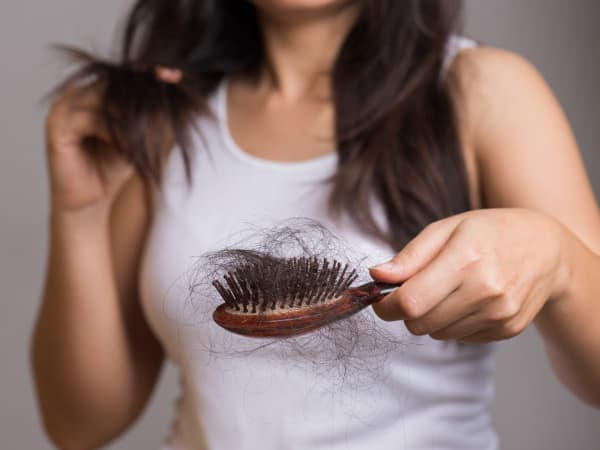
Yes — Mounjaro hair loss is a real and documented side effect. Hair loss was reported in 4.9% to 5.7% of patients on Mounjaro doses of 5mg to 15mg in clinical studies, compared to 0.9% on placebo. A 2025 meta-analysis of eight tirzepatide studies encompassing 8,847 participants confirmed an alopecia rate of approximately 5.7% across two years of treatment. For Zepbound — the same tirzepatide molecule at the same doses used for weight management — hair loss is listed as a common adverse event.
A critical 2025 study published in the Journal of the American Academy of Dermatology found that tirzepatide puts patients at greater risk of telogen effluvium compared to other weight loss medications — confirming that the Mounjaro hair loss risk is real and quantifiable. However, the same study and all available clinical data are consistent on one point: tirzepatide is not known to directly damage hair follicles, and the shedding is considered a reversible condition in the vast majority of cases.
Why Mounjaro causes hair thinning — the telogen effluvium mechanism
Understanding why Mounjaro hair loss occurs is the key to preventing and reversing it. The primary mechanism is telogen effluvium — a well-characterised, reversible form of diffuse hair shedding caused by physiological stress. Here is how it works:
Under normal conditions, approximately 85 to 90% of hair follicles are in the active growth phase (anagen) at any given time. When the body experiences significant physiological stress — rapid weight loss, surgery, illness, or severe nutritional deficit — a proportion of follicles are simultaneously pushed from the growth phase into the resting phase (telogen). Two to three months later, these resting follicles shed their hairs simultaneously, producing the diffuse thinning that patients notice as Mounjaro hair loss.
The trigger is not the tirzepatide molecule itself — it is the metabolic stress of losing weight rapidly and the nutritional deficit that accompanies reduced calorie intake. This is why the same pattern of shedding occurs after bariatric surgery, crash dieting, or any period of significant rapid weight loss. The difference with Mounjaro is the speed and magnitude of weight loss — 21 to 22% average body weight reduction in clinical trials means a significant and sustained physiological adjustment that telogen effluvium responds to.
How common is Mounjaro hair loss?
| Study / Source | Hair loss rate (tirzepatide) | Hair loss rate (placebo) | Notes |
|---|---|---|---|
| SURMOUNT-1 (Zepbound weight management) | ~5–6% | ~1% | More frequent in females (7.1% vs 0.5%) |
| Mounjaro clinical studies (5–15mg) | 4.9–5.7% | 0.9% | No patients stopped due to hair loss |
| 2025 meta-analysis (8 studies, 8,847 patients) | ~5.7% | — | Over 2 years of treatment |
| 2025 JAAD retrospective study | Elevated vs other weight loss meds | — | Confirmed greater TE risk with tirzepatide |
The consistent finding across all data is that Mounjaro hair loss affects a minority of patients — approximately 5% — and no patient in the SURMOUNT trials discontinued treatment due to hair loss. This suggests the condition, while distressing, is manageable within continued treatment for those who experience it.
Why women are more affected by Mounjaro hair loss
The SURMOUNT-1 data showed a striking sex difference in Mounjaro hair loss: 7.1% of women experienced hair loss versus only 0.5% of men. Several factors explain this disparity. Women have a higher biological predisposition to telogen effluvium — hormonally influenced hair cycle patterns make female follicles more sensitive to metabolic stress. Women are also more likely to have pre-existing iron deficiency, which significantly compounds the shedding response to rapid weight loss. And women tend to lose a higher proportion of weight as body fat compared to men on the same medication, creating proportionally greater metabolic stress on hair follicles.
The practical implication is that women on Mounjaro — particularly those with any history of iron deficiency — should apply the prevention strategies below from the very first injection rather than waiting for shedding to begin.
7 proven tips to prevent and reverse Mounjaro hair loss
Hair shafts are composed primarily of keratin — a protein. When protein intake is inadequate, the body deprioritises hair follicle activity. Maintain 1.2 to 1.6g of protein per kg body weight daily throughout Mounjaro treatment. This is the single most impactful nutritional intervention for preventing Mounjaro hair loss.
Iron deficiency is the most common nutritional cause of hair loss in women and significantly compounds Mounjaro-associated telogen effluvium. Ask your GP to check serum ferritin — a ferritin below 70 mcg/L is associated with increased shedding even without clinical anaemia. Iron-rich foods (red meat, spinach, lentils, fortified cereals) and supplementation where indicated are both effective interventions.
Zinc plays a critical role in follicular repair and hair cycle regulation. Biotin supports keratin production. Both can become deficient during rapid weight loss when total calorie and nutrient intake drops. Food sources include eggs, pumpkin seeds, shellfish (zinc), and eggs, nuts, salmon (biotin). A high-quality multivitamin formulated for hair health provides both if dietary intake is uncertain.
Omega-3 fatty acids from fish oil have anti-inflammatory properties that support scalp health and hair follicle function. Multiple studies have shown omega-3 supplementation reduces hair shedding and improves hair density. Given that oily fish also provides protein, adding 2 to 3 portions weekly plus an omega-3 supplement provides a strong dual benefit for patients concerned about Mounjaro hair loss.
The greater the calorie deficit and the faster the weight loss, the more severe the telogen effluvium response. While Mounjaro produces significant weight loss, you can moderate the speed by ensuring adequate caloric intake — particularly protein — rather than eating as little as possible. Slower, nutritionally adequate weight loss produces better hair outcomes than the fastest possible weight loss.
During a telogen effluvium phase, follicles are more fragile than usual. Avoid tight hairstyles, high heat styling, harsh chemical treatments, and aggressive brushing. Use a wide-tooth comb on wet hair. Switch to a gentle, sulphate-free shampoo. These measures will not stop the shedding phase that is already underway but they reduce additional breakage and protect the regrowth phase.
Minoxidil (Regaine) is an over-the-counter topical treatment that prolongs the anagen (growth) phase and can reduce shedding and accelerate regrowth during telogen effluvium. It is one of the few interventions with direct evidence for GLP-1-associated hair loss. Discuss with your GP or pharmacist before starting — it is generally safe but not suitable for everyone. Use for at least 3 to 6 months to assess benefit.
Is Mounjaro hair loss permanent?
For the vast majority of patients, Mounjaro hair loss is not permanent. Telogen effluvium does not cause scarring or permanent follicle destruction — the follicles enter a resting phase and shed, but they retain their ability to re-enter the growth phase. This is fundamentally different from androgenic alopecia (pattern baldness), which involves miniaturisation and eventual destruction of follicles.
The important caveat is that continued nutritional deficiency, unresolved iron deficiency, or extreme ongoing calorie restriction can extend or worsen the shedding phase. Addressing the nutritional causes — particularly protein and iron — is the most effective way to move through the telogen effluvium phase and into regrowth as quickly as possible.
No patients in the SURMOUNT weight management trials discontinued treatment due to Mounjaro hair loss. The condition is manageable within continued treatment for the approximately 5% of patients who experience it. Do not stop Mounjaro due to hair thinning without discussing with our support team first — the right nutritional adjustments typically resolve the issue without changing your treatment.
Hair regrowth timeline after Mounjaro
Understanding the hair regrowth timeline after Mounjaro hair loss helps manage expectations and avoid unnecessary anxiety:
- Months 2–3 of treatment: metabolic stress triggers follicles to enter telogen phase — but shedding has not started yet
- Months 3–6: peak shedding phase — the follicles that entered telogen 2 to 3 months earlier are now shedding. This is when most patients first notice Mounjaro hair loss
- Months 5–8: shedding typically slows as the body adapts to its new weight and nutritional status stabilises with adequate protein, iron, and zinc
- Months 6–12: regrowth becomes visible. Short new hairs at the scalp line are a positive sign that follicles have re-entered the anagen phase
- 9–12 months: most patients return to full or near-full hair thickness
If shedding persists beyond six months, or is accompanied by other symptoms (fatigue, cold intolerance, irregular periods), seek medical assessment to rule out thyroid disease, anaemia, or other conditions that may be compounding the hair loss. Browse our full product range and read our verified customer reviews. For more on nutrition during Mounjaro treatment, see our Best Diet on Mounjaro guide.
Common questions about Mounjaro hair loss
Start your Mounjaro journey with full 24/7 support.
HPLC-verified at 99% purity, COA on every batch, free UK shipping. Our support team guides you through every aspect of treatment including managing hair thinning.
Buy Mounjaro now →