
Retatrutide vs semaglutide — which produces better results?
Retatrutide vs semaglutide is the comparison defining the next chapter of weight loss pharmacology. Semaglutide — sold as Ozempic and Wegovy — is the medication that started the GLP-1 revolution, with millions of prescriptions worldwide and years of real-world data proving its effectiveness. Retatrutide is the experimental successor that has produced the most impressive weight loss figures ever seen in clinical trials — but without the regulatory approval, the long-term safety data, or the prescribing history that semaglutide has earned. The retatrutide vs semaglutide question is not simply “which is better” — it is “which is better for you, right now, given where the science stands.”
This guide compares retatrutide vs semaglutide across every dimension that matters: how they work, weight loss results, side effects, dosing, cost, availability, and the practical considerations that should inform your decision. The information here is based on published clinical trial data and is consistent with general weight management guidance from the NHS. This is not medical advice — consult your prescriber before starting or switching any medication.
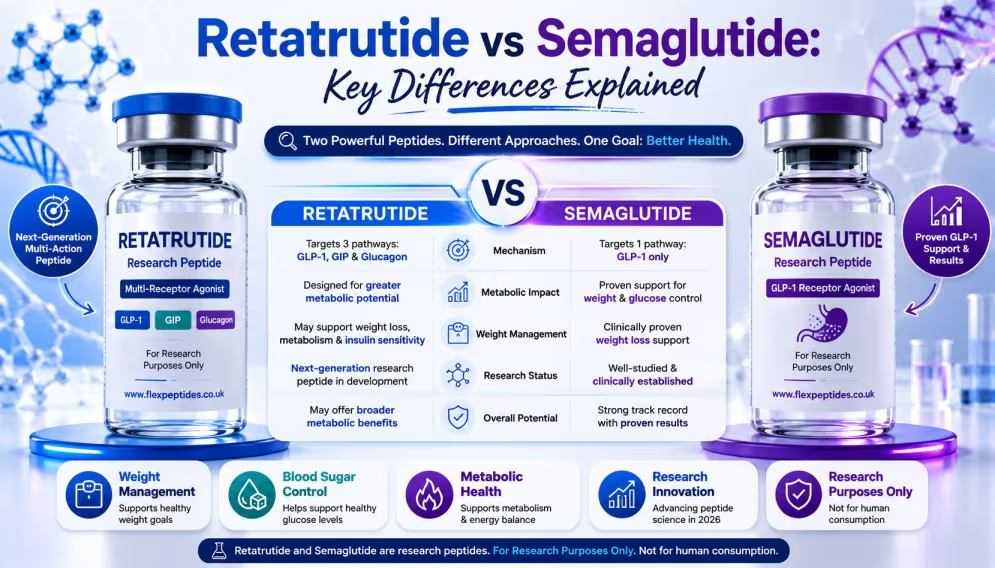
Retatrutide vs semaglutide — at a glance
| Factor | Retatrutide | Semaglutide (Ozempic/Wegovy) |
|---|---|---|
| Mechanism | GLP-1 + GIP + glucagon triple agonist | GLP-1 single receptor agonist |
| Developer | Eli Lilly | Novo Nordisk |
| Average weight loss | 22–24% (phase 2, 48 weeks) | 15–17% (phase 3, 68 weeks) |
| Injection frequency | Once weekly | Once weekly |
| Trial dose range | 1 mg → 12 mg | 0.25 mg → 2.4 mg |
| Approval status | Phase 3 trials — not approved | Fully approved (UK, EU, US) |
| Long-term safety data | Limited (phase 2 only) | Extensive (years of real-world use) |
| UK availability | Research-grade only | NHS prescription + private |
| Brand names | None approved (Synedica is a research pen format) | Ozempic, Wegovy |
Retatrutide vs semaglutide — how they work differently
Semaglutide: one receptor, proven results
Semaglutide activates the GLP-1 receptor — a single hormonal pathway that reduces appetite, slows gastric emptying, improves insulin sensitivity, and creates the sustained calorie reduction that drives weight loss. It is the most studied GLP-1 medication in the world, with extensive phase 3 data, years of real-world prescribing, and a safety profile that has been validated across millions of patients. In the retatrutide vs semaglutide comparison, semaglutide’s advantage is certainty — you know exactly what it does, how well it works, and what the risks are.
Retatrutide: three receptors, unprecedented results
Retatrutide activates three receptors simultaneously — GLP-1, GIP, and glucagon. Each pathway contributes something distinct to weight loss. GLP-1 suppresses appetite and slows gastric emptying (the same effect as semaglutide). GIP enhances insulin sensitivity and improves fat metabolism (adding a second engine). Glucagon receptor activation increases energy expenditure, promotes active fat breakdown, and reduces liver fat — a metabolic dimension that no approved medication targets. In the retatrutide vs semaglutide comparison, retatrutide’s advantage is potency — the triple mechanism produces greater weight loss in clinical trials than any single-receptor approach.
Retatrutide vs semaglutide is a question of breadth versus depth. Semaglutide does one thing exceptionally well with years of data proving it. Retatrutide does three things simultaneously with extraordinary early results — but the long-term picture is still being drawn.
Mechanism comparisonRetatrutide vs semaglutide — weight loss results
| Metric | Retatrutide (12 mg, phase 2) | Semaglutide (2.4 mg, phase 3) |
|---|---|---|
| Average total body weight loss | ~24% | ~15–17% |
| Patients losing >10% | ~93% | ~70% |
| Patients losing >20% | ~75% | ~30–35% |
| Average loss for 100 kg patient | ~24 kg | ~15–17 kg |
| Trial duration | 48 weeks | 68 weeks |
| Weight loss curve at end of trial | Still declining (not plateaued) | Plateauing by week 60 |
The retatrutide vs semaglutide weight loss comparison is striking: retatrutide at 12 mg produced approximately 7–9 percentage points more weight loss than semaglutide at maximum dose — and it achieved this in a shorter trial period, with the weight loss curve still trending downward at 48 weeks, suggesting that longer treatment could widen the gap further.
The retatrutide data is from a phase 2 trial with a smaller participant group and a shorter duration. The semaglutide data is from multiple large phase 3 trials with thousands of participants over longer periods. Phase 2 results do not always replicate exactly in phase 3 — the retatrutide numbers may shift when the full trial data is published. Direct comparison in the same trial would be the gold standard for the retatrutide vs semaglutide question, and that data does not yet exist.
Retatrutide vs semaglutide — side effects compared
| Side effect | Retatrutide (12 mg) | Semaglutide (2.4 mg) |
|---|---|---|
| Nausea | ~45% | ~40–45% |
| Diarrhoea | ~28% | ~25–30% |
| Constipation | ~25% | ~20–25% |
| Vomiting | ~18% | ~15–25% |
| Decreased appetite | ~28% | ~20% |
| Injection site reactions | ~5% | ~5–8% |
The retatrutide vs semaglutide side effect profiles are broadly comparable — gastrointestinal effects dominate both medications and are most pronounced during dose escalation. The rates at maximum doses are similar enough that side effect profile alone is unlikely to be the deciding factor between the two. However, retatrutide’s glucagon receptor activation may produce additional effects not yet fully characterised — including slight increases in heart rate and changes in liver enzyme levels that were observed in the phase 2 trial without raising safety concerns. The full side effect profile of retatrutide will be clearer after phase 3 data is published.
Retatrutide vs semaglutide — dosing and titration
| Phase | Retatrutide | Semaglutide (Wegovy) |
|---|---|---|
| Starting dose | 2 mg weekly | 0.25 mg weekly |
| Step 2 | 4 mg (week 5) | 0.5 mg (week 5) |
| Step 3 | 8 mg (week 9) | 1.0 mg (week 9) |
| Step 4 | 12 mg (week 13) | 1.7 mg (week 13) |
| Step 5 (maintenance) | 12 mg ongoing | 2.4 mg (week 17) |
| Weeks to maintenance | ~12 weeks | ~16–20 weeks |
| Injection frequency | Once weekly | Once weekly |
Both medications follow a similar titration philosophy — start low, increase monthly, reach maintenance dose within 3–5 months. Retatrutide reaches its maximum dose slightly faster (12 weeks vs 16–20 weeks) with fewer dose steps. In the retatrutide vs semaglutide comparison, the injection frequency and overall patient experience during titration are very similar. Both are subcutaneous injections that can be self-administered at home.
Retatrutide vs semaglutide — cost and availability UK
| Factor | Retatrutide | Semaglutide |
|---|---|---|
| NHS availability | Not available | Available (strict eligibility) |
| Private prescription | Not available (not approved) | £150–£250/month |
| Research-grade | Available — vials and pen formats (e.g. Synedica pens) | Available — lyophilised vials |
| Regulatory status | Phase 3 trials | Fully approved |
| Expected approval | Late 2026 or 2027 (estimate) | Already approved |
The most significant practical difference in the retatrutide vs semaglutide comparison is availability. Semaglutide is a fully approved, regulated medication available through NHS prescription (with eligibility criteria) and private clinics. Retatrutide is not approved anywhere in the world — it is only available as a research-grade compound from specialist suppliers. Patients using research-grade retatrutide do so with the understanding that the full safety and efficacy data from phase 3 trials is not yet available. This is a fundamental risk/reward consideration that every patient must weigh for themselves.
Retatrutide vs semaglutide — which is right for you?
Semaglutide may be better if:
- You want a proven, approved medication: Years of real-world data, regulatory approval, and established prescribing guidelines give semaglutide a certainty that retatrutide cannot yet match
- Your weight loss goals are moderate: If 15–17% body weight loss meets your target, semaglutide delivers this reliably for most patients
- You prefer NHS or private prescription access: Semaglutide is available through established medical channels with prescriber oversight
- You want the most safety data available: Semaglutide has the longest safety track record of any GLP-1 medication currently on the market
- Budget is a primary concern: Semaglutide is generally the more affordable option, particularly through NHS access
Retatrutide may be better if:
- You have significant weight to lose: If your goal is 20%+ body weight loss, retatrutide’s higher efficacy at maximum dose gives you a better statistical chance of reaching that target
- Semaglutide has not produced adequate results: Some patients respond poorly to single-receptor GLP-1 agonists. The triple-receptor approach of retatrutide may produce a response where semaglutide did not
- You have strong insulin resistance or metabolic syndrome: The addition of GIP and glucagon receptor activation provides metabolic benefits beyond what GLP-1 alone delivers
- You are comfortable with research-grade products: Understanding that you are using a medication with preliminary data and accepting the associated risks
- You want the most potent option available: The clinical data is clear — retatrutide produces the greatest average weight loss of any medication tested to date
The retatrutide vs semaglutide decision is not simply about weight loss percentages. Semaglutide has years of post-market safety surveillance, cardiovascular outcome trials, and real-world prescribing data that retatrutide does not and cannot have until it completes the regulatory process. Greater potency does not automatically mean “better” — it means different risk profiles that each patient must evaluate individually, ideally with the guidance of a healthcare professional.
Retatrutide vs semaglutide is not a question with a universal winner. Semaglutide is the proven choice with established safety. Retatrutide is the frontier choice with extraordinary early results. Where you stand on the risk-reward spectrum determines which is right for you — and that is a deeply personal decision.
Mymetabolism perspectiveResearch disclaimer: Retatrutide is not approved for human use by any regulatory body. It is currently in phase 3 clinical trials. Research-grade retatrutide products, including Synedica pen formats, are intended for research purposes only. The information in this article is for educational purposes and does not constitute medical advice. Always consult a qualified healthcare professional before starting any medication or research compound. Mymetabolism supplies research-grade peptides verified by HPLC at 99%+ purity with a Certificate of Analysis on every batch.
Common questions — retatrutide vs semaglutide
Explore both options at Mymetabolism.
We supply both semaglutide and retatrutide — HPLC-verified at 99% purity, COA on every batch, free UK shipping. Compare the options and choose what is right for you.
Browse Retatrutide →