
Mounjaro stops working — 7 proven solutions when weight loss stalls.
When Mounjaro stops working — or feels like it has — it is one of the most frustrating experiences in weight management treatment. You have been losing consistently, the medication has been working brilliantly, and then the scale simply stops moving. Weeks pass. Nothing changes. The first instinct is to worry that the medication has failed. In almost every case, it has not. What most patients experience when Mounjaro stops working is a metabolic plateau — a predictable physiological response that has a clear explanation and, crucially, proven solutions.
Research published in the Journal of Clinical Endocrinology and Metabolism in 2024 analysed weight loss trajectories from the SURMOUNT-1 and SURMOUNT-2 trials, confirming that tirzepatide weight loss follows predictable patterns with natural deceleration phases — updated further by NHS healthy weight management guidance and a May 2026 review on tirzepatide plateau mechanisms. A plateau is not failure. It is your body adapting — and with the right adjustments, progress can resume. This guide covers the seven most effective solutions when Mounjaro stops working.
Why Mounjaro stops working — the real explanation
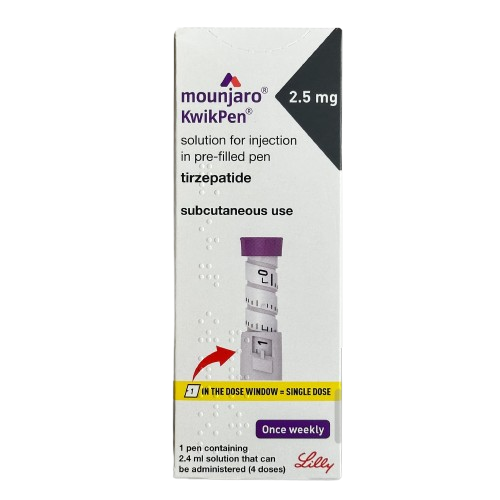
When patients say Mounjaro stops working, the medication itself has almost never actually stopped working. Tirzepatide continues activating GIP and GLP-1 receptors throughout treatment — its pharmacological mechanism does not diminish with time. What changes is the body’s response to the resulting calorie deficit.
Here is the core explanation: as you lose weight on Mounjaro, your body becomes smaller. A smaller body requires fewer calories to function. The same calorie intake that created a significant deficit at your starting weight creates a much smaller deficit — or no deficit at all — at your current lower weight. The result is that weight loss slows or stops, even though nothing has changed in your behaviour or the medication’s activity. This is metabolic adaptation — universal to all forms of weight loss, not specific to tirzepatide. Research confirms this is the primary mechanism when Mounjaro stops working for most patients.
There is a second mechanism: muscle loss. Research shows that up to 39% of weight lost on GLP-1 and GIP/GLP-1 medications like tirzepatide comes from lean mass including muscle. Muscle drives metabolic rate — losing it reduces how many calories your body burns at rest, further narrowing the calorie deficit and accelerating the plateau. This is why resistance training and protein intake are the two most important interventions when Mounjaro stops working in this pattern.
The 5 most common causes of a Mounjaro plateau
- Metabolic adaptation — the primary cause in most patients. Your calorie requirements have fallen as your body weight has decreased. The deficit that drove early weight loss is now smaller or absent
- Dietary drift — portion sizes slowly creep back up over weeks and months. Food choices that were strictly managed in the early phase become more relaxed. Calorie density increases without the patient consciously deciding to change their diet
- Muscle loss — as covered above. Reduced muscle mass lowers resting metabolic rate, reducing the calories burned without activity throughout the day
- Insufficient exercise — exercise was not prioritised during the weight loss phase. Without resistance training, the body composition shift toward lower muscle accelerates, compounding metabolic adaptation
- Not yet at maximum dose — some patients plateau before reaching the 15mg maximum dose. If you are at 5mg, 7.5mg, or 10mg and weight loss has stalled, the solution may simply be continuing the escalation protocol to a higher therapeutic dose
7 proven solutions when Mounjaro stops working
These seven solutions address the most common causes of a Mounjaro plateau in order of impact.
1. Audit your calorie intake honestly
Dietary drift is one of the most common causes when Mounjaro stops working — and one of the least acknowledged. Keep a detailed food diary for at least one week using a calorie tracking app. Most patients who do this discover one of three patterns: portion sizes have gradually increased beyond their early-treatment levels, high-calorie additions have crept in (oils, dressings, snacks, alcohol), or they are consistently underestimating calorie density of regular meals. A single honest week of tracking typically reveals the issue clearly. You do not need to track forever — just long enough to recalibrate.
2. Increase protein intake
Protein is the most impactful single dietary lever when Mounjaro stops working. Increasing protein to 1.2 to 1.6g per kg of body weight preserves muscle mass, increases the thermic effect of food (protein requires more energy to digest than fat or carbohydrate), and reduces hunger more effectively than other macronutrients. If you have been eating adequate protein from the start, maintain it. If protein has drifted lower as appetite suppression reduced meal size, prioritise it explicitly at every meal — protein first, before vegetables or carbohydrates.
3. Add or intensify resistance training
If you are not already doing resistance training, adding two to three sessions per week is one of the most effective interventions when Mounjaro stops working. Resistance training builds muscle, raises resting metabolic rate, and directly counteracts the muscle loss that reduces calorie burn during weight loss. This is not a slow fix — metabolic improvements from resistance training begin within 2 to 3 weeks of consistent sessions. For patients already resistance training, increasing intensity, adding a session, or applying progressive overload (adding weight or reps) can restart progress.
4. Reduce alcohol and liquid calories
Alcohol and liquid calories are among the most invisible calorie sources when Mounjaro stops working due to dietary drift. Alcoholic drinks add calories without meaningful nutritional value, increase the likelihood of poor food choices, and directly interfere with fat metabolism. Sugary drinks, fruit juices, and creamy coffee beverages can add hundreds of calories without being registered as food by the brain’s satiety systems. Cutting or significantly reducing liquid calories often produces renewed weight loss progress within one to two weeks with no other changes.
5. Review your sleep and stress levels
Two factors consistently underestimated when Mounjaro stops working are sleep quality and chronic stress. Poor sleep — less than seven hours per night — measurably increases ghrelin (the hunger hormone) and reduces leptin (the satiety hormone), directly working against Mounjaro’s appetite mechanism. Chronic stress elevates cortisol, which promotes fat storage particularly around the abdomen and can stall weight loss entirely. Both are modifiable — improving sleep hygiene and stress management produce meaningful metabolic benefits alongside medication.
6. Escalate your dose if not at maximum
If you are experiencing a plateau at 5mg, 7.5mg, or 10mg and have been at that dose for four or more weeks, the most clinically straightforward solution is to continue the escalation schedule toward the 15mg maximum dose. The SURMOUNT trials show consistently that higher doses produce greater weight loss — patients who plateau on lower doses almost always see renewed progress at the next dose level. Contact our 24/7 support team to discuss your current dose and whether escalation is appropriate for your situation.
7. Consider switching to a more potent medication
If you are already at the 15mg maximum Mounjaro dose and have applied the above adjustments without renewed progress, the most powerful solution is upgrading to a more potent mechanism. Two options are available from Mymetabolism for patients in this position: Retatrutide activates three receptors (GIP, GLP-1, and glucagon) and produces 25 to 28.3% average weight loss at 12mg — significantly more than Mounjaro’s ceiling. CagriReta combines amylin and GLP-1 receptor activation and produces 20.4% average weight loss with 60% of patients losing 20% or more of body weight. Both offer genuinely different mechanisms that can produce results where Mounjaro has plateaued. Browse our full product range to see all available options.
When to consider upgrading to a stronger medication
Consider moving beyond Mounjaro when all of the following apply:
- You have been at the 15mg maximum dose for at least 8 weeks
- You have audited your diet, increased protein, and added resistance training consistently for at least 4 weeks
- Sleep and stress have been addressed
- Progress remains absent despite these adjustments
| Medication | Mechanism | Average weight loss | Best for |
|---|---|---|---|
| Mounjaro (plateau) | GIP + GLP-1 | ~21–22% | First-line dual agonist |
| CagriReta | Amylin + GLP-1 | ~20.4% | Different mechanism from Mounjaro |
| Retatrutide | GIP + GLP-1 + Glucagon | 25–28.3% | Maximum weight loss potential |
A Mounjaro plateau is not failure
The most important perspective when Mounjaro stops working is this: a plateau is not failure. It is a physiological signal that your body has adapted to its current state — which is itself proof that the medication produced significant results. The patients who navigate plateaus successfully are those who treat them as a recalibration opportunity rather than a reason to discontinue.
Even during a plateau, the metabolic benefits of Mounjaro continue — improved insulin sensitivity, better cardiovascular risk factors, and maintained appetite suppression that prevents weight regain. The scale may not be moving, but the medication is still working. Contact our support team or read our verified customer reviews to hear how other patients have navigated and broken through their Mounjaro plateaus.
Common questions — Mounjaro stops working
Ready to break through your plateau?
Our 24/7 support team helps you find the right solution — from dose adjustments to upgrading to Retatrutide or CagriReta. HPLC-verified, free UK shipping.
Browse all products →