
Ozempic face — 7 proven ways to prevent and treat it.
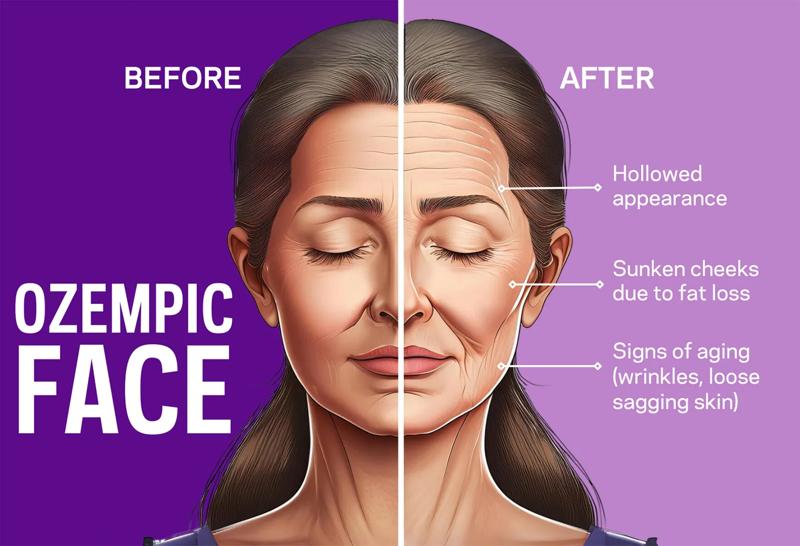
Ozempic face is a term coined by dermatologist Dr Paul Frank to describe the gaunt, hollowed, or prematurely aged facial appearance some patients develop after significant weight loss on GLP-1 medications. Despite the name, it is not caused by semaglutide specifically — the same effect can occur with any medication, or any method, that produces rapid, substantial fat loss. Search interest in Ozempic face and related facial volume restoration procedures has surged by over 1,400% since mid-2022, reflecting how common and how visible this experience has become as GLP-1 prescriptions have reached record levels. This guide covers exactly why it happens, who is most at risk, and seven proven ways to prevent and treat it.
All clinical data in this guide is drawn from peer-reviewed dermatology and plastic surgery research, including a 2025 Vanderbilt University study quantifying facial volume loss, alongside the NHS obesity treatment guidance and the NHS healthy weight management guidance.
What is Ozempic face?
Ozempic face describes visible facial volume loss — particularly in the temples, cheeks, under the eyes (tear troughs), jawline, smile lines, and marionette lines — that becomes apparent after substantial weight loss on a GLP-1 medication. Patients who experience significant changes can appear up to five years older, even as their underlying metabolic health dramatically improves. A 2025 study from Vanderbilt University reported approximately 9% midface volume loss for every 10kg of total weight loss in patients using GLP-1 medications — a figure that quantifies what many patients notice anecdotally.
Despite the name, Ozempic face is not unique to Ozempic or semaglutide. The same facial changes can occur with tirzepatide (Mounjaro, Zepbound), liraglutide (Saxenda), dulaglutide (Trulicity), or indeed any method of rapid, significant weight loss including bariatric surgery. The term has simply become a catch-all because GLP-1 medications produce the kind of rapid, substantial weight loss — typically 15 to 22% of body weight — that makes facial volume changes noticeable enough for patients and clinicians to name and discuss.
Why it happens — the science behind Ozempic face
Ozempic face is a predictable consequence of systemic fat loss, not a medical complication. The face contains the same fat compartments as the rest of the body, and when GLP-1 medications drive significant weight loss, those facial fat compartments shrink along with everywhere else. The key issue is timeline: with gradual weight loss, the skin’s natural turnover and collagen remodelling cycles can partially compensate for decreasing volume. With the rapid weight loss often seen on GLP-1 medications, the gap between volume loss and skin adaptation widens, creating more visible changes than the same total weight loss achieved more slowly.
Some 2025 research suggests GLP-1 medications may affect superficial fat compartments disproportionately compared to the deeper fat compartments typically lost during normal ageing — a different pattern of fat loss that may contribute to the distinct appearance associated specifically with Ozempic face. It is also worth noting that GLP-1 medications carry a higher risk of lean muscle mass loss compared to dietary weight loss alone when protein intake and strength training are not prioritised — and facial musculature is not exempt from this effect.
Who is most at risk of Ozempic face?
| Higher risk | Lower risk |
|---|---|
| Losing 20% or more of body weight | Losing under 15% of body weight |
| Naturally lean facial structure | Naturally fuller face |
| History of sun damage | Well-protected skin history |
| History of smoking | Non-smoker |
| Low protein intake during weight loss | High protein intake and resistance training |
| Older age (reduced skin elasticity) | Younger age (under 35–40, good elasticity) |
Understanding these risk factors helps explain why two patients losing the same percentage of body weight can have very different facial outcomes — Ozempic face severity depends on far more than the number on the scale alone.
7 proven ways to prevent and treat Ozempic face
1. Prioritise protein intake throughout treatment
Adequate protein is the single most impactful nutritional intervention against Ozempic face. Low protein intake during rapid weight loss accelerates lean tissue loss throughout the body, including facial musculature — the structural support beneath facial skin. Aiming for 1.6 to 2.0g of protein per kg of body weight helps preserve this tissue. See our complete protein on GLP-1 guide for the full framework.
2. Add resistance training
Patients maintaining high protein intake alongside resistance training are consistently in the lower-risk category for significant Ozempic face. While resistance training cannot directly build facial muscle in a meaningful cosmetic sense, it preserves overall lean mass and supports the metabolic environment that reduces disproportionate fat loss patterns throughout the body.
3. Discuss a gradual dose escalation with your doctor
Because the speed of weight loss — not just the total amount — drives the severity of Ozempic face, discussing your dosage and escalation pace with your prescriber is a genuinely useful prevention strategy. A more gradual approach gives the skin’s natural collagen remodelling cycles more time to partially compensate for decreasing facial volume, reducing the visible gap between fat loss and skin adaptation.
4. Use sunscreen daily, without exception
Chronic UV exposure degrades collagen and elastin, directly reducing the skin’s ability to rebound after volume loss — making sun protection one of the simplest and most effective tools against Ozempic face. Daily sunscreen use, regardless of weather or season, protects the collagen reserves that determine how well skin adapts to facial volume changes during weight loss.
5. Build a collagen-supporting skincare routine
A skincare routine built around ingredients that support collagen production and skin hydration — particularly hyaluronic acid and retinoids — helps the skin function at its best during a period of significant change. While skincare alone cannot prevent Ozempic face in patients losing very substantial weight, it meaningfully supports the skin’s resilience and appearance throughout the process.
6. Stay well hydrated
Hydration directly affects skin plumpness and elasticity. Alongside nutrition, a focus on consistent daily water intake supports the skin’s ability to maintain as much volume and resilience as possible during weight loss — a simple, free intervention that complements every other strategy on this list for managing Ozempic face.
7. Consider professional treatment if changes are significant
For patients who experience noticeable Ozempic face despite preventive measures, a range of professional treatments — covered in detail below — can restore volume and improve skin quality. Consulting a board-certified dermatologist or plastic surgeon allows for a tailored assessment of which option suits your specific facial changes and goals.
Medical and cosmetic treatment options
For more established Ozempic face, treatment usually involves a combination of therapies designed to improve skin health, increase collagen and elastin, and restore lost facial volume:
- Hyaluronic acid dermal fillers: restore facial volume and improve skin hydration relatively quickly, with results lasting several months to over a year depending on the product used
- Biostimulatory fillers (Sculptra, Radiesse): work by stimulating the body’s own collagen production for more gradual, natural-looking results that build over weeks to months
- Radiofrequency microneedling: tightens loose skin by boosting collagen and elastin production, addressing both volume and skin quality concerns
- Fat transfer (autologous or nanofat): uses the patient’s own body fat to restore facial volume, skin thickness, and pigmentation, with nanofat transfer potentially containing growth factors that promote skin regeneration
- Facelift and neck lift surgery: remains the gold standard for addressing advanced facial ageing changes in patients with significant weight loss, offering the most definitive and longest-lasting correction
Discontinuing GLP-1 treatment is not generally recommended as a solution to Ozempic face, since stopping the medication may lead to weight regain in many patients without addressing the underlying facial volume change that has already occurred.
The emotional side of Ozempic face
Beyond the physical changes, Ozempic face can trigger genuine anxiety, body image concerns, and a sense of being caught between two competing realities — improved metabolic health alongside an appearance some patients feel does not reflect how they feel inside. Many patients report feeling torn between the clear health benefits of significant weight loss and the emotional distress of looking older or less like themselves. This is a legitimate and common experience, not vanity, and it deserves the same care and attention as any other aspect of your weight loss journey. If facial changes are affecting your confidence or wellbeing, discussing this openly with your prescriber or a dermatologist is a reasonable and proactive step — you do not need to navigate it alone.
Browse our full product range, read our verified customer reviews, and see our complete Ozempic side effects guide for everything else you need to know about treatment.
Common questions — Ozempic face
Start your Ozempic journey with informed support.
HPLC-verified at 99% purity, COA on every batch, free UK shipping. 24/7 support for every question about your treatment.
Buy Ozempic now →