
Ozempic side effects week by week — proven relief guide.
Understanding Ozempic side effects week by week is one of the most practically useful things a new patient can know before starting treatment. The single biggest reason people discontinue Ozempic is not that it stops working — it is that side effects in the first few weeks feel more severe than expected and patients are not prepared for them. Research shows only approximately 27% of GLP-1 users are still taking their medication at the one-year mark, and the biggest drops occur in the first few months — almost always because of GI side effects at dose escalation points that were not anticipated. Knowing exactly what to expect, and when, removes the surprise and makes every difficult week manageable.
This complete Ozempic side effects week by week guide covers every stage of the escalation schedule — from the first 0.25mg injection through to the 2mg maintenance dose — with precise timing, what each side effect feels like, and seven proven management strategies. All side effect frequency data is drawn from the official Ozempic prescribing information and the NHS semaglutide injection guidance, alongside a medically reviewed April 2026 dosing guide.
Why Ozempic causes side effects
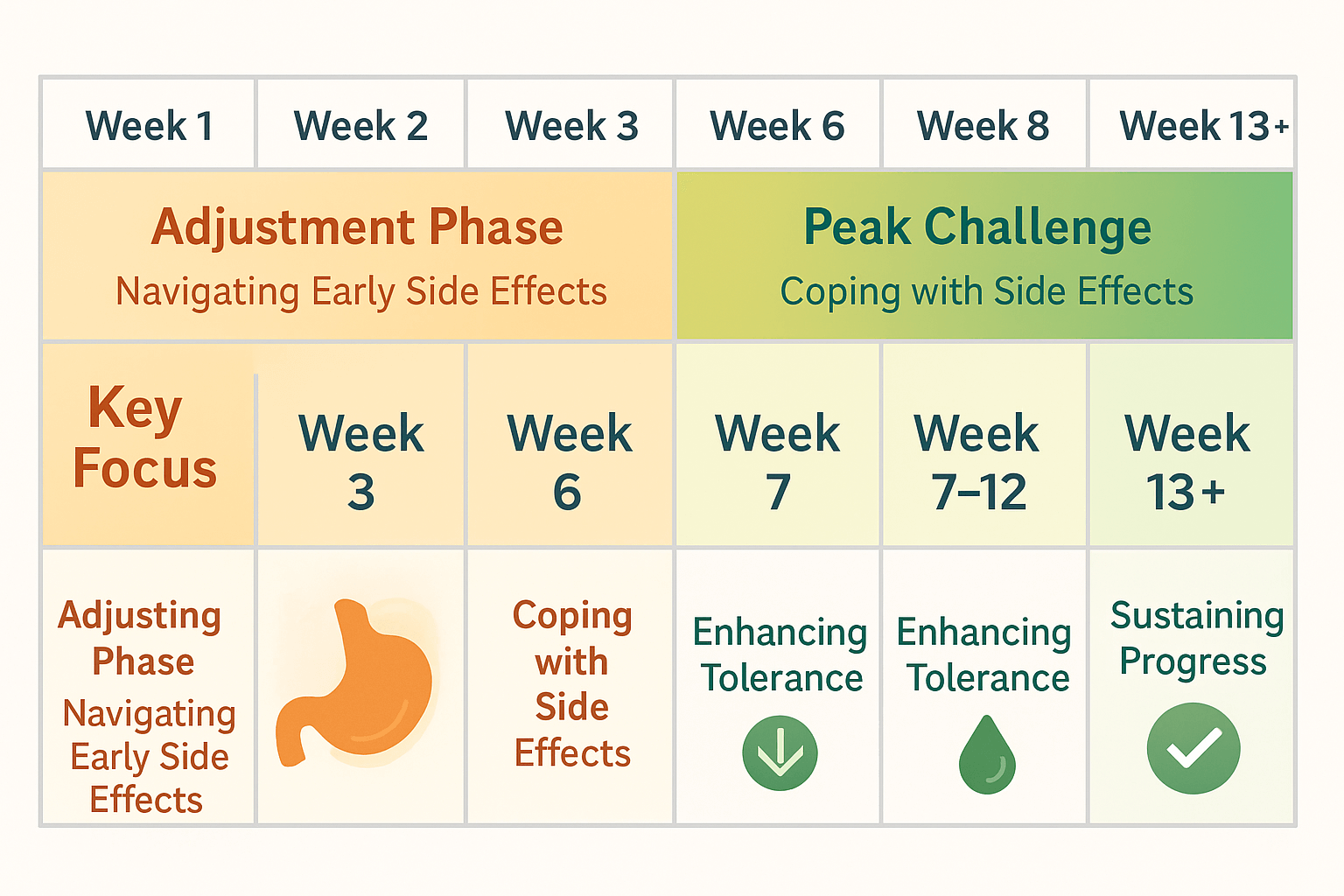
Almost all Ozempic side effects week by week are gastrointestinal — nausea, constipation, diarrhoea, vomiting, and bloating. These occur because semaglutide activates GLP-1 receptors throughout the digestive system, significantly slowing gastric emptying (the rate at which food moves from the stomach into the intestine). This slowing is central to how Ozempic produces satiety and reduces appetite — but it also means the digestive system is processing food more slowly than it is accustomed to. The result is nausea, bloating, and altered bowel habits as the gut adapts to its new slower pace.
The good news is that this adaptation is real and consistent — the body genuinely does adjust to each dose level over 2 to 4 weeks, and side effects reduce substantially after this window. The dose escalation schedule exists specifically to allow this adaptation to occur gradually rather than all at once. The critical insight in understanding Ozempic side effects week by week is that every spike in side effects is temporary and tied to a specific dose level — it will pass.
Complete Ozempic side effects week by week timeline
| Weeks | Dose | Typical side effects | Severity |
|---|---|---|---|
| Weeks 1–4 | 0.25mg (starter) | Mild nausea, reduced appetite, occasional fatigue, mild headache | Low — adapting phase |
| Weeks 5–8 | 0.5mg (first escalation) | Nausea increases, constipation common, possible vomiting, bloating | Moderate — most difficult phase for many |
| Weeks 9–12 | 0.5mg (continuing) | Nausea reducing, constipation persists, appetite suppression established | Reducing — adaptation occurring |
| Weeks 13–16 | 1mg (second escalation) | Nausea spike, possible diarrhoea, fatigue, taste changes | Moderate — temporary spike |
| Weeks 17–24 | 1mg (continuing) | Side effects largely resolved, stable appetite suppression | Low — most patients feel well |
| Weeks 25–28 | 2mg (third escalation if needed) | Nausea returns, possible vomiting, constipation | Moderate — temporary spike |
| Week 28+ | 2mg (maintenance) | Largely adapted — occasional nausea with large meals or fatty food | Low — stable |
Most common Ozempic side effects explained
Nausea — the most common
Nausea is the most commonly reported Ozempic side effect week by week across all dose levels — affecting approximately 20% of patients at some point during treatment. It is caused directly by semaglutide slowing gastric emptying, creating a sensation of fullness and queasiness as food remains in the stomach longer. It is typically most severe in the first 1 to 3 days after each injection or dose escalation, then reduces over the following days. By weeks 8 to 12, most patients find nausea has substantially resolved. Plain foods on injection day, small portion sizes, and avoiding high-fat meals significantly reduce nausea severity.
Constipation — second most common
Constipation affects approximately 12% of Ozempic patients in clinical trials and is caused by the same gastric slowing mechanism as nausea — the entire digestive tract is moving more slowly. It typically begins in weeks 1 to 4 and can persist throughout treatment, though it usually improves. The practical solutions are increased water intake (at least 2.5 litres daily), more dietary fibre from vegetables and whole grains, daily gentle movement, and where needed, a gentle over-the-counter osmotic laxative. Never attempt to manage Ozempic constipation through reduced food intake — dehydration worsens it significantly.
Diarrhoea
Diarrhoea affects approximately 9% of patients and typically occurs earlier in treatment or at dose escalation points. It may seem contradictory alongside constipation, but both reflect the digestive system’s unpredictable adaptation to altered gut motility. Diarrhoea is usually self-limiting and resolves within a few days of onset. If persistent or severe, contact our 24/7 support team — persistent diarrhoea can cause dehydration, which significantly worsens all other Ozempic side effects.
Vomiting
Vomiting affects approximately 9% of patients and is most common in the first 8 weeks and at dose escalation points. It is typically triggered by eating too large a portion too soon after an injection, eating high-fat foods, or eating too quickly. If vomiting occurs more than once in a day or prevents fluid intake, contact a healthcare provider — dehydration from vomiting is one of the more serious Ozempic side effects week by week and requires medical management.
Fatigue
Fatigue is a less commonly discussed but very real early Ozempic side effect — affecting a meaningful proportion of patients in weeks 1 to 8, particularly in the first few days after each injection. It is most likely caused by the combination of reduced calorie intake and the body’s metabolic adjustment to the medication. Most patients find fatigue resolves by weeks 6 to 8 and their energy actually improves beyond their pre-treatment baseline as weight loss progresses.
Headache
Headaches are common in the first few weeks and are almost always caused by dehydration — Ozempic suppresses thirst signals alongside appetite, and many patients significantly under-drink in the early treatment phase. Increasing water intake to 2 to 2.5 litres daily typically resolves headaches within 48 hours. If headaches persist beyond the first few weeks or are severe, seek medical advice.
7 proven ways to manage Ozempic side effects week by week
Keep injection day and the following 24 hours to plain, easily digestible foods — plain protein, plain rice, steamed vegetables, toast. Avoid high-fat, spicy, or heavily seasoned foods. This one adjustment reduces nausea severity more than any other single measure.
Ozempic slows gastric emptying — eating to the point of fullness means the stomach is significantly over-loaded for its new slower pace. Stop eating when 70 to 80% full. Put utensils down between bites. Eat slowly over at least 20 minutes per meal.
Ozempic suppresses thirst. Drink 2 to 2.5 litres of water daily regardless of whether you feel thirsty. Set phone reminders. Dehydration worsens every single Ozempic side effect — nausea, headache, constipation, and fatigue all intensify significantly when fluid intake is low.
Injecting in the early evening means the peak side effect period (24 to 48 hours post-injection) coincides partly with sleep — many patients find this significantly reduces the impact of nausea and fatigue on their daily functioning. Morning injection means the worst day is a work day; evening injection means it is partly a sleep night.
The escalation schedule exists to allow adaptation — do not try to progress faster than the 4-week minimum at each dose. If side effects are still significant at 4 weeks, it is clinically acceptable to extend at the current dose by an additional 4 weeks before escalating. Tolerability matters more than speed.
Increase vegetable and fibre intake gradually alongside increased water intake — sudden large increases in dietary fibre without adequate water worsen bloating. Daily gentle movement (even a 20-minute walk) significantly improves gut motility. For persistent constipation, discuss osmotic laxative options with our support team.
Do not wait for a side effect to become unmanageable. Our 24/7 support team can advise on adjustments to injection timing, food choices, hydration, and whether a dose extension is appropriate for your situation. Most side effect problems have practical solutions — contact us before they reach the point of considering stopping.
When do Ozempic side effects resolve?
The pattern of Ozempic side effects week by week follows a consistent adaptive trajectory for most patients:
- Weeks 1–4 (0.25mg): mild side effects, body beginning to adapt
- Weeks 5–8 (0.5mg): side effects spike — the most challenging phase for most patients
- Weeks 9–12: significant improvement as adaptation occurs at 0.5mg
- Weeks 13–16 (1mg): temporary spike again — typically less severe than the 0.5mg transition
- Weeks 17–24: largely resolved — most patients feel well and energy improves
- Long-term: occasional nausea with large meals or fatty foods remains for many patients but is generally well-managed
Warning signs requiring medical attention
While most Ozempic side effects week by week are manageable at home, these signs require prompt medical attention:
- Severe persistent abdominal pain — particularly if it radiates to the back. This is a possible sign of pancreatitis. Stop the medication and seek medical attention immediately
- Inability to keep fluids down — vomiting that prevents adequate hydration requires medical management to prevent dehydration
- Signs of severe dehydration — extreme thirst, dark urine, dizziness, rapid heartbeat
- Severe allergic reaction — facial swelling, difficulty breathing, widespread rash or hives
- Sudden vision changes — report any sudden change in vision to your GP promptly
- Symptoms of hypoglycaemia — particularly for patients also taking insulin or sulfonylureas
For all other questions about Ozempic side effects week by week, contact our 24/7 support team. Browse our full product range, read our verified customer reviews, and see our How to Inject Ozempic guide for the complete injection technique.
Longer-term side effects to know about
Beyond the acute gastrointestinal side effects of the first few months, two longer-term considerations deserve attention in any complete Ozempic side effects week by week guide:
- Hair thinning: affects some patients from around months 3 to 6. Not caused directly by semaglutide — caused by the physiological stress of rapid weight loss triggering telogen effluvium. Prevented and reversed through adequate protein intake (1.2 to 1.6g per kg body weight), iron levels checked and corrected if low, and omega-3 supplementation
- Muscle loss: 20 to 40% of weight lost on semaglutide can come from lean mass. Prevented through consistent resistance training 2 to 3 times per week and adequate protein intake throughout treatment
Common questions — Ozempic side effects week by week
Start your Ozempic journey with 24/7 support.
HPLC-verified at 99% purity, COA on every batch, free UK shipping. Our team guides you through every side effect — week by week.
Buy Ozempic now →