
How to store GLP-1 medications — 7 proven tips to protect your investment.
Knowing how to store GLP-1 medications correctly is not optional — it is essential. GLP-1 receptor agonists including Mounjaro, Wegovy, Ozempic, and Retatrutide are biological medications — complex peptide molecules that are highly sensitive to temperature and light. Store them incorrectly and the active ingredient degrades silently, reducing or eliminating the medication’s effectiveness without any visible warning. Understanding the correct storage conditions for each medication protects a significant financial investment and ensures every injection delivers its full therapeutic effect.
All storage guidance in this article is drawn from the official prescribing information for each medication via the Electronic Medicines Compendium (EMC) and the NHS Semaglutide injection guidance. Always verify against the current patient information leaflet in your specific product packaging.
Why GLP-1 storage matters so much
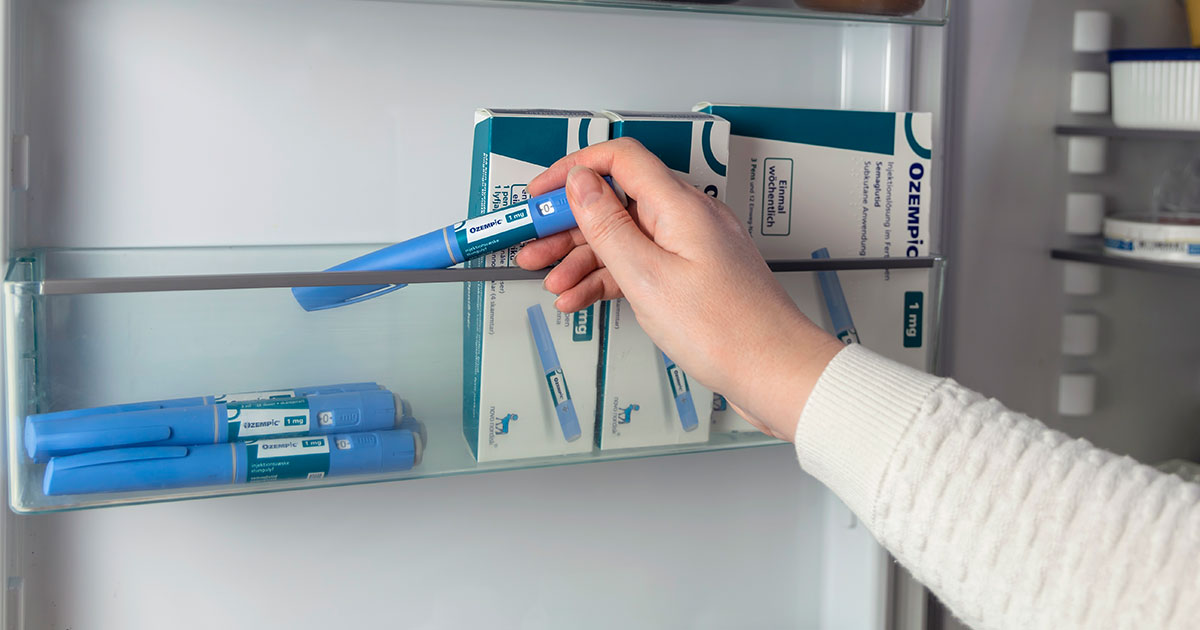
GLP-1 medications are biologics — medications whose active ingredients are large, complex protein molecules (peptides) rather than the small chemical molecules found in traditional drugs. These peptide molecules are inherently temperature-sensitive because their three-dimensional structure — which is essential to how they bind to receptors in the body — can be disrupted by heat, freezing, and light exposure. Once the protein structure is damaged, the medication cannot bind correctly and its therapeutic effect is lost, often partially or entirely.
Critically, this degradation is often invisible. A pen of Mounjaro that has been left on a warm windowsill may look identical to a correctly stored pen — clear, colourless solution, no visible particles. But its active tirzepatide molecules may have been significantly compromised, reducing the dose you actually receive with each injection. Understanding how to store GLP-1 medications correctly is how you ensure every injection delivers its full prescribed therapeutic effect.
GLP-1 medication storage requirements — complete table
The table below covers the official storage requirements for every GLP-1 medication available from Mymetabolism:
| Medication | Unopened (fridge) | In use (room temp max) | Room temp duration | Never exceed |
|---|---|---|---|---|
| Mounjaro (Tirzepatide) | 2–8°C | 30°C | 21 days | 30°C / freeze |
| Wegovy (Semaglutide 2.4mg) | 2–8°C | 30°C | 28 days | 30°C / freeze |
| Ozempic (Semaglutide) | 2–8°C | 30°C | 56 days | 30°C / freeze |
| Retatrutide (VLS / Synedica) | 2–8°C | 30°C | 21 days | 30°C / freeze |
| CagriReta | 2–8°C | 30°C | 21 days | 30°C / freeze |
| NAD+ | 2–8°C | Room temp | Per product label | Heat / freeze |
Ozempic has the longest room temperature tolerance at 56 days — significantly more than Mounjaro and Retatrutide at 21 days. Wegovy falls in between at 28 days. If you travel frequently or have limited fridge access, these differences matter for planning. Always refer to your specific product’s patient information leaflet for confirmation.
7 proven tips for storing GLP-1 medications
1. Store in the main body of the fridge — not the door
The fridge door is the worst location for GLP-1 medication storage. Door shelves experience the greatest temperature fluctuations — every time the door opens, they are exposed to room temperature air. Main body shelves maintain the stable 2 to 8°C required. Store pens in the centre of the middle or lower shelves, away from the back wall where temperatures can drop below 2°C and cause partial freezing.
2. Keep pens in their original packaging until use
The original carton protects GLP-1 medications from light exposure, which can degrade the active molecule independently of temperature. Keep pens in their original box until the moment of use. Do not transfer to other containers or storage bags. The packaging is part of the storage system, not just protective wrapping.
3. Never place pens near the fridge back wall
Fridge back walls can reach temperatures below 0°C, particularly in older fridges or when the fridge is set very cold. Even brief partial freezing at the back wall can compromise a GLP-1 pen. Keep pens at least 5cm from the back wall. If you notice any ice crystals on a pen at any point, discard it immediately — do not allow it to thaw and attempt to use it.
4. Allow pens to reach room temperature before injecting
Removing a pen from the fridge 30 minutes before injection is recommended for all GLP-1 medications. Injecting cold medication is not dangerous but causes significantly more stinging at the injection site. Allowing the pen to warm naturally also reduces the risk of injection site reactions from cold medication. Do not accelerate warming with a microwave, warm water, or direct sunlight — these can exceed safe temperature limits rapidly.
5. Track your room temperature days carefully
When a pen is removed from the fridge, the clock starts on its room temperature limit. Write the date removed from the fridge on the pen with a permanent marker or note it in your injection log. Mounjaro and Retatrutide at 21 days, Wegovy at 28 days, Ozempic at 56 days. A pen that exceeds its room temperature limit must be discarded even if unused medication remains — do not return it to the fridge after this window has passed.
6. Store away from heat sources and direct sunlight
When pens are in their room temperature window, store them in a cool, dark location — a bedside drawer or bathroom cabinet away from the shower. Never leave a GLP-1 pen on a windowsill, near a radiator, in a car during warm weather, or in direct sunlight. Car interiors can reach temperatures well above 30°C even on mild days, exceeding the storage limit in minutes. A pen left in a hot car is likely compromised and should be discarded.
7. Check the solution before every injection
Before every injection, inspect the medication window. The solution should be clear, colourless, or very slightly yellow with no visible particles, deposits, or cloudiness. Discoloured, cloudy, or particle-containing solutions indicate the medication has been compromised — use indicates this pen should be discarded and replaced. Contact our 24/7 support team if you have any doubts about the condition of your medication.
Never freeze — what happens if you do
Freezing is the most serious storage error for all GLP-1 medications. When a GLP-1 peptide molecule freezes, ice crystals form within the solution and mechanically disrupt the three-dimensional protein structure that allows the molecule to bind to its receptor. This damage is permanent — it cannot be reversed by allowing the pen to thaw. A frozen GLP-1 pen must be discarded immediately, regardless of how normal the solution looks after thawing.
Partial freezing — which can occur if a pen is placed near the back wall of a cold fridge or packed directly against an ice pack during travel — causes the same molecular damage as complete freezing, but may not produce visible cloudiness or particle formation. This makes it particularly insidious: the pen looks normal, the solution appears clear, but the active molecule is compromised. When in doubt after a cold event, discard and replace.
Discard it immediately. Do not allow it to thaw and attempt to use it — the molecular damage from freezing cannot be reversed. Contact our 24/7 support team if you need a replacement pen urgently. Never attempt to use a GLP-1 medication that has been frozen at any point.
What to do if your pen was left out
If you discover a pen has been left at room temperature, the key questions are:
- How long has it been out? — within the medication’s room temperature window (21, 28, or 56 days) and below 30°C: likely still usable. Restart the day count from when it was first removed
- What temperature was it exposed to? — if above 30°C (e.g. in a warm room or car), discard even if within the day limit
- Does the solution look normal? — inspect before use. Any cloudiness, discolouration, or particles: discard immediately
- Has it been returned to the fridge after exceeding its limit? — once a pen has exceeded its room temperature limit, refrigerating it again does not restore viability. Discard
When genuinely uncertain, contact our 24/7 support team before injecting a pen you have concerns about.
Travel storage for GLP-1 medications
Travelling with GLP-1 medications requires specific preparation to maintain correct storage throughout the journey. Follow these guidelines for safe travel storage:
- Use an insulated medical travel wallet — soft-sided cooler cases designed for insulin and other biologics are ideal. They maintain temperatures between 2 and 25°C for several hours without additional cooling
- Use ice packs with a buffer — wrap ice packs in a cloth or bubble wrap before placing alongside pens. Direct contact between ice and pens can cause freezing of the pen surface and potential partial freezing of the contents
- Carry in hand luggage on flights — cargo hold temperatures can be extreme and are not regulated for medical cargo on passenger flights. Always carry GLP-1 pens in your hand luggage
- Carry prescription documentation — airport security may ask about injectable medications. A copy of your prescription, product packaging, and our Mymetabolism order confirmation provides adequate documentation in most cases
- Plan ahead for long trips — for trips exceeding the room temperature limit of your medication, arrange fridge access at your destination in advance
For more medication guidance, see our injection guides for Mounjaro, Ozempic, and Wegovy. Browse our full product range or read our verified customer reviews.
Common questions — how to store GLP-1 medications
All your GLP-1 medications in one place.
HPLC-verified at 99% purity, COA on every batch, free UK shipping. 24/7 support for every storage or medication question throughout your treatment.
Shop all products →