
CagriReta side effects — 7 proven tips to manage cagrilintide side effects.
CagriReta side effects are one of the most important considerations before starting this dual-action weight loss combination. CagriReta (Cagrilintide 2.4mg + Semaglutide 2.4mg) produced 20.4% average weight loss in the REDEFINE 1 Phase 3 trial — but like all effective GLP-1 class medications, it comes with a side effect profile that requires understanding and management. The good news is that the REDEFINE trial safety data is clear: most effects are mild to moderate, gastrointestinal in nature, and significantly improve once the maintenance dose is established.
This guide covers every documented CagriReta side effect from the REDEFINE Phase 3 trial programme, alongside seven proven tips for managing cagrilintide side effects at every stage of treatment. Data is drawn from the REDEFINE 1 trial published in the New England Journal of Medicine in June 2025 and the NHS healthy weight management guidance.
Why CagriReta causes side effects
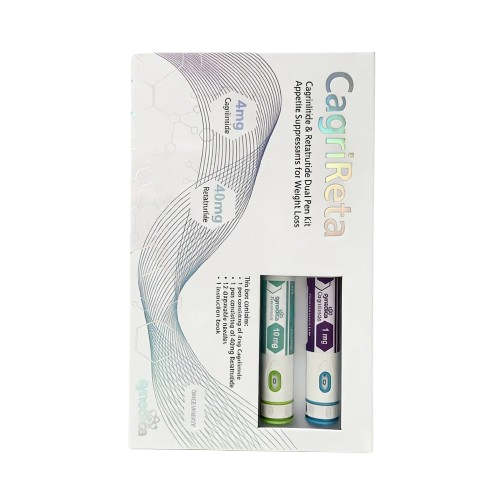
Understanding why CagriReta side effects occur starts with understanding what each component does. CagriReta combines two active compounds that affect digestion through complementary but distinct pathways. Semaglutide activates GLP-1 receptors — slowing gastric emptying and reducing appetite through the brain and digestive system. Cagrilintide activates amylin and calcitonin receptors — further reducing appetite from a separate neurological pathway and slowing gastric transit independently.
The result is that CagriReta side effects represent the combined effect of both pathways acting simultaneously — producing stronger appetite suppression and greater weight loss than either alone, but also a more pronounced initial adjustment period as the digestive system adapts to two separate mechanisms of action. The REDEFINE trial safety team confirmed that the adverse event profile for CagriReta is consistent with what would be expected from the individual components — no new or unexpected safety signals emerged from the combination.
Common CagriReta side effects
The following CagriReta side effects are most frequently reported across the REDEFINE Phase 3 trial programme:
- Nausea — the most common CagriReta side effect. Described as mostly mild to moderate and transient in the REDEFINE safety data. Most pronounced during dose escalation
- Diarrhoea — common during early escalation phases. Typically resolves within days of each new dose level being established
- Vomiting — less common than nausea, usually accompanies peak nausea periods during dose increases
- Constipation — particularly at higher doses. The combined slowing effect of both cagrilintide and semaglutide on gastric emptying can cause constipation more readily than semaglutide alone
- Reduced appetite — the primary intended effect of both components. Most patients welcome this cagrilintide side effect as confirmation the medication is working
- Injection site reactions — mild redness or discomfort at the injection site, minimised by weekly rotation between sites
- Fatigue — particularly common in the first 24 to 48 hours after dose increases
The REDEFINE 1 trial safety data — presented at the American Diabetes Association 85th Scientific Sessions in June 2025 — confirmed that CagriReta side effects were consistent with the known profiles of its individual components. The most common adverse events were gastrointestinal, onset occurred mainly during dose escalation, and nausea was mostly mild to moderate and transient. No new safety signals emerged from the combination.
CagriReta side effects — REDEFINE trial data table
The table below summarises the CagriReta side effect profile from the REDEFINE Phase 3 programme, compared to the individual components and placebo:
| Side effect | CagriReta | Semaglutide alone | Placebo | Severity |
|---|---|---|---|---|
| Nausea | Common | Common (~44%) | Low | Mostly mild–moderate |
| Diarrhoea | Common | Common (~30%) | Low | Usually mild |
| Vomiting | Common | Common (~24%) | Low | Usually mild |
| Constipation | Common | Common (~24%) | Low | Usually mild |
| Reduced appetite | Very common | Very common | Low | Intended effect |
| Injection site reaction | Common | Common | Low | Usually mild |
| Fatigue | Common | Common | Similar | Usually mild |
| Pancreatitis | Rare | Rare | Rare | Serious |
| Gallbladder disease | Uncommon | ~1.6% | Low | Serious if severe |
| Allergic reaction | Very rare | Very rare | Very rare | Serious |
When do CagriReta side effects peak?
The REDEFINE trial confirmed that CagriReta side effects follow a predictable pattern — onset occurs mainly during dose escalation and resolves as each dose level is established. The typical timeline:
- Starting dose phase: the gentlest phase. Both components begin acting at low doses. Mild appetite suppression and minimal digestive effects are typical
- Each escalation step: a brief return of nausea and digestive symptoms is normal with each dose increase. Typically lasts 3 to 7 days before resolving as the body adapts to the new level
- 2.4mg maintenance phase (week 13+): most patients find CagriReta side effects have significantly reduced. The appetite suppression remains as the beneficial intended effect, but nausea and digestive discomfort typically resolve within 2 to 4 weeks of reaching maintenance dose
“The first four weeks were surprisingly comfortable. The nausea came more at the 1mg escalation than at the start. By maintenance dose, I was barely noticing any effects except the reduced hunger — which was exactly what I wanted.”
— Mymetabolism customer, CagriReta, Leeds, March 20267 proven tips to manage CagriReta side effects
These seven strategies address the specific side effect profile of CagriReta and reflect the dual-component nature of the medication.
Both cagrilintide and semaglutide are better tolerated when injected after a small, low-fat meal. Injecting on an empty stomach amplifies the gastric effects of both components simultaneously — making CagriReta side effects more intense than they need to be.
CagriReta slows gastric emptying through two separate mechanisms. Large meals overwhelm this doubled slowing effect. Aim for 4 to 5 smaller meals throughout the day to minimise bloating and nausea as cagrilintide side effects.
The dual gastric slowing mechanism of CagriReta makes constipation more likely than with semaglutide alone. Address it before it becomes uncomfortable — increase dietary fibre, drink more water, and maintain daily gentle movement. Speak to a pharmacist if persistent.
Dehydration worsens every CagriReta side effect. Aim for at least 2 to 2.5 litres of water daily throughout treatment. On injection day and the day after, increase to 3 litres. Do not rely on thirst — the appetite suppression often suppresses thirst signals too.
Injecting in the evening allows the peak CagriReta side effect window of 24 to 48 hours to occur largely during sleep. This is one of the most practical management strategies for managing nausea from both cagrilintide and semaglutide simultaneously.
High-fat meals are the most common dietary trigger for nausea with dual-mechanism medications. On the day of your injection and the day after, eat plain, low-fat, easily digestible foods. Save richer meals for days 3 to 7 of your weekly cycle when tolerance is highest.
If CagriReta side effects feel difficult to manage, contact our 24/7 support team before making any changes to your dose or injection schedule. A slower escalation — staying at each dose for 6 to 8 weeks instead of 4 — is clinically supported and prevents most discontinuation.
Serious CagriReta side effects to watch for
As CagriReta contains semaglutide, it carries the same serious side effect warnings as other semaglutide-containing medications. Stop immediately and seek medical attention for:
- Pancreatitis — severe upper abdominal pain radiating to the back, with or without vomiting. Stop CagriReta and seek emergency care immediately
- Gallbladder disease — severe pain under the right ribcage. Rapid weight loss increases gallstone risk. Seek prompt medical attention
- Severe dehydration — if vomiting or diarrhoea prevents keeping fluids down for more than 24 hours, seek medical attention to prevent kidney injury
- Thyroid symptoms — neck lump, hoarseness, or difficulty swallowing. CagriReta carries a thyroid C-cell tumour warning via the semaglutide component. Report immediately to a doctor
- Severe allergic reaction — facial swelling, difficulty breathing, or rapid heartbeat. Stop CagriReta and seek emergency care
You experience severe upper abdominal pain, cannot keep fluids down for more than 24 hours, develop signs of allergic reaction, or notice a neck lump. These serious CagriReta side effects require immediate medical attention. Our 24/7 support team can help assess severity and advise on next steps before or after contacting a healthcare provider.
Do CagriReta side effects improve over time?
Yes — the REDEFINE trial safety data confirms that CagriReta side effects are primarily transient and occur mainly during dose escalation. Once the 2.4mg maintenance dose is established, the vast majority of patients in the REDEFINE trials found their gastrointestinal symptoms had resolved or become minimal. The appetite suppression remains throughout — which is the intended therapeutic effect, not a side effect.
CagriReta is associated with a discontinuation rate that is clinically comparable to other dual-mechanism medications — significantly lower than retatrutide at the highest doses. Most patients who follow the escalation protocol carefully and apply the management strategies above complete treatment successfully and achieve the 20.4% average weight loss shown in clinical trials.
Read our verified customer reviews to see real CagriReta experiences. Browse our full product range for CagriReta alongside all other available GLP-1 medications including our GLP-1 medications UK comparison guide.
Common questions about CagriReta side effects
Buy CagriReta from Mymetabolism with full support
HPLC-verified at 99% purity, COA on every batch, free UK shipping. 24/7 support team to guide you through every stage including managing cagrilintide side effects.
Buy CagriReta now →