
Can you travel with retatrutide? — 7 essential tips.
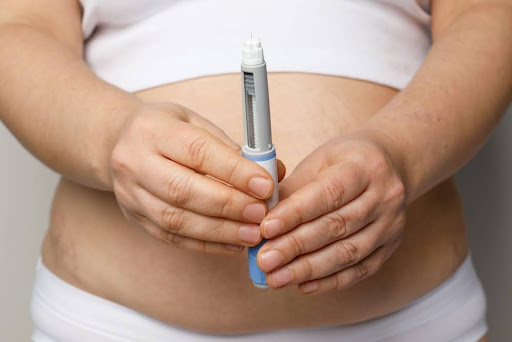
Can you travel with retatrutide is a practical question worth answering properly before any trip, whether that’s a weekend away or a longer holiday abroad. The good news is that travelling with an injectable research product is very manageable once you understand the actual UK rules involved.
This guide covers UK airport security requirements from the Civil Aviation Authority (CAA), the storage temperatures that matter, and the practical steps that keep your supply safe and effective throughout a trip. This is educational content — retatrutide remains an unapproved research compound, and nothing here constitutes medical advice. Full official guidance is available directly from the UK Civil Aviation Authority (CAA).
Explore our retatrutide range with transparent sourcing and quality documentation.
Explore Retatrutide →Can you travel with retatrutide — tip 1: the UK liquid exemption
Standard UK airport security rules limit liquids, gels, and aerosols in hand luggage to 100ml per container. However, the CAA operates a medical exemption: liquid or gel medicines needed for your trip are permitted above this limit, provided you can support this at the security point.
This exemption is well established and applies specifically to genuine medical necessity, which is why answering “can you travel with retatrutide” starts with understanding that injectable liquid products in general are not automatically barred just because they exceed the standard 100ml container size — the exemption exists precisely for this kind of item.
Can you travel with retatrutide — tip 2: airport-specific variation
An important 2026-specific detail: UK airport liquid rules are not fully uniform right now. Airports including Heathrow, Gatwick, Edinburgh, Birmingham, and London City have rolled out CT scanners that allow containers up to 2 litres to remain in your bag without the traditional clear plastic bag requirement. Manchester, Stansted, Luton, Glasgow, and Liverpool, among others, still enforce the older 100ml system as of mid-2026.
For most retatrutide travellers this distinction matters less in practice, since individual injection pens and vials are typically well under 100ml regardless — but it becomes more relevant if you are carrying a larger supply for an extended trip, or connecting through multiple airports with different rules on the same journey.
| Airport type | 2026 liquid rule |
|---|---|
| CT scanner airports (Heathrow, Gatwick, Edinburgh, Birmingham, London City) | Up to 2 litres, no bag required |
| Traditional airports (Manchester, Stansted, Luton, Glasgow, Liverpool) | 100ml per container, clear resealable bag |
| Medical exemption (all UK airports) | Above standard limit permitted with documentation |
Can you travel with retatrutide — tip 3: carry documentation
Because retatrutide is not a licensed medicine, you will not have an NHS or private prescription for it in the way you would for an approved medication like Mounjaro. The practical equivalent is clear supplier documentation — a label or letter confirming exactly what the product is, its quantity, and that it is a research compound.
Carrying any batch-specific Certificate of Analysis (COA) alongside this documentation is genuinely useful here too, beyond its normal quality-verification purpose — it gives security staff a clear, professional-looking explanation of what they are looking at, which tends to reduce friction and speed up screening considerably.
Across UK airport guidance, the consistent advice is to declare any medical liquid or injectable item to security staff at the very start of screening, rather than waiting for it to be flagged. This alone is one of the biggest factors in how smoothly the process goes.
Can you travel with retatrutide — tip 4: hand luggage only
This is a firm, non-negotiable rule across every injectable peptide and GLP-1 class product: always carry it in your hand luggage, never in hold baggage. Aircraft cargo holds are not temperature-controlled the way the cabin is, and can reach freezing temperatures at cruising altitude.
A retatrutide vial frozen in an aircraft hold is permanently damaged — freezing disrupts the peptide structure in a way that cannot be reversed by simply thawing it back out. Beyond the temperature risk, hold baggage can also be lost, delayed, or misdirected, leaving you without your supply entirely at your destination.
Can you travel with retatrutide — tip 5: temperature windows
There is no manufacturer-published storage guidance for retatrutide specifically, since it has no approved status. What follows is based on the storage requirements of mechanistically similar, already-approved GLP-1 products, offered as a cautious reference point rather than confirmed retatrutide-specific data.
Unopened vials are typically stored refrigerated between 2°C and 8°C. Once reconstituted or in active use, approved comparator products vary in how long they tolerate room temperature — tirzepatide-based products (Mounjaro), the closest mechanistic comparator to retatrutide given the shared GIP receptor activity, tolerate approximately 21 days below 30°C once in use.
| Product (for reference) | Room-temperature window once in use |
|---|---|
| Tirzepatide-based (Mounjaro) — closest mechanistic comparator | ~21 days, below 30°C |
| Semaglutide-based (Ozempic) | ~56 days, below 30°C |
| Semaglutide-based (Wegovy) | ~28 days, below 30°C |
| Retatrutide | No published data — treat conservatively as the shortest comparator window |
A quality insulated medication case or evaporative cooling wallet, kept out of direct sunlight and away from vehicle glove boxes or parked cars, is the simplest way to stay well within a safe temperature range for the duration of most trips.
Can you travel with retatrutide — tip 6: sharps disposal
Used needles and syringes must always be carried in a proper, sealed sharps container — never loose in a bag, wrapped in tissue, or placed in general waste, including hotel room bins. This is both a safety and, in many places, a legal requirement.
A small, travel-sized, puncture-resistant sharps container fits easily in most luggage and solves this cleanly. Many UK and international pharmacies accept sharps for disposal, and it is worth checking in advance for longer trips whether your destination has accessible disposal points, rather than trying to figure this out mid-trip.
Can you travel with retatrutide — tip 7: time zone adjustments
For weekly-schedule injectable products in this general class, a degree of timing flexibility around a scheduled dose — commonly cited as up to roughly 48 hours either side — is generally considered acceptable without meaningful disruption, based on how these products are typically used.
This means a short-haul European trip rarely requires any real adjustment, while a longer-haul trip crossing several time zones is worth planning for by either maintaining your home schedule for the trip’s duration, or shifting gradually — a conversation worth having with whoever oversees your research use rather than guessing at the airport.
It is also worth thinking beyond just departure — the return journey deserves the same level of planning. If you are travelling from a UK airport still using the traditional 100ml system but returning through one with the newer CT scanners, or vice versa, the stricter rule of the two effectively governs your overall approach. Packing and documenting your retatrutide as though the more restrictive airport applies throughout the entire trip avoids any awkward surprises on the way home, when you are likely tired and less inclined to deal with an unexpected security question.
Can you travel with retatrutide comes down to the same fundamentals as any temperature-sensitive injectable product — hand luggage only, proper documentation, sensible temperature management, and a little planning. None of it is complicated once you know the actual rules rather than assuming.
Our practical guidanceFor more on retatrutide’s current status, read our guide on retatrutide’s regulatory status and the quality checks that matter most when sourcing it. Explore our Synedica Retatrutide and VLS Retatrutide product pages, or read patient reviews.
This article is for informational and research purposes only and does not constitute medical or legal travel advice. Retatrutide is not currently approved as a medicine and has no manufacturer-published storage or travel guidance; temperature information here is extrapolated from mechanistically similar approved products for general reference only. UK airport security rules can change and vary by airport — always confirm current requirements directly with your specific departure airport and the CAA before travelling.
Common questions — can you travel with retatrutide
Explore verified retatrutide sourcing.
Transparent sourcing, quality documentation and 24/7 support for your research journey.
Explore Retatrutide →