
GLP-1 nausea — 9 powerful ways to manage it that actually work.
GLP-1 nausea is the single most common side effect reported by patients starting semaglutide, tirzepatide, retatrutide, and other GLP-1 receptor agonists — and it is also the number one reason people consider stopping treatment before it has had time to deliver results. The good news is that GLP-1 nausea is almost always temporary, almost always manageable, and there are specific, evidence-based strategies that dramatically reduce its severity without compromising weight loss outcomes.
This guide covers everything UK patients need to know about GLP-1 nausea: why it happens, how long it typically lasts, and nine practical strategies that clinical experience and patient reports consistently show to be the most effective. The advice here is consistent with general NHS guidance on managing nausea and current prescribing best practice for GLP-1 receptor agonists.
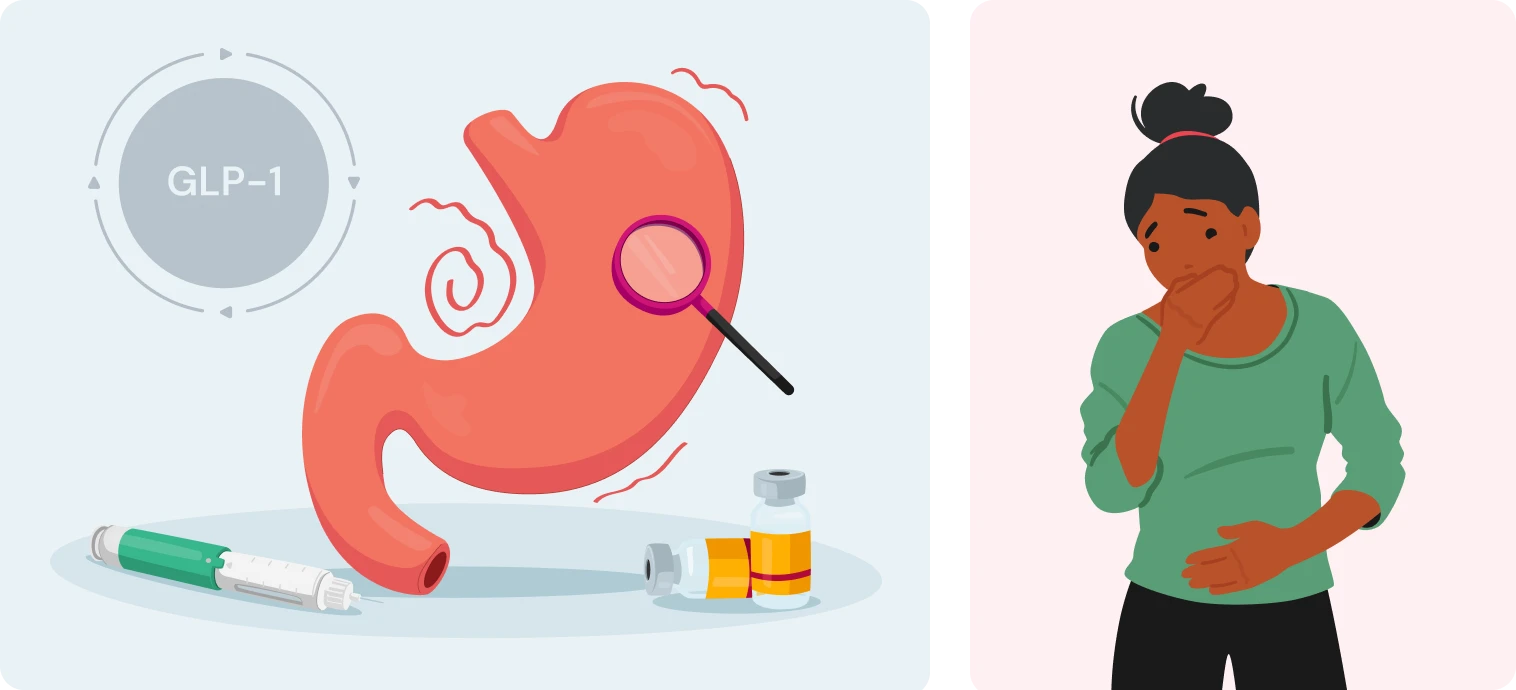
GLP-1 nausea — why it happens
GLP-1 nausea is not a sign that something is going wrong — it is a predictable consequence of how these medications work. GLP-1 receptor agonists cause nausea through two primary mechanisms. First, they significantly slow gastric emptying, which means food remains in the stomach for much longer than usual. This creates a persistent feeling of fullness that can easily tip into nausea, particularly after eating. Second, GLP-1 receptors exist in the brainstem’s area postrema — the region responsible for triggering the nausea response — and the medication directly activates these receptors.
Understanding that GLP-1 nausea is caused by the same mechanisms that suppress appetite and drive weight loss is important. It means the nausea is, in a sense, evidence that the drug is working. It also means that strategies to manage GLP-1 nausea focus on reducing its intensity rather than blocking the drug’s effects entirely.
GLP-1 nausea is dose-dependent and adaptation-dependent. It is almost always worst at the beginning of treatment and after each dose increase, because the body has not yet adjusted to the new level of receptor activation. This is why gradual dose escalation — starting low and increasing slowly — is the standard prescribing protocol. Rushing dose increases is the single most common cause of severe GLP-1 nausea.
GLP-1 nausea — how long does it last?
For the majority of patients, GLP-1 nausea follows a predictable pattern. It appears or intensifies within the first few days of starting treatment or increasing the dose, peaks during the first one to two weeks at that dose level, and then gradually improves as the body adapts. Most patients report that GLP-1 nausea is significantly reduced or absent by weeks four to six at a stable dose.
| Phase | Typical timeline | GLP-1 nausea severity |
|---|---|---|
| Starting dose | Week 1–2 | Mild to moderate — most common onset |
| First dose increase | Week 4–6 | Moderate — may briefly feel like restarting |
| Stabilisation | Week 6–10 | Reducing — body adapting to dose level |
| Maintenance dose | Week 10+ | Minimal or absent for most patients |
| Late dose escalation | Variable | Brief return — usually milder than initial onset |
It is important to note that a small minority of patients experience persistent GLP-1 nausea that does not fully resolve with time. For these patients, the strategies below can still reduce severity significantly, and dose adjustment or medication switching may be appropriate options to discuss with a prescriber.
GLP-1 nausea — 9 strategies that actually work
1. Eat smaller meals more frequently
This is the single most effective strategy for managing GLP-1 nausea. Because GLP-1 medications slow gastric emptying, large meals sit in the stomach for extended periods and overwhelm a system that is already working at reduced speed. Switching from three standard meals to five or six very small portions spread across the day dramatically reduces the stomach load at any given time and consistently reduces GLP-1 nausea severity.
2. Avoid high-fat and greasy foods
Fat slows gastric emptying independently of GLP-1 medication. When you combine a drug that already delays stomach emptying with foods that further slow the process, the result is a compounding effect that intensifies GLP-1 nausea significantly. During the dose escalation phase, sticking to lean proteins, simple carbohydrates, and low-fat preparations makes a measurable difference to how you feel after eating.
3. Do not lie down immediately after eating
Lying flat after a meal slows gastric motility further and increases the likelihood of acid reflux, both of which worsen GLP-1 nausea. Staying upright — sitting or gently walking — for at least 30 minutes after eating allows gravity to assist the already-slowed digestive process. Many patients find that a short, gentle walk after meals is one of the most immediately effective ways to reduce GLP-1 nausea.
4. Use ginger — it genuinely helps
Ginger has robust clinical evidence as an antiemetic, supported by multiple randomised controlled trials across different nausea contexts including chemotherapy, pregnancy, and post-operative settings. For GLP-1 nausea specifically, many patients report meaningful relief from ginger tea, ginger chews, crystallised ginger, or ginger capsules. It is inexpensive, widely available, and has no significant drug interactions with GLP-1 medications.
Keep a packet of ginger chews or crystallised ginger in your bag, desk, and bedside table. GLP-1 nausea can strike unpredictably, and having ginger immediately accessible means you can address it within seconds rather than waiting until you get home to make ginger tea.
5. Stay well hydrated — but sip, do not gulp
Dehydration worsens nausea across every clinical context, and GLP-1 nausea is no exception. However, drinking large volumes of water quickly can distend the stomach and trigger or worsen GLP-1 nausea. The most effective approach is frequent small sips throughout the day rather than drinking large glasses at intervals. Many patients find that adding a small amount of lemon or lime to water makes it easier to tolerate during nauseous periods.
6. Time your injection strategically
GLP-1 nausea tends to peak in the 24 to 48 hours following injection. Timing your weekly injection so that this peak falls on days when you have fewer commitments — such as Friday evening if your weekends are more flexible — allows you to manage the worst of the GLP-1 nausea without it disrupting work or social obligations. Some patients also report that injecting before bed rather than in the morning helps them sleep through the initial onset.
7. Follow the prescribed dose escalation — do not rush
The dose escalation schedule exists specifically to minimise GLP-1 nausea. Each step up gives your body time to adapt to the current level of GLP-1 receptor activation before increasing it further. Patients who skip dose levels or escalate faster than recommended consistently experience more severe and longer-lasting GLP-1 nausea. If you are tolerating a dose well and are eager to increase, still follow the recommended timeline — your body is adapting in ways that are not always obvious from how you feel.
8. Consider anti-nausea medication during escalation
There is no need to suffer through severe GLP-1 nausea when effective anti-nausea medications exist. Many prescribers proactively offer antiemetics during the dose escalation phase. Over-the-counter options may also provide relief for milder cases. Discuss this with your prescriber — using anti-nausea medication during dose increases does not reduce the weight loss efficacy of the GLP-1 treatment.
9. Eat bland, cold, or room-temperature foods
Strong food smells and very hot foods are common GLP-1 nausea triggers. During periods of active nausea, switching to bland, cold, or room-temperature foods — plain crackers, cold chicken, chilled yoghurt, rice, bananas, toast — can make the difference between being able to eat and not being able to eat at all. The BRAT diet principles (bananas, rice, applesauce, toast) that are used for general nausea management work well for GLP-1 nausea too.
GLP-1 nausea — best and worst foods
| Helps reduce GLP-1 nausea | Tends to worsen GLP-1 nausea |
|---|---|
| Plain rice or rice cakes | Fried foods and takeaways |
| Bananas | Rich, creamy sauces |
| Plain toast or crackers | Full English breakfast |
| Chilled Greek yoghurt | Very spicy food |
| Boiled or baked potatoes | Large portions of red meat |
| Ginger tea or ginger chews | Strong coffee on an empty stomach |
| Cold chicken or turkey slices | Carbonated sugary drinks |
| Applesauce or stewed apple | Very hot soups (smell triggers) |
GLP-1 nausea — when to contact your prescriber
While GLP-1 nausea is expected and usually manageable, there are situations where it requires medical attention. Contact your prescriber if you experience any of the following:
- Vomiting that prevents you from keeping any food or fluid down for more than 24 hours — dehydration is a serious risk
- Severe abdominal pain alongside nausea — this may indicate pancreatitis, a rare but serious complication that requires immediate assessment
- GLP-1 nausea that does not improve at all after four to six weeks at a stable dose — this may warrant a dose reduction or medication review
- Weight loss that is too rapid (more than 1 kg per week consistently) alongside persistent nausea — this suggests the dose may be too high
- Signs of dehydration — dark urine, dizziness, dry mouth, headache — especially if you are unable to maintain adequate fluid intake
Never stop your GLP-1 medication abruptly without consulting your prescriber. Sudden discontinuation can cause rebound appetite, blood sugar instability, and other effects. If GLP-1 nausea is severe enough that you are considering stopping, your prescriber can adjust the dose, slow the escalation, or switch you to an alternative medication rather than stopping entirely.
GLP-1 nausea is almost always a temporary phase, not a permanent feature of treatment. The patients who manage it best are the ones who plan for it, use these strategies proactively, and communicate with their prescriber rather than suffering in silence.
Clinical best practiceCommon questions — GLP-1 nausea
Start your weight management journey with Mymetabolism.
HPLC-verified at 99% purity, COA on every batch, free UK shipping. 24/7 support for every question throughout your treatment — including side effect management.
Browse products →