
Mounjaro vs Ozempic — 7 critical differences in 2026.
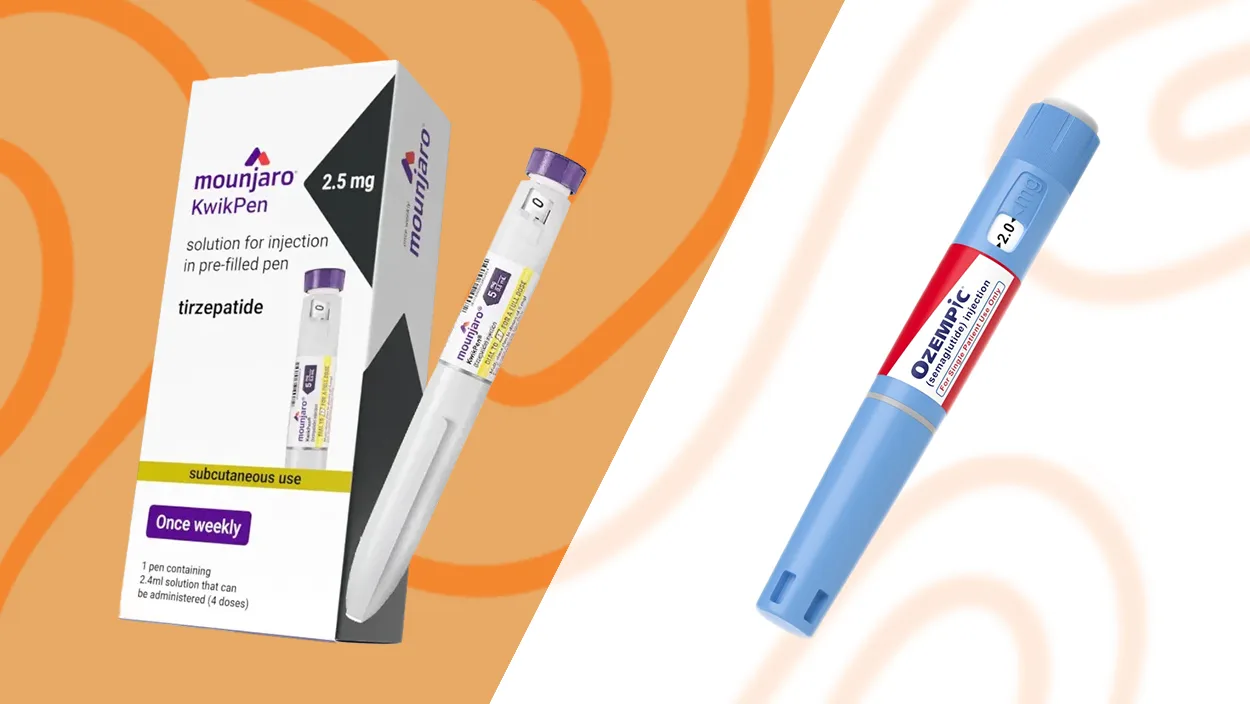
Mounjaro vs Ozempic is one of the most searched comparisons in weight management. Both are weekly injections, both work on appetite and blood sugar, and both have changed how people approach weight loss.
But they’re not the same medicine, and in the UK they’re licensed for different things. This updated 2026 guide compares Mounjaro vs Ozempic on how they work, results, licensing, doses, side effects and cost.
Mymetabolism stocks GLP-1 and research peptide products with a batch-specific certificate of analysis, free UK shipping and 24/7 support. Explore the Mymetabolism shop →
How they work
Mounjaro contains tirzepatide, made by Eli Lilly. It acts on two gut hormone receptors, GIP and GLP-1, which together reduce appetite, slow stomach emptying and improve blood sugar control.
Ozempic contains semaglutide, made by Novo Nordisk. It acts on the GLP-1 receptor only.
That dual action is the biggest scientific difference in Mounjaro vs Ozempic, and it’s thought to explain why tirzepatide often produces more weight loss.
Mounjaro vs Ozempic: 7 critical differences
These are the seven differences that matter most when comparing Mounjaro vs Ozempic, starting with what’s inside the pen.
1. Active ingredient
Mounjaro is tirzepatide; Ozempic is semaglutide. They’re different molecules from different manufacturers.
2. How many hormones they target
Mounjaro targets GIP and GLP-1, while Ozempic targets GLP-1 only. Newer drugs like retatrutide go further still, as our guide to retatrutide vs tirzepatide explains.
3. UK licensing
In the UK, licensing is a key Mounjaro vs Ozempic difference. Mounjaro is licensed for both type 2 diabetes and weight management. Ozempic is licensed for type 2 diabetes only; semaglutide for weight loss is sold as Wegovy.
4. Weight loss
In head-to-head research, tirzepatide led to more average weight loss than semaglutide. That’s the result most people care about in the Mounjaro vs Ozempic debate.
5. Doses
Mounjaro starts at 2.5mg and rises in 2.5mg steps up to 15mg. Ozempic starts at 0.25mg and rises to a maximum of 2mg.
6. Pen type
Both come as weekly pre-filled pens. Our guides on how to inject Mounjaro and how to inject Ozempic walk through each one.
7. NHS access
NICE recommends tirzepatide for weight management in certain adults, with a phased NHS rollout. Ozempic isn’t used on the NHS for weight loss alone.
Mounjaro and Ozempic are prescription-only medicines. Only use them under the care of a qualified prescriber, and never switch, combine or change doses without medical advice.
Weight loss results
The clearest Mounjaro vs Ozempic evidence comes from SURMOUNT-5, a head-to-head trial in adults with obesity. Over 72 weeks, people on tirzepatide lost about 20% of their body weight on average, compared with about 14% on semaglutide at weight-loss doses.
In type 2 diabetes, the SURPASS-2 trial compared tirzepatide with semaglutide 1mg, the Ozempic dose. Tirzepatide again led to greater reductions in both blood sugar and weight.
In Mounjaro vs Ozempic results, individual responses vary widely. Our guides to Mounjaro week by week and Mounjaro month by month show what progress typically looks like.
| Feature | Mounjaro | Ozempic |
|---|---|---|
| Active ingredient | Tirzepatide | Semaglutide |
| Hormones targeted | GIP and GLP-1 | GLP-1 |
| UK licence | Type 2 diabetes and weight management | Type 2 diabetes |
| Dose range | 2.5mg to 15mg weekly | 0.25mg to 2mg weekly |
| Head-to-head weight loss | About 20% (SURMOUNT-5) | About 14% (semaglutide) |
For type 2 diabetes
Both medicines are licensed for type 2 diabetes, so this is where Mounjaro vs Ozempic is a true like-for-like choice. Both lower HbA1c, reduce appetite and support weight loss.
In the SURPASS-2 trial, tirzepatide lowered HbA1c and weight more than semaglutide 1mg. That has made Mounjaro a popular option when weight loss is also a goal.
Ozempic has a longer track record and established heart outcome data in type 2 diabetes. Your prescriber will weigh these factors when choosing between Mounjaro vs Ozempic. Our guide to Mounjaro for type 2 diabetes covers more.
Where Wegovy fits in
Many people comparing Mounjaro vs Ozempic really want to compare weight-loss treatments. In the UK, that means Mounjaro and Wegovy, as Wegovy is semaglutide licensed for weight management.
Wegovy uses higher semaglutide doses than Ozempic, up to 2.4mg weekly, with a 7.2mg option now available. Our Ozempic vs Wegovy guide explains the difference.
For readers in Ireland, our Mounjaro vs Ozempic vs Wegovy Ireland guide covers local prices and access.
Dose schedules
In the Mounjaro vs Ozempic dosing comparison, Mounjaro starts at 2.5mg weekly for four weeks, then increases by 2.5mg every four weeks as needed, up to 15mg. Maintenance doses are usually 5mg, 10mg or 15mg.
Ozempic starts at 0.25mg weekly for four weeks, then 0.5mg, with further increases to 1mg and 2mg if needed for blood sugar control.
If you’re wondering how quickly each one acts, our guide to how long Mounjaro takes to work covers the typical timeline.
Side effects
Side effects are similar in the Mounjaro vs Ozempic comparison, as both act on GLP-1. The most common are nausea, diarrhoea, vomiting, constipation and reduced appetite, usually during dose increases.
Rare but serious side effects include pancreatitis and gallbladder problems. Seek medical help straight away for severe, persistent stomach pain.
See our detailed guides to Mounjaro side effects and Ozempic side effects for more.
Mounjaro vs Ozempic isn’t really a like-for-like choice in the UK. One is licensed for weight loss, the other for diabetes.
Mymetabolism TeamSwitching between them
People switch for many reasons, and the Mounjaro vs Ozempic decision isn’t always final: side effects, results, cost or availability can all play a part. Switching between Mounjaro vs Ozempic, in either direction, should always be done with your prescriber.
Because the medicines are dosed differently, there’s no simple equivalent dose. Your prescriber will usually restart at a lower dose and step up again to limit side effects.
Keep a note of your weight, appetite and side effects before and after any change. It helps you and your prescriber judge whether the switch is working.
Who shouldn’t use either
Neither medicine is suitable for everyone. They’re generally not recommended during pregnancy or breastfeeding, or for people with a personal or family history of medullary thyroid cancer or MEN2.
People with a history of pancreatitis, severe stomach problems or certain other conditions need careful assessment. Always share your full medical history before starting either treatment.
Cost and access
On the NHS, NICE guidance on tirzepatide sets out who can be offered Mounjaro for weight management, with access being phased in. Most people currently pay privately.
Private prices for Mounjaro vs Ozempic change regularly. Our guides to Mounjaro cost in the UK and the cheapest way to buy Mounjaro in the UK cover current options.
Ozempic is prescribed for type 2 diabetes. If you’re comparing weight-loss options, our Wegovy vs Mounjaro guide is the more relevant comparison.
Ozempic for weight loss
Some people have used Ozempic off-label for weight loss. During past shortages, UK regulators asked prescribers to prioritise Ozempic for people with type 2 diabetes.
For weight management, licensed options are the safer route. Our guide to Ozempic for weight loss explains the issues in more detail, including why the Mounjaro vs Ozempic question often leads to Wegovy instead.
Which may suit you
For weight management in the UK, the real choice is usually Mounjaro or Wegovy, not Ozempic. Mounjaro tends to produce more weight loss on average, while some people tolerate semaglutide better.
For type 2 diabetes, both Mounjaro and Ozempic are options, and your prescriber will weigh blood sugar targets, weight, side effects and other conditions.
Whichever you’re considering, the decision on Mounjaro vs Ozempic should be made with a qualified prescriber who knows your medical history.
Questions to ask your prescriber
Go into any Mounjaro vs Ozempic conversation prepared. These questions help you get a clear, personal answer:
- Which medicine is licensed for my condition and goals?
- What results are realistic for me, and over what timescale?
- How will my dose be increased, and what if side effects are hard to manage?
- How do my other medicines and conditions affect the choice?
- What happens if I need to stop, and how do I keep the weight off?
Writing your answers down makes it easier to compare Mounjaro vs Ozempic, or Mounjaro vs Wegovy, with confidence.
Getting the most from treatment
Whichever side of Mounjaro vs Ozempic you land on, medication works best alongside diet and activity. Our guides to the best diet on Mounjaro and exercising on Mounjaro help you protect muscle and keep progress steady.
If you’re looking further ahead, our overview of retatrutide in 2026 explains the next generation of weight-loss medicines.
Common questions — Mounjaro vs Ozempic
Explore the Mymetabolism shop.
Batch-specific certificate of analysis, free UK shipping and 24/7 support throughout your treatment.
Explore the Shop →