
Protein on GLP-1 — 7 proven ways to protect your muscle mass.
Protein on GLP-1 medications is the single most important nutritional consideration for anyone on Mounjaro, Ozempic, or Wegovy — and a 2026 analysis found that over 90% of GLP-1 patients are getting it catastrophically wrong. The average GLP-1 patient consumes just 33 grams of protein per day and only 753 calories. That is not weight loss — that is muscle loss, metabolic damage, and a setup for rapid weight regain when treatment ends. The appetite suppression that makes GLP-1 medications so effective also makes it dangerously easy to undereat protein without realising it. This guide exists to fix that.
Protein on GLP-1 medications has its own evidence base, its own targets, and its own practical challenges that do not apply to other forms of weight loss. This guide covers everything: why protein matters so much on GLP-1 treatment, how much you need based on 2026 guidelines, the best sources, and seven proven strategies to hit your targets consistently despite suppressed appetite. Guidance draws on the NHS Eatwell Guide, the 2025 joint consensus from four major US medical societies, and the 2026 American Society for Nutrition guidelines.
Why protein on GLP-1 is critical
GLP-1 medications are the most powerful appetite suppressants ever developed. This is their greatest strength — and their most significant nutritional risk. When total calorie intake drops by 30 to 50%, the proportion of that reduced intake that comes from protein drops alongside it — unless protein is actively prioritised above all other macronutrients at every meal. Most patients do not do this, and the consequences are significant.
Protein on GLP-1 is not just about muscle preservation — it drives better weight loss results directly. A 2025 joint consensus from four major US medical societies confirmed that higher protein intake independently predicts more weight loss on GLP-1 therapy — not just better body composition. Patients eating adequate protein lose more total weight, more of it from fat, and maintain more of their loss when treatment ends. The evidence base for protein on GLP-1 medications in 2026 is unambiguous.
A 2026 analysis found that over 90% of patients on Ozempic, Wegovy, Mounjaro, or Zepbound fail to meet basic protein targets. Average intake: just 753 calories and 33g protein per day. That is not sustainable weight loss — it is a pathway to muscle loss, fatigue, and rapid rebound. If you are on a GLP-1 medication, the most important nutritional change you can make is increasing protein on GLP-1 to an evidence-based target.
The muscle loss problem — the numbers
Clinical trials show patients on GLP-1 medications lose 25 to 40% of their total weight loss as lean mass — muscle, bone density, and other non-fat tissue — rather than fat alone. The ENDO 2025 study found 39 to 47% lean mass loss from semaglutide without intervention. But here is the transformative finding from adequate protein on GLP-1 treatment: it can reduce this dramatically.
A 2025 prospective cohort study of 200 adults combining GLP-1 medications with resistance training and individualised protein intake found participants lost approximately 13% of total body weight but only 3% of muscle mass over six months. A 2025 SAGE Open Medicine case series of three semaglutide and tirzepatide patients doing resistance training 3 to 5 days weekly with protein intake above 0.36g per pound showed lean soft tissue changes of -6.9%, +2.5%, and +5.8% — with two patients actually gaining muscle while losing substantial body weight. The difference between 39% lean mass loss and 3% lean mass loss is protein and resistance training.
How much protein on GLP-1 do you need?
The evidence-based protein targets for protein on GLP-1 treatment are higher than standard weight loss recommendations — because GLP-1 medications produce more rapid weight loss, creating greater lean mass preservation demands:
| Medication | Recommended protein (per kg body weight) | For 80kg patient | Source |
|---|---|---|---|
| Standard (non-GLP-1) weight loss | 1.2–1.6g/kg | 96–128g/day | General guidelines |
| Ozempic / Wegovy (semaglutide) | 1.6–2.0g/kg | 128–160g/day | 2025 joint consensus + 2026 ASN |
| Mounjaro (tirzepatide) | 2.0–2.2g/kg | 160–176g/day | 2026 ASN — higher due to greater weight loss |
| Age 60+ on any GLP-1 | Add 0.4g/kg to above | +32g/day | 2026 ASN — age-adjusted |
Recalculate your protein on GLP-1 target every 15 to 20 pounds of weight lost — as your body weight decreases, the absolute grams needed may need to increase per kg to compensate for the reduced mass. This is one of the most commonly missed adjustments in GLP-1 protein management.
Best protein sources on GLP-1 medications
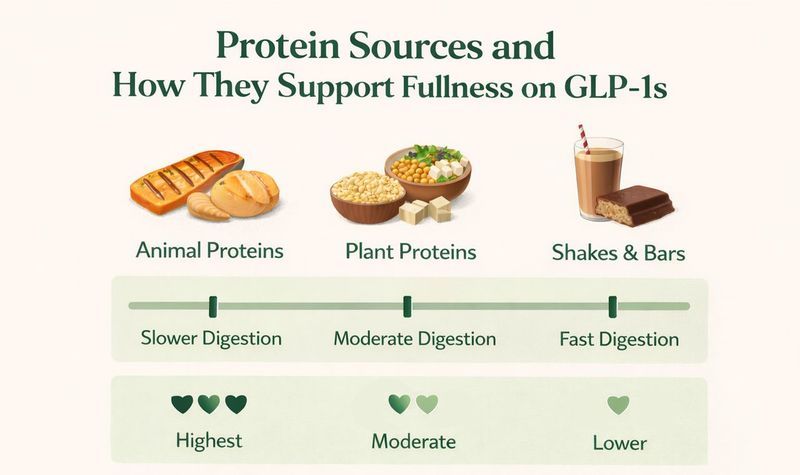
When appetite is suppressed, the most important characteristic of a protein source is density — the amount of protein delivered per gram or per volume of food. A 2026 study found higher proportions of lean animal protein (fish, poultry, eggs) and plant protein (legumes, tofu) were associated with better weight loss outcomes than processed meat sources, likely due to sodium and additives in deli meats and processed foods. These are the best protein sources for GLP-1 patients ranked by density and digestibility:
- Greek yoghurt (full fat, 200g): 20g protein — excellent for breakfast, small volume, highly bioavailable
- Cottage cheese (200g): 24g protein — very high density, mild flavour, excellent mixed into meals
- Eggs (2 large): 12g protein — complete amino acid profile, easy to prepare, digest well on GLP-1
- Chicken breast (150g cooked): 45g protein — the highest density whole food option, lean and versatile
- White fish (150g cooked): 30g protein — light, easy to digest, low fat
- Salmon (150g): 30g protein plus omega-3 — anti-inflammatory benefit alongside protein
- Tuna (1 tin, 120g): 28g protein — convenient, no preparation, portable
- Tofu (150g firm): 18g protein — excellent plant option, takes on flavours well
- Edamame (150g): 18g protein — plant-based complete protein, easy snack
- Protein shake (30g serving): 24–28g protein — essential top-up when appetite prevents adequate whole food intake
7 proven strategies to hit your protein on GLP-1 target
Appetite suppression on GLP-1 medications means fullness arrives quickly and unpredictably. If you eat carbohydrates or vegetables first, you risk reaching fullness before the protein is consumed. Protein first — always — ensures the most important macronutrient is prioritised before the appetite signal cuts off the meal.
Most GLP-1 patients have no idea how little protein they are eating. The 2026 finding of 33g average daily intake versus a 130g+ target represents a 4-fold shortfall. Use a free app (MyFitnessPal, Cronometer) to track protein only — not calories — for the first 8 weeks. This single intervention consistently reveals the gap and motivates correction.
On injection day and the day after, when appetite is most suppressed, whole food protein targets can feel impossible. A 25 to 30g protein shake between meals adds essential protein without significant volume or nausea risk. Choose a high-quality whey or plant protein with minimal additives. This is not a replacement for whole food protein — it is a supplement for the days whole food feels impossible.
Research confirms that 25 to 40g of protein per eating occasion maximally stimulates muscle protein synthesis — the biological signal that tells muscle cells to maintain rather than break down. Spreading intake across 3 to 4 meals is more effective than two large meals. For a 160g daily target, this means four 40g protein meals.
Volume is the enemy of protein intake on GLP-1 medications. A large salad with 10g of protein fills the stomach quickly and leaves nothing for protein. Choose concentrated protein formats — Greek yoghurt, cottage cheese, tuna, chicken, eggs — that deliver 20 to 30g of protein in 150 to 200g of food. Protein density per gram of food eaten is the key metric.
Protein on GLP-1 medications works most powerfully when combined with resistance training. The 2025 cohort study showing only 3% muscle loss — versus 25 to 40% without intervention — achieved this through both adequate protein AND resistance exercise. Two to three sessions per week of 30 to 40 minutes targeting major muscle groups is the minimum effective dose. See our Exercising on Ozempic guide for the full approach.
Protein targets are calculated per kg of body weight — which changes as you lose weight on GLP-1 treatment. Recalculate every 15 to 20 pounds of weight lost. A patient starting at 100kg on Mounjaro might need 200g of protein daily; after losing 25kg to reach 75kg, the target is 150 to 165g. Staying on the original target as weight drops means progressively under-eating protein relative to the correct guideline.
How to distribute protein across meals on GLP-1
A practical daily framework for hitting protein on GLP-1 targets — for a patient needing 140g daily:
- Breakfast: Greek yoghurt (200g) + 2 eggs = ~32g protein
- Mid-morning: cottage cheese (150g) + cucumber = ~18g protein
- Lunch: 150g chicken breast + salad + olive oil = ~47g protein
- Afternoon: protein shake (25g serving) = ~25g protein
- Dinner: 150g salmon + steamed broccoli + sweet potato = ~32g protein
- Total: ~154g protein ✅
Protein shakes on GLP-1 medications
Protein shakes are one of the most practical tools for hitting protein on GLP-1 targets — particularly in the early treatment phase when appetite is most severely suppressed. Key principles for using shakes effectively: choose whey protein isolate or a high-quality plant blend with at least 20g protein per serving and minimal sugar; avoid meal replacement shakes which are too large in volume; use shakes to supplement — not replace — whole food protein; and do not use shakes on days when whole food is manageable — the satiety benefit of solid protein is higher than liquid protein.
Browse our full product range and read our verified customer reviews. For complete nutrition guides see our Best Diet on Mounjaro, Best Diet on Ozempic, and Best Diet on Wegovy guides.
Common questions — protein on GLP-1 medications
Maximise your GLP-1 results with the right nutrition.
HPLC-verified at 99% purity, COA on every batch, free UK shipping. 24/7 nutrition and treatment support throughout your GLP-1 journey.
Shop all products →