
Retatrutide and gallbladder problems — 7 critical facts.
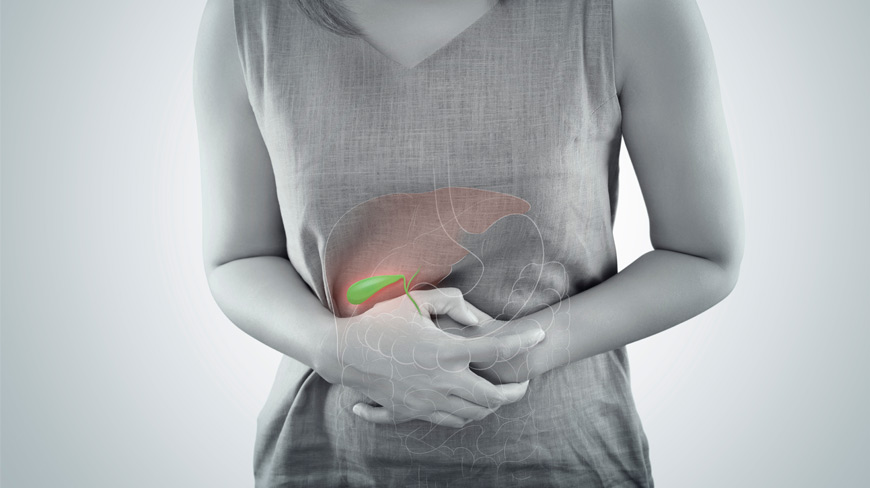
Retatrutide and gallbladder risk is a clinically important topic that deserves honest, evidence-based coverage — not alarm, but not dismissal either. Gallbladder problems are a known consideration across the entire GLP-1 class, and retatrutide’s particularly aggressive weight loss means the risk deserves specific attention. The good news: the absolute risk is manageable, the warning signs are recognisable, and there is real preventive evidence available.
This guide covers everything you need to know about retatrutide and gallbladder health: how common gallbladder events are, why rapid weight loss drives most of the risk, the specific symptoms to watch for, who is most at risk, and what the bariatric surgery evidence tells us about prevention. For broader side effect information, read our retatrutide side effects guide. General information is available through the Guts UK charity.
Synedica Retatrutide — £190 for 40mg, COA included with every order.
Explore Synedica →Retatrutide and Gallbladder — fact 1: how common are problems
Across the GLP-1 class, gallbladder-related events occur in approximately 2-7% of users compared to 0.3-0.8% on placebo — a meaningful elevation above background rate, though still a relatively low absolute risk for the individual patient. The STEP trials for semaglutide 2.4mg specifically reported gallbladder disorders in 1.6-2.6% of participants receiving medication versus 0.7-1.2% receiving placebo.
For retatrutide and gallbladder risk specifically, Phase 3 trial data is still accumulating. However, given that retatrutide produces substantially more rapid and extensive weight loss than either semaglutide or tirzepatide — and given that the weight of evidence across the class consistently identifies rapid weight loss as the primary driver of gallbladder events — retatrutide’s gallbladder risk is conservatively expected to sit at the higher end of the 2-7% class range rather than the lower end.
| GLP-1 drug | Gallbladder events | Placebo rate |
|---|---|---|
| Semaglutide 2.4mg (STEP) | 1.6–2.6% | 0.7–1.2% |
| GLP-1 class range (2026 data) | 2–7% | 0.3–0.8% |
| Retatrutide (Phase 3 specific data) | Not yet separately published | — |
Retatrutide and Gallbladder — fact 2: why it happens
The retatrutide and gallbladder connection has two overlapping mechanisms, both of which are well understood from clinical research. The first and primary mechanism is rapid weight loss itself — a gallstone risk factor that predates GLP-1 medications by decades and is well established from bariatric surgery research.
When significant weight loss occurs rapidly, the liver releases more cholesterol into bile as fat is mobilised from adipose tissue. This increased bile cholesterol concentration, combined with reduced gallbladder motility during caloric restriction, creates the conditions for cholesterol crystals to precipitate and eventually form gallstones. Losing 15-20% or more of body weight rapidly — as retatrutide produces — significantly increases the likelihood of bile thickening, gallbladder sludge, and stone formation.
The second mechanism is specific to the GLP-1 class: GLP-1 receptor activation reduces cholecystokinin release. Cholecystokinin is the hormone that triggers gallbladder contraction to release bile after meals. When this signal is suppressed by GLP-1 receptor activation, the gallbladder empties less completely and less frequently — allowing bile to pool, concentrate, and thicken between meals. A published review in JAMA Internal Medicine identified this dual mechanism as explaining the retatrutide and gallbladder risk pattern across the class.
Retatrutide and Gallbladder — fact 3: the retatrutide-specific risk
While the retatrutide and gallbladder risk profile is driven by the same mechanisms as the rest of the GLP-1 class, there is a compound-specific factor that makes this worth specific attention: retatrutide’s glucagon receptor activation produces more rapid fat mobilisation than either semaglutide or tirzepatide at comparable doses. This accelerated fat mobilisation increases the hepatic cholesterol load entering bile more quickly, which may further amplify the gallstone risk that rapid weight loss already creates.
In practical terms, this means someone losing 25-30% of their body weight on retatrutide over 80-104 weeks — as the TRIUMPH trials demonstrate is achievable — is exposed to a more prolonged and intense gallstone-formation environment than someone losing 15% over a similar period on semaglutide. This is not a reason to avoid retatrutide, but it is a reason to take the retatrutide and gallbladder risk consideration more seriously than the class-average data suggests.
Retatrutide and Gallbladder — fact 4: warning symptoms
Knowing the warning signs of retatrutide and gallbladder complications is the most practically important information in this guide, because early recognition of gallbladder symptoms allows for timely medical attention before a mild presentation becomes a serious emergency.
The characteristic presentation of biliary colic — the symptom of a gallstone obstructing the bile duct — is a sharp, stabbing pain in the right upper abdomen, beneath the right rib cage. This pain typically radiates to the right shoulder or the middle of the back, and is frequently accompanied by nausea, bloating, vomiting, and sometimes changes in bowel habits. Episodes often occur after eating a fatty meal, when the gallbladder contracts to release bile and a stone obstructs the duct.
If right upper quadrant abdominal pain is accompanied by fever, this may signal acute cholecystitis — gallbladder inflammation or infection — rather than simple biliary colic. Acute cholecystitis is a medical emergency requiring prompt evaluation and often hospitalisation. Do not wait to see if it resolves on its own. Any combination of right upper abdominal pain and fever during retatrutide and gallbladder treatment warrants same-day medical attention.
Retatrutide and Gallbladder — fact 5: who is most at risk
The retatrutide and gallbladder risk is not evenly distributed — specific pre-existing characteristics substantially increase individual risk above the class average. The factors that most significantly elevate gallstone risk during GLP-1 treatment include:
- Female sex — women have approximately twice the gallstone incidence of men, driven by oestrogen’s effects on bile cholesterol saturation.
- Age over 40 — gallstone risk increases progressively with age.
- Prior history of gallstones or biliary colic — pre-existing stones are not cleared by GLP-1 treatment and the added bile concentration risk can trigger symptoms in previously asymptomatic stones.
- Obesity itself — excess weight independently increases gallstone risk before any treatment begins, meaning people starting retatrutide already carry elevated baseline risk.
- Family history of gallstones — biliary cholesterol secretion has a strong genetic component.
- Rapid weight loss rate — the faster the weight loss, the higher the risk. Retatrutide’s aggressive weight loss means this factor is particularly relevant.
Retatrutide and Gallbladder — fact 6: UDCA prevention evidence
The retatrutide and gallbladder risk is not simply something to monitor passively — there is genuine preventive evidence available from the bariatric surgery field, where the same mechanism of rapid weight loss causing gallstones has been studied extensively for decades.
Ursodeoxycholic acid (UDCA), also known as ursodiol, taken at 300-600mg daily has been shown in multiple studies to reduce gallstone formation by approximately 70% during periods of rapid weight loss. UDCA works by reducing bile cholesterol saturation and promoting bile flow, directly addressing the two components of the gallstone formation mechanism that rapid weight loss exacerbates.
This evidence is from bariatric surgery populations, not specifically from GLP-1 or retatrutide trials. However, given the shared mechanism — rapid weight loss causing concentrated, poorly-emptying bile — the evidence is the most directly applicable available. Anyone with significant retatrutide and gallbladder risk factors (particularly women over 40 with a family history) may wish to discuss prophylactic UDCA with their prescriber before starting treatment.
UDCA 300-600mg daily during the rapid weight loss phase of retatrutide treatment is a clinically reasonable preventive strategy for high-risk individuals, based on the bariatric surgery evidence. It is not standard practice yet across GLP-1 prescribing, but the pharmacological rationale is sound. Discuss it with your prescriber if you have multiple gallstone risk factors before beginning retatrutide.
Retatrutide and Gallbladder — fact 7: if you’ve had yours removed
A commonly asked retatrutide and gallbladder question: what if you’ve already had a cholecystectomy (gallbladder removal)? The straightforward answer is that you cannot form new gallstones — you have no gallbladder in which they can develop. The specific gallstone-related risk of retatrutide does not apply to you.
However, post-cholecystectomy syndrome affects some patients who have had their gallbladder removed. Without the gallbladder as a reservoir, bile flows continuously from the liver into the small intestine rather than being released in response to meals. This can cause bile salt malabsorption, loose stools, or diarrhoea — symptoms that may interact with retatrutide’s own gastrointestinal side effects during dose escalation, potentially making GI tolerability more challenging than in patients with intact gallbladders.
For post-cholecystectomy patients, the retatrutide and gallbladder concern shifts from stone formation to GI tolerability management — a different set of considerations but a manageable one, particularly given that retatrutide’s GI effects typically diminish as each dose level stabilises.
Retatrutide and gallbladder risk is real but manageable. The absolute risk is 2-7% — the majority of users will not experience gallbladder problems. Knowing the warning signs, understanding your personal risk factors, and discussing UDCA prophylaxis if appropriate are the tools that keep this risk from becoming a reason to avoid a compound with genuinely transformational weight loss data.
Our research guidanceFor broader side effect guidance, read our retatrutide side effects guide. For the full Phase 3 efficacy picture, see our retatrutide phase 3 results guide. Explore our Synedica Retatrutide product page.
Retatrutide is not approved as a medicine anywhere. This article is for research and informational purposes only. Gallbladder risk data is drawn from GLP-1 class clinical trials, published pharmacovigilance reviews, and bariatric surgery literature. If you experience right upper abdominal pain, particularly with fever, seek immediate medical attention. Do not self-prescribe UDCA without consulting a healthcare professional.
Common questions — retatrutide and gallbladder
Explore verified retatrutide sourcing.
Synedica Retatrutide — £190 for 40mg, COA included, tracked delivery.
Explore Synedica →