
Retatrutide and insulin resistance — 6 key facts.
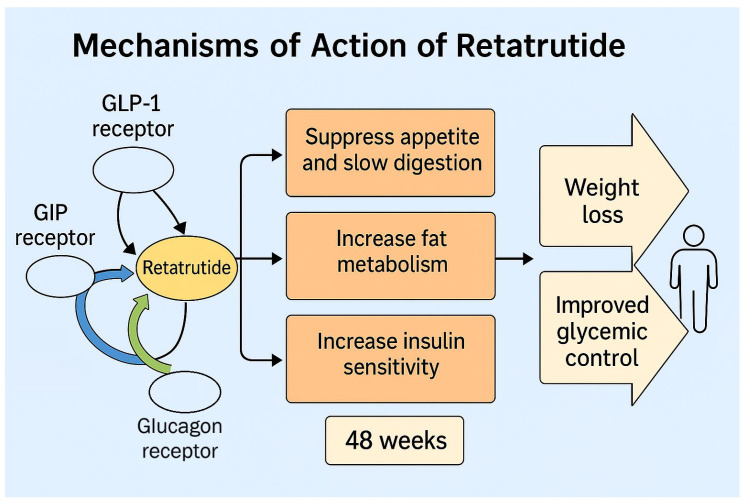
Retatrutide and insulin resistance is a combination generating real interest, since insulin resistance sits at the root of so many metabolic health challenges — from prediabetes to type 2 diabetes to polycystic ovary syndrome. Retatrutide’s unusual triple-receptor mechanism has made it a compound of particular curiosity for anyone researching this area.
This guide explains what insulin resistance actually is, how retatrutide’s mechanism relates to it, what the current trial data shows, and important context to understand before drawing conclusions. This is educational content — retatrutide remains an investigational compound, not an approved treatment for insulin resistance or any other condition. General information on insulin resistance and metabolic health is available through the NHS.
See our full range of GLP-1 treatments with 24/7 expert support.
Explore Mounjaro →Retatrutide and insulin resistance — fact 1: what it actually is
Insulin resistance is a metabolic state where the body’s cells — particularly in the muscle, liver, and fat tissue — respond less effectively to insulin than they should. In response, the pancreas produces increasingly more insulin to keep blood sugar within a normal range, a compensation that can work for years before eventually failing.
Insulin resistance is not the same as type 2 diabetes, though the two are closely related. It often develops silently, years before any diabetes diagnosis, and is influenced by factors including excess visceral fat, physical inactivity, genetics, and chronic inflammation. Left unaddressed, insulin resistance is a well-established precursor to type 2 diabetes, and is also strongly linked to conditions like PCOS and non-alcoholic fatty liver disease.
Retatrutide and insulin resistance — fact 2: the mechanism connection
Retatrutide’s relevance to insulin resistance comes from its triple-agonist mechanism — simultaneous activity on the GIP, GLP-1, and glucagon receptors. Each of these pathways plays a role in glucose regulation, and GIP receptor activity in particular has been a growing area of research interest for its links to improved insulin sensitivity.
This places retatrutide in an interesting position relative to insulin resistance research — its mechanism touches multiple pathways relevant to glucose metabolism simultaneously, rather than acting through a single receptor as older-generation GLP-1 medications do. This breadth of mechanism is part of why retatrutide and insulin resistance is such a frequently searched combination among people following metabolic health research.
Retatrutide and insulin resistance — fact 3: what the data shows
The TRANSCEND-T2D-1 trial, conducted specifically in people with type 2 diabetes — a population where insulin resistance is a defining feature — reported meaningful improvements in glycaemic control alongside significant weight loss. This is the most direct trial evidence currently available relevant to the retatrutide and insulin resistance question.
It is important to be precise about what this data does and does not show. These results demonstrate improved blood sugar control in a diabetic population — a related but distinct measure from a dedicated insulin resistance marker such as HOMA-IR. Purpose-built trials measuring insulin resistance specifically, independent of a diabetes diagnosis, remain limited at this stage of retatrutide’s development.
| Trial | Population | Relevant finding |
|---|---|---|
| TRANSCEND-T2D-1 | Type 2 diabetes | Meaningful glycaemic improvement alongside weight loss |
| TRIUMPH-1 | Obesity | 28.3% weight loss at 80 weeks — indirect insulin sensitivity benefit expected |
| TRIUMPH-4 | Obesity | 28.7% weight loss at 68 weeks — indirect insulin sensitivity benefit expected |
Retatrutide and insulin resistance — fact 4: weight loss matters most
This is arguably the most important fact in the entire retatrutide and insulin resistance conversation. Research consistently shows that weight loss of just 5 to 10 percent of body weight can meaningfully improve insulin sensitivity — regardless of which specific medication or method produced that weight loss.
Retatrutide’s trial results have produced some of the largest weight loss figures reported across the entire GLP-1 medication class, with TRIUMPH-1 participants averaging 28.3% weight loss at 80 weeks. Given how strongly weight loss and insulin sensitivity are linked, much of retatrutide’s likely benefit for insulin resistance may be substantially — though not necessarily entirely — mediated through this weight loss effect, alongside its more direct receptor-level actions.
Separating retatrutide’s direct receptor-level effects on insulin sensitivity from its indirect weight-loss-driven effects is genuinely difficult with the data available today. Both pathways likely contribute, and untangling their relative contribution will require more targeted research.
Retatrutide and insulin resistance — fact 5: current approval status
It bears repeating clearly: retatrutide is not approved as a medicine anywhere in the world as of mid-2026, and is not approved specifically for insulin resistance, type 2 diabetes, or any other condition. It remains in Phase 3 clinical trials under Eli Lilly’s TRIUMPH programme.
The retatrutide and insulin resistance connection is a genuinely promising area of ongoing research — not a confirmed, approved treatment pathway. Anyone encountering confident claims online that retatrutide is “proven” to reverse insulin resistance should treat such claims with appropriate scepticism, since the research base, while encouraging, has not reached that level of certainty.
The mechanisms make biological sense, and the related evidence — particularly the diabetes trial data and the substantial weight loss figures — is genuinely encouraging. But dedicated insulin-resistance-specific trials, independent of diabetes, are still limited, and no regulatory body has approved retatrutide for any indication.
Retatrutide and insulin resistance — fact 6: what to discuss with your doctor
If insulin resistance is a concern for you, the most productive conversation with a healthcare provider today centres on already-approved options with established safety and efficacy data — including Mounjaro, which shares part of retatrutide’s mechanism through its GIP and GLP-1 receptor activity, and has a substantial evidence base specifically in insulin resistance and type 2 diabetes.
- Your current insulin resistance markers — including any HOMA-IR score, fasting insulin, or glucose tolerance test results you may have.
- Your family history of type 2 diabetes, PCOS, or related metabolic conditions.
- Lifestyle factors — activity levels, diet patterns, and sleep quality, all of which meaningfully influence insulin sensitivity independent of medication.
- Available approved treatment options that address insulin resistance directly, rather than waiting for an unapproved compound’s future approval.
Retatrutide and insulin resistance is a compelling area of research — but “compelling research” and “available treatment” are two very different things. The most responsible path today is engaging with what is actually approved and available, while staying informed about where the research is heading.
Our clinical guidanceRetatrutide and insulin resistance — related conditions worth understanding
Insulin resistance rarely exists in isolation, and understanding its connections to related conditions helps frame why retatrutide and insulin resistance has become such a widely discussed topic. Metabolic syndrome — a cluster of conditions including elevated blood pressure, high blood sugar, excess abdominal fat, and abnormal cholesterol levels — is closely tied to underlying insulin resistance in the majority of cases.
Polycystic ovary syndrome (PCOS) is another condition where insulin resistance plays a central role for many women affected, which is part of why retatrutide’s potential relevance extends into that research area as well. Non-alcoholic fatty liver disease, increasingly recognised as one of the most common chronic liver conditions globally, is similarly driven substantially by insulin resistance and excess visceral fat.
This web of interconnected conditions explains why a compound with retatrutide’s broad metabolic effects generates interest across so many different areas of research simultaneously. A single mechanism touching weight, glucose regulation, and multiple hormone pathways has implications that extend well beyond any one diagnosis.
For more on retatrutide’s development, read our guide on retatrutide’s regulatory status and our overview of retatrutide and PCOS, a related area of research interest. Explore our Mounjaro product page for an approved option available today, or read patient reviews.
Whatever the eventual outcome of retatrutide’s clinical development, the underlying principle behind managing insulin resistance remains constant: sustainable weight management, regular activity, and appropriate medical treatment where indicated all work together, regardless of which specific medication is involved in that plan.
This article is for informational and research purposes only and does not constitute medical advice. Retatrutide is not currently approved for the treatment of insulin resistance or any other condition. Always consult a qualified healthcare provider before making decisions about managing insulin resistance or any metabolic health condition.
Common questions — retatrutide and insulin resistance
Explore approved options for metabolic health.
UK-based, MHRA-compliant supply with 24/7 expert support to help you navigate treatment decisions today.
Explore Mounjaro →