
Retatrutide and thyroid disease — 6 critical facts.
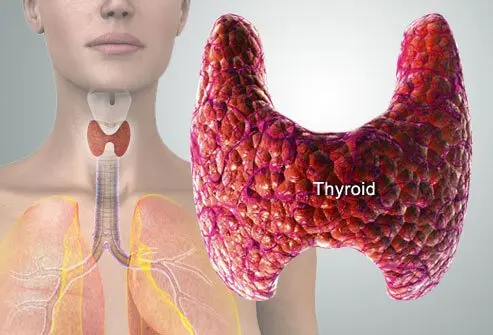
Retatrutide and thyroid disease is a search that reflects a genuinely important safety question — every approved GLP-1 class medication carries a boxed warning related to thyroid cancer, and understanding what that warning actually means is essential before drawing any conclusions.
This guide explains where the thyroid warning comes from, what human evidence actually shows, who is genuinely affected by the contraindication, and what remains uncertain. This is educational content — retatrutide is not an approved medicine, and nothing here constitutes medical advice. General information on thyroid conditions is available through the NHS.
See our full range of GLP-1 treatments with 24/7 expert support.
Explore Mounjaro →Retatrutide and thyroid disease — fact 1: the class-wide warning
Every currently approved GLP-1 class medication — including semaglutide, liraglutide, dulaglutide, and tirzepatide — carries a boxed warning, the FDA’s most serious labelling category, related to medullary thyroid carcinoma (MTC), a rare and specific type of thyroid cancer.
Given retatrutide’s shared mechanism of action, this warning is expected to apply to retatrutide by analogy once it reaches approval, even though retatrutide itself has not yet accumulated its own long-term safety data. Understanding this warning properly — rather than either dismissing it or over-reacting to it — is essential to the retatrutide and thyroid disease conversation.
Retatrutide and thyroid disease — fact 2: the rodent origin
The warning originates from studies in mice and rats, where long-term GLP-1 receptor activation — sustained for up to two years — was associated with increased proliferation of thyroid C-cells, leading to both benign and malignant tumour formation in these animals.
Critically, GLP-1 receptor expression in thyroid tissue is species-dependent, meaning the density and behaviour of these receptors differs meaningfully between rodents and humans. This biological difference is central to why the rodent finding has not been confirmed to translate directly into an equivalent human risk, despite driving a precautionary class-wide warning.
Retatrutide and thyroid disease — fact 3: what human evidence shows
This is the most reassuring part of the retatrutide and thyroid disease picture. A systematic review of 10 randomised controlled trials involving over 14,500 participants on semaglutide found thyroid cancer incidence of less than 1%, suggesting no significant risk signal in human data.
A separate retrospective cohort study specifically examining tirzepatide found that, despite the boxed warning, the data failed to demonstrate an association with medullary thyroid carcinoma — consistent with similar findings across other GLP-1 receptor agonists. A white paper from a specialist thyroid research centre reached the same conclusion: the best available human evidence does not show that these medications cause common thyroid cancers or adversely affect existing thyroid malignancies.
| Evidence source | Finding |
|---|---|
| Semaglutide systematic review (14,550 participants) | Thyroid cancer incidence under 1% — no significant risk found |
| Tirzepatide retrospective cohort study | Failed to prove MTC association despite boxed warning |
| Specialist thyroid centre white paper | No evidence of increased common thyroid cancer risk in humans |
| Retatrutide-specific human data | Very limited — compound remains investigational with short trial history |
Retatrutide and thyroid disease — fact 4: who is genuinely affected
Despite the reassuring human data, a clear contraindication applies to a specific, identifiable group of people, based on the class-wide precaution. This is not a vague “ask your doctor if you’re worried” situation — it is a defined set of criteria worth knowing precisely.
- Personal history of medullary thyroid carcinoma at any point in your life.
- Family history of medullary thyroid carcinoma specifically in a first-degree relative — a parent, sibling, or child.
- Multiple Endocrine Neoplasia syndrome type 2 (MEN2A or MEN2B) — a genetic syndrome carrying near-100% lifetime MTC risk.
- A known RET proto-oncogene mutation — the specific genetic driver behind MEN2 syndrome.
If you fall into any of the categories above, GLP-1 class medications — including any future approved form of retatrutide — are considered contraindicated, not merely something to discuss cautiously. This is a clear line, not a grey area, and should be disclosed to any prescriber.
Retatrutide and thyroid disease — fact 5: not all thyroid cancers matter here
This is a frequently misunderstood point worth stating plainly: medullary thyroid carcinoma accounts for only 3 to 4 percent of all thyroid cancers. The far more common types — papillary, follicular, and Hurthle cell thyroid cancer — are not part of this specific contraindication.
If your family history involves one of these more common thyroid cancer types rather than MTC specifically, the class-wide contraindication does not automatically apply to you. This distinction matters enormously in practice, since many people with a family history of thyroid cancer generically assume they are excluded from GLP-1 treatment when, in most cases, they are not.
Retatrutide and thyroid disease — fact 6: screening guidance
For the general population without any of the specific risk factors described above, routine pre-treatment thyroid ultrasound is not generally recommended. Incidental thyroid nodules are extremely common in the wider population — found in roughly half of UK adults over a certain age on imaging — meaning routine screening would generate substantial unnecessary anxiety and follow-up investigation without meaningful clinical benefit.
The practical guidance from major endocrine bodies is straightforward: discuss the rodent-based warning and the defined contraindicated groups once, clearly, at the point of clinical consent, then proceed without routine calcitonin blood testing or ultrasound screening for patients outside those specific high-risk categories.
This approach reflects a broader principle in medicine — screening tests are only genuinely useful when the population being screened has a high enough baseline risk that the test is likely to catch real disease rather than simply finding incidental, clinically insignificant findings. Applying calcitonin testing or ultrasound imaging broadly to every person considering a GLP-1 class medication would generate far more false alarms than genuine early detections, given how rare medullary thyroid carcinoma actually is in the general population.
Retatrutide and thyroid disease — symptoms worth knowing
Even without routine screening, it is worth knowing the symptoms that warrant medical attention while on any GLP-1 class medication, since awareness matters more than blanket testing for the general population. These symptoms are not specific to medication use — they are simply the standard signs of a thyroid problem that anyone should be aware of, medication or not.
- A lump or swelling in the neck that is new or noticeably growing.
- Hoarseness or voice changes that persist without an obvious cause such as a cold.
- Difficulty swallowing that develops or worsens over time.
- Persistent neck pain that does not resolve as expected.
- Swollen lymph nodes in the neck that persist beyond a typical infection timeframe.
Reporting any of these symptoms promptly to a healthcare provider, rather than waiting to see if they resolve on their own, is the practical safety net that sits alongside the class-wide warning — regardless of whether someone falls into a defined high-risk category or not.
Retatrutide and thyroid disease is a topic where the honest answer is genuinely reassuring for the vast majority of people, while remaining a firm, non-negotiable contraindication for a small, clearly defined group. Both things are true simultaneously, and neither should be minimised.
Our clinical guidanceFor more on retatrutide’s current status, read our guide on retatrutide’s regulatory status. Explore our Mounjaro product page for an approved option available today, or read patient reviews.
As with any medication decision involving a class-wide safety warning, the goal is informed proportionality — understanding precisely who the warning applies to, why it exists, and what the actual human evidence shows, rather than either dismissing a legitimate precaution or avoiding an entire medication class based on a finding that, for the vast majority of people, has not been shown to translate into real-world risk.
This article is for informational and research purposes only and does not constitute medical advice. Retatrutide is not currently approved as a medicine. Thyroid safety information described relates primarily to already-approved GLP-1 class medications; retatrutide-specific long-term human safety data remains limited. Always disclose any personal or family thyroid cancer history to a healthcare provider before starting any GLP-1 class medication.
Common questions — retatrutide and thyroid disease
Explore approved options with full safety information.
UK-based, MHRA-compliant supply with 24/7 expert support to help you make informed treatment decisions.
Explore Mounjaro →