
Retatrutide vs CagriReta — which triple agonist is better?
Retatrutide vs CagriReta is the frontier comparison in weight loss pharmacology — two next-generation compounds that have both produced approximately 24% body weight loss in clinical trials, both targeting multiple receptor pathways simultaneously, and both representing a leap beyond the single-receptor medications that defined the GLP-1 era. But the retatrutide vs CagriReta comparison reveals two fundamentally different pharmacological strategies: retatrutide combines GLP-1, GIP, and glucagon receptor activation in a single molecule, while CagriReta pairs cagrilintide (an amylin analogue) with semaglutide (a GLP-1 agonist) in a combination injection.
This guide compares retatrutide vs CagriReta across every dimension: mechanism, weight loss data, side effects, dosing, cost, availability, and which compound may suit different patient profiles. Both are in advanced clinical development; neither has received regulatory approval. The information here is based on published phase 2 clinical trial data and is consistent with general weight management guidance from the NHS.
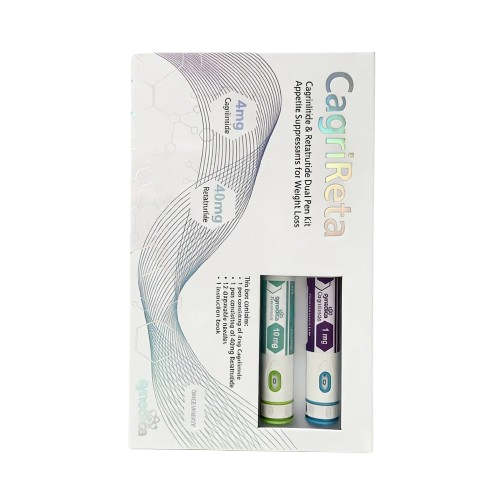
Retatrutide vs CagriReta — at a glance
| Factor | Retatrutide | CagriReta |
|---|---|---|
| Developer | Eli Lilly | Novo Nordisk |
| Receptors targeted | GLP-1 + GIP + Glucagon | Amylin + GLP-1 (via cagrilintide + semaglutide) |
| Molecule type | Single tri-agonist molecule | Fixed-dose combination of two molecules |
| Average weight loss | ~24.2% (phase 2, 48 weeks) | ~24% (phase 2, 68 weeks) |
| Trial duration | 48 weeks | 68 weeks |
| Injection frequency | Once weekly | Once weekly |
| Approval status | Phase 3 trials | Phase 3 trials |
| UK availability | Research-grade (vials + Synedica pens) | Research-grade |
| Unique advantage | Glucagon pathway — increased energy expenditure | Amylin pathway — enhanced satiety signalling |
Retatrutide vs CagriReta — how the mechanisms differ
Retatrutide: the triple hormone agonist
Retatrutide is a single molecule engineered to activate three distinct hormone receptors simultaneously. In the retatrutide vs CagriReta mechanism comparison, retatrutide’s approach is about breadth — hitting three metabolic pathways with one compound. GLP-1 activation suppresses appetite and slows gastric emptying. GIP activation enhances insulin sensitivity and fat metabolism. Glucagon activation increases resting energy expenditure and drives active breakdown of stored fat, particularly visceral and liver fat. The glucagon component is what makes retatrutide unique in the retatrutide vs CagriReta comparison — no other weight loss compound targets this pathway.
CagriReta: the combination approach
CagriReta takes a different strategy in the retatrutide vs CagriReta matchup. Rather than engineering one molecule to hit multiple receptors, Novo Nordisk combined two proven molecules — cagrilintide and semaglutide — into a single injection. Semaglutide is the established GLP-1 agonist that powers Ozempic and Wegovy. Cagrilintide is an amylin analogue — a synthetic version of the hormone amylin that is co-secreted with insulin from the pancreas. Amylin acts on the brain’s appetite centres through a pathway distinct from GLP-1, providing an additional layer of satiety signalling that amplifies the appetite suppression beyond what semaglutide achieves alone.
Retatrutide increases how many calories you burn (glucagon pathway). CagriReta increases how full you feel (amylin pathway). Both reduce how much you eat (GLP-1 pathway). The retatrutide vs CagriReta question comes down to metabolic activation versus enhanced satiety — two different pharmacological strategies that arrive at similar weight loss figures through different biological routes.
Retatrutide vs CagriReta — weight loss data compared
| Metric | Retatrutide (12 mg) | CagriReta (highest dose) |
|---|---|---|
| Average total body weight loss | ~24.2% | ~24% |
| Trial duration | 48 weeks | 68 weeks |
| Patients losing >20% | ~75% | ~55–60% (estimated) |
| Weight loss curve at trial end | Still declining (not plateaued) | Approaching plateau |
| Rate of loss | Faster — similar result in shorter period | Slower — longer trial to reach similar figure |
The retatrutide vs CagriReta weight loss comparison at face value appears nearly identical — approximately 24% for both. But the context matters: retatrutide achieved this figure in 48 weeks with the weight loss curve still declining, while CagriReta required 68 weeks to reach a similar figure with the curve approaching plateau. This suggests that retatrutide may produce greater total weight loss over equivalent treatment durations. However, direct head-to-head comparison in the same trial does not exist — the retatrutide vs CagriReta weight loss numbers come from different studies with different participant populations.
Retatrutide vs CagriReta on weight loss alone is essentially a draw at the headline level. Both produce approximately 24% weight loss — figures that were considered impossible five years ago. The meaningful differences lie in mechanism, side effect profile, and which pharmacological approach suits your individual biology.
Data perspectiveRetatrutide vs CagriReta — side effect profiles
| Side effect | Retatrutide | CagriReta |
|---|---|---|
| Nausea | ~45% at highest dose | ~45% at highest dose |
| Diarrhoea | ~28% | ~20–25% |
| Constipation | ~25% | ~15–20% |
| Vomiting | ~18% | ~15–20% |
| Injection site reactions | ~5% | ~5–10% |
| Heart rate increase | Small increase noted (glucagon effect) | Not prominently reported |
| Liver enzyme elevation | Mild ALT increase in some (glucagon effect) | Not prominently reported |
The retatrutide vs CagriReta side effect comparison shows broadly similar GI profiles — both cause nausea, diarrhoea, and vomiting at comparable rates during dose escalation. The differentiator is the unique effects from each compound’s novel receptor pathway. Retatrutide’s glucagon activation may produce slight heart rate increases and liver enzyme elevations not seen with CagriReta. CagriReta’s amylin pathway may produce slightly higher rates of injection site reactions. In the retatrutide vs CagriReta safety comparison, neither compound has a clear advantage based on available data — both are too early in their development cycle for definitive safety conclusions.
Retatrutide vs CagriReta — dosing compared
| Phase | Retatrutide | CagriReta |
|---|---|---|
| Starting dose | 2 mg weekly | Low combination dose weekly |
| Titration steps | 2 → 4 → 8 → 12 mg | Multiple escalation steps |
| Weeks to maintenance | ~12 weeks | ~16–20 weeks |
| Injection type | Single subcutaneous injection | Single subcutaneous injection (pre-mixed combination) |
| Injection frequency | Once weekly | Once weekly |
Both compounds are administered as once-weekly subcutaneous injections, making the retatrutide vs CagriReta user experience very similar from a practical standpoint. Retatrutide reaches maintenance dose slightly faster (~12 weeks vs ~16–20 weeks), meaning full therapeutic effect begins earlier. The dosing convenience is equivalent — one injection per week for both.
Retatrutide vs CagriReta — unique advantages
Where retatrutide has the edge
- Energy expenditure: The glucagon receptor activation increases resting metabolic rate — your body burns more calories even at rest. CagriReta does not have this feature. In the retatrutide vs CagriReta comparison, this is retatrutide’s most distinctive advantage.
- Liver fat reduction: The glucagon pathway directly targets hepatic fat. For patients with fatty liver disease, retatrutide may offer targeted benefit that CagriReta does not provide through its mechanism.
- Faster results: Achieving ~24% weight loss in 48 weeks vs 68 weeks means retatrutide produces faster visible transformation — important for motivation and adherence.
- Single molecule simplicity: Retatrutide is one compound, not two. This may offer more predictable pharmacokinetics and fewer potential drug interaction considerations.
Where CagriReta has the edge
- Amylin-driven satiety: The cagrilintide component targets appetite through a brain pathway distinct from GLP-1, providing what some researchers describe as a deeper, more complete feeling of fullness. In the retatrutide vs CagriReta comparison, CagriReta may produce more effective appetite control for some patients.
- Semaglutide foundation: CagriReta contains semaglutide — the most studied GLP-1 medication in the world. This provides a established safety base that retatrutide’s novel triple mechanism does not have.
- Potentially fewer novel risks: Without the glucagon pathway, CagriReta avoids the heart rate and liver enzyme considerations that retatrutide introduces. The amylin pathway has been studied through pramlintide (an approved diabetes medication) for years.
- Novo Nordisk development: Novo Nordisk has the most experience bringing GLP-1 medications to market. Their regulatory and manufacturing infrastructure may lead to faster approval and more reliable supply.
Retatrutide vs CagriReta — cost and availability UK
| Factor | Retatrutide | CagriReta |
|---|---|---|
| NHS availability | Not available | Not available |
| Research-grade (UK) | Available — vials + Synedica pens | Available — vials + combination formats |
| Monthly cost (maintenance) | £130–£300 | £150–£300 |
| Expected approval | Late 2027–2028 (estimate) | Late 2027–2028 (estimate) |
The retatrutide vs CagriReta cost comparison in the UK research-grade market shows broadly similar pricing. CagriReta may be marginally more expensive due to the combination formulation, but the difference is not decisive. Both are available from specialist peptide suppliers with HPLC-verified purity and Certificates of Analysis. Neither is available on NHS prescription. Check our customer reviews for confidence in product quality across both compounds.
Retatrutide vs CagriReta — which should you choose?
Choose retatrutide if:
- You want the metabolic activation advantage — burning more calories at rest through glucagon receptor activation
- You have fatty liver disease or elevated liver fat that would benefit from the glucagon pathway’s targeted fat reduction
- You want faster results — reaching peak efficacy in 48 weeks rather than 68
- You prefer a single-molecule compound rather than a two-drug combination
- Budget is comparable — retatrutide vs CagriReta pricing is similar enough that cost is not the deciding factor
Choose CagriReta if:
- You prioritise appetite control — the amylin pathway provides a distinct satiety signal that may work better for your biology
- You have previously used semaglutide with partial success and want to amplify it with the amylin component
- You prefer a compound with a more established safety foundation through semaglutide’s years of real-world data
- You want to avoid the glucagon-related considerations (heart rate, liver enzymes) that retatrutide introduces
- You respond well to GLP-1 medications and want enhanced efficacy through a complementary pathway rather than a completely different mechanism
Do not use retatrutide and CagriReta simultaneously. Both activate the GLP-1 receptor — retatrutide directly, CagriReta through its semaglutide component. Combining them would double the GLP-1 stimulation, dramatically increasing the risk of severe nausea, vomiting, and potentially dangerous blood sugar changes. The retatrutide vs CagriReta decision is one or the other — never both.
Retatrutide vs CagriReta is a question that did not exist two years ago — and the fact that we are comparing two compounds that both produce 24% weight loss speaks to how rapidly this field is advancing. There is no wrong answer. Both are extraordinary. The right choice depends on your biology, your priorities, and which pharmacological approach aligns with your individual response profile.
Mymetabolism perspectiveResearch disclaimer: Neither retatrutide nor CagriReta is approved for human use by any regulatory body. Both are currently in phase 3 clinical trials. Research-grade products are intended for research purposes only. The comparison in this article is based on published phase 2 data from separate trials — not a direct head-to-head comparison. The information in this article is for educational purposes and does not constitute medical advice. Always consult a qualified healthcare professional before starting any medication or research compound. Mymetabolism supplies both retatrutide and CagriReta, verified by HPLC at 99%+ purity with a Certificate of Analysis on every batch.
Common questions — retatrutide vs CagriReta
Explore both at Mymetabolism.
We supply both retatrutide and CagriReta — HPLC-verified at 99%+ purity, COA on every batch, free UK shipping. Compare the options and choose what suits you.
Browse Retatrutide →