
Semaglutide microdosing — 7 proven facts to know.
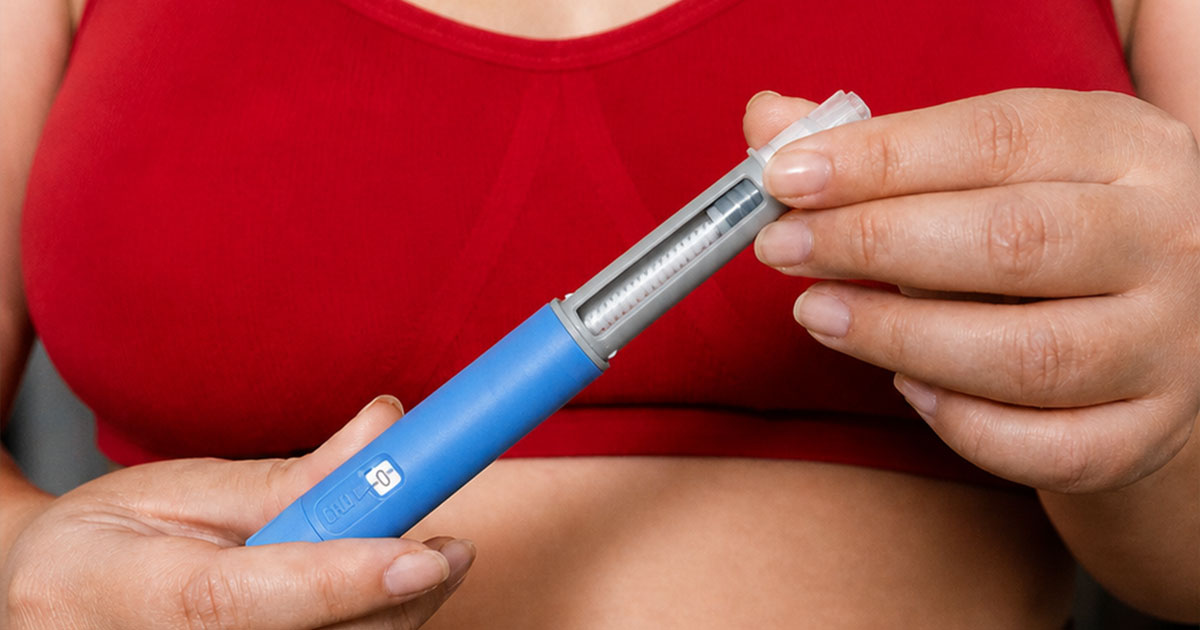
Semaglutide microdosing is one of the biggest weight loss trends online. Supporters say tiny doses can cut appetite, reduce side effects, save money and even slow ageing.
This guide explains what semaglutide microdosing really means, what the evidence shows, why UK experts have warned against it, the risks of altering pens and using unlicensed products, and safer ways to use a lower dose with a prescriber.
Start at the licensed 0.25mg dose with full prescriber support. See Wegovy pricing at every strength.
Explore Wegovy →Semaglutide microdosing: what it means
Semaglutide microdosing means taking much smaller amounts of semaglutide than the licensed schedule. Some people take a fraction of a normal dose, while others stretch doses further apart.
The term comes from social media, not medicine. There is no agreed definition, so one person’s microdose can be very different from another’s.
Doctors point out that what many people call microdosing is really the normal slow dose increase used at the start of treatment. The difference is that true microdosing goes below or outside the licensed plan, usually without medical supervision.
Starting at 0.25mg and moving up slowly is standard licensed treatment. Semaglutide microdosing is anything below or outside that plan.
7 proven facts at a glance
- Microdosing is a social media term, not a medical one
- There is no clinical evidence that very low doses lead to meaningful weight loss
- Weight loss in trials rises with dose
- Most microdosing programmes rely on compounded or unlicensed products
- UK experts, the MHRA and Novo Nordisk have warned against microdosing hacks
- Altering pens or reusing needles risks wrong doses and infection
- A prescriber can keep you on a lower licensed dose safely
For the licensed dose steps, see our semaglutide dosage chart.
Why people try it
Semaglutide microdosing became popular online in 2025 and 2026. Several reasons come up again and again.
- Cost: making a pen last longer to save money
- Side effects: hoping to avoid nausea and stomach upset
- Small goals: wanting to lose only a few pounds
- Wellness claims: hoping for less inflammation, more energy or longer life
- Maintenance: trying to keep weight off after stopping full treatment
A UK survey suggested that around 1.6 million people use weight loss medication, and almost half had tried microdosing or buying from unlicensed sellers. Rising prices were one of the main reasons given.
What the evidence shows
There are no large clinical trials of semaglutide microdosing. Doctors and researchers have repeatedly said there is no robust evidence that very small doses work.
Experts at Cedars-Sinai note that meaningful weight loss in trials comes at the approved doses, while very low doses produce only modest results. Whether low doses give other benefits, such as less inflammation, is unknown.
Without trials, nobody knows the right microdose, how long to take it, or what the long-term effects might be. People who microdose are, in effect, running their own uncontrolled experiment.
Weight loss rises with dose
The best guide to what low doses can do comes from licensed trials. They consistently show that higher doses lead to more weight loss.
| Trial | Dose | Average weight loss |
|---|---|---|
| STEP-2 (type 2 diabetes) | 1mg weekly | About 7% |
| STEP-2 (type 2 diabetes) | 2.4mg weekly | About 9.6% |
| STEP-1 (obesity) | 2.4mg weekly | About 14.9% |
| Higher-dose trial | 7.2mg weekly | Around 19–21% |
Semaglutide microdosing sits well below the bottom of this range. That makes it unlikely to produce the results people see in before-and-after photos.
See our Wegovy weight loss results guide for what full licensed treatment can achieve.
Inflammation, energy and longevity claims
Some clinics market semaglutide microdosing for wellness rather than weight loss. Claims include lower inflammation, better focus, more energy and slower ageing.
Semaglutide has shown heart benefits in the SELECT trial, where it cut major cardiovascular events by around 20%. That trial used the full 2.4mg dose in people with heart disease, not microdoses in healthy people.
Scientists have said there is no proven link between microdosing weight loss drugs and living longer. Treat any longevity promise with great caution.
The risks of semaglutide microdosing
Low doses sound safer, but semaglutide microdosing brings its own risks.
- Unlicensed products: many programmes use compounded or research semaglutide of unknown quality
- Wrong doses: measuring tiny amounts from vials is easy to get wrong
- Pen tampering: licensed pens are not designed for partial doses
- Infection: reusing needles to stretch supplies can cause skin infections
- False reassurance: serious side effects can still happen at low doses
- No supervision: problems may go unnoticed without a prescriber
Semaglutide can still cause gallbladder problems, pancreatitis and low blood sugar in some people, even at lower doses. Get medical help for severe stomach pain or vomiting.
Splitting or stretching pens
A common form of semaglutide microdosing is trying to make a Wegovy or Ozempic pen last longer by taking partial doses. Pens are built and tested to deliver set amounts, so doing this means you can no longer be sure what dose you are getting.
UK Wegovy FlexTouch pens each hold four weekly doses of one strength. They are not designed to deliver smaller amounts.
Reusing needles to stretch supplies adds a further risk of infection and blunt needles. If cost is the problem, speak to your prescriber about a lower licensed dose rather than altering your pen.
Microdosing with compounded products
In the US, many semaglutide microdosing programmes are run by telehealth companies using compounded semaglutide. These products are not the same as licensed Wegovy or Ozempic.
Compounded and research semaglutide have not been checked by a regulator for strength, purity or sterility. Our compounded semaglutide guide explains the risks in detail.
UK websites selling semaglutide “for research use only” in vials are selling unlicensed products. Microdosing with them doubles the uncertainty.
What UK experts say
UK health experts have warned against weight loss “jab hacks”, including semaglutide microdosing and buying from unlicensed sellers. They highlight risks such as infection, incorrect dosing and reduced effectiveness.
The MHRA says weight loss injections are prescription-only medicines that should come from regulated pharmacies after a consultation. Novo Nordisk has described microdosing and buying outside legitimate channels as a direct danger to health.
Microdosing vs supervised low-dose treatment
Staying on a lower dose is not always a bad idea. The key difference is whether a prescriber is involved and whether the dose is part of a licensed plan.
| Feature | Semaglutide microdosing | Supervised low-dose treatment |
|---|---|---|
| Dose | Below or outside licensed steps | A licensed step, such as 0.5mg or 1mg |
| Product | Often compounded or altered pens | Licensed pens or tablets |
| Supervision | Usually none | Regular prescriber reviews |
| Evidence | No trials | Backed by licensed trial data |
| Goal | Often vague wellness claims | Clear weight and health targets |
Many people do well staying at 1mg or 1.7mg for longer if they are losing weight steadily. That is a medical decision made with your prescriber, not semaglutide microdosing.
Low doses for maintenance
One genuine question behind semaglutide microdosing is whether a lower dose can help keep weight off after reaching a goal. Research into maintenance doses is ongoing.
When people stop semaglutide completely, much of the lost weight often returns. The STEP-1 extension found that participants regained around two-thirds of their lost weight within a year of stopping.
Some prescribers may reduce the dose gradually or keep patients on a lower licensed step. Our Wegovy plateau guide explains what to do when weight loss slows.
If cost is the real issue
For many people, semaglutide microdosing is really about money. There are safer ways to manage the cost of treatment.
- Compare GPhC-registered UK providers, as prices vary widely
- Ask whether you can stay on a lower licensed dose
- Consider the Wegovy pill as a daily alternative
- Check NHS eligibility through your GP
- Look for providers that offer payment plans
In the UK, Wegovy currently costs from about £90–£150 a month at 0.25mg. Read our Wegovy pill UK price and availability guide or explore the Wegovy pill.
Side effects at lower doses
Lower doses generally cause fewer side effects, which is one reason semaglutide microdosing appeals to people. That is exactly why licensed treatment starts at 0.25mg and rises slowly.
Nausea, fullness, constipation and diarrhoea can still happen at low doses, especially in the first weeks. Most people find these ease as the body adjusts.
Our first week of semaglutide and Wegovy side effects guides explain how to manage them.
Who should be extra careful
- People with type 2 diabetes who take insulin or sulfonylureas
- Anyone with a history of pancreatitis or gallbladder disease
- People with a history of eating disorders
- Anyone who is pregnant, planning pregnancy or breastfeeding
- People taking several other medicines
If any of these apply to you, semaglutide microdosing is especially unwise, and semaglutide should only be used with close medical supervision. Self-adjusting doses is especially risky.
What about tirzepatide microdosing?
The semaglutide microdosing trend has spread to tirzepatide, the medicine in Mounjaro. The same concerns apply: no trial evidence for very low doses, frequent use of unlicensed products and risks from altering pens.
Read our tirzepatide dosage chart for the licensed steps, or compare the two medicines in semaglutide vs tirzepatide.
Where the trend came from
Semaglutide microdosing spread through TikTok, Instagram and podcasts, where users shared their own low-dose routines. Celebrities and wellness influencers helped push it into the mainstream.
In the US, telehealth companies such as Noom, Found and Hims & Hers launched microdosing programmes in 2025. Many smaller online clinics followed, often using compounded semaglutide.
The trend then reached the UK, where rising private prices made the idea of stretching a pen attractive. By 2026, semaglutide microdosing had become a regular topic in UK news and on pharmacy websites.
Myths vs facts
Much of what is said about semaglutide microdosing online is not supported by evidence. Here are the most common claims.
| Myth | Fact |
|---|---|
| Microdosing gives the same results with fewer side effects | Trials show weight loss rises with dose; very low doses give modest results |
| Microdosing is a medical technique | It is a social media term with no agreed definition |
| Microdosing slows ageing | There is no clinical evidence for this |
| Low doses are always safe | Serious side effects can still happen, and unlicensed products add risk |
| Splitting pens is a harmless way to save money | Pens are not designed for partial doses, so you cannot be sure what you take |
Before trying semaglutide microdosing, it is worth separating what is proven from what is simply popular. The proven route is the licensed dose schedule.
How it is marketed
Semaglutide microdosing is often sold with wellness language rather than medical language. Adverts talk about energy, balance, inflammation and healthy ageing.
Prices may be shown per week rather than per month to look cheaper. Some programmes also bundle in supplements, coaching or apps.
If a semaglutide microdosing offer promises benefits beyond weight loss, ask for the clinical trial that supports it. In most cases, there isn’t one.
Microdosing and the Wegovy pill
The Wegovy pill is a daily tablet that starts at a low dose and increases over several months. It must not be cut, crushed or split, because the tablet is designed to be absorbed in a specific way.
This means semaglutide microdosing with tablets is not possible in any controlled way. Our how to take the Wegovy pill correctly guide explains the right way to take it.
Small weight goals
Some people turn to semaglutide microdosing because they only want to lose a small amount of weight. However, licensed semaglutide is only prescribed for people who meet BMI and health criteria.
If you do not meet those criteria, semaglutide is not the right tool. Diet, activity, sleep and support from your GP are safer first steps for smaller goals.
Using semaglutide microdosing to get around prescribing rules removes the safety checks that exist to protect you.
Signs to stop and get help
- Severe stomach pain, especially if it spreads to your back
- Repeated vomiting or being unable to keep fluids down
- Yellowing of the skin or eyes
- Signs of low blood sugar, such as shaking or confusion
- Redness, heat or swelling at an injection site
Get urgent medical help if you notice any of these, whatever dose you are taking. Tell the doctor exactly what product you used and how much.
Talking to your prescriber
If you are thinking about semaglutide microdosing, raise it with your prescriber first. They can help you find a plan that fits your goals, budget and side effects.
- Can I stay on my current dose for longer?
- Is a lower licensed dose suitable for maintenance?
- How can I manage side effects without reducing my dose?
- What are my cheapest licensed options?
- How should I come off treatment if I want to stop?
An honest conversation is far safer than experimenting alone. Prescribers hear these questions every day.
A safer plan instead
If semaglutide microdosing appeals because you want gentler treatment, a licensed plan can be just as gentle. Your prescriber can slow the dose increases and hold you on any step for as long as needed.
- Start at the licensed 0.25mg dose
- Stay on each step for at least four weeks, or longer if needed
- Move up only when side effects are manageable
- Settle on the lowest licensed dose that keeps working
- Review progress with your prescriber regularly
This approach gives you the benefits people hope for from semaglutide microdosing, with the safety of a licensed medicine and proper monitoring.
Key takeaways
- Semaglutide microdosing has no agreed definition and no trial evidence
- Weight loss in trials rises with dose
- Many microdosing programmes rely on unlicensed or compounded products
- Altering pens and reusing needles carry real risks
- A prescriber can safely keep you on a lower licensed dose
Ready to start licensed treatment at the right dose? Our Wegovy product page shows pricing at every strength, and our semaglutide UK guide compares every brand.
The safest low dose is a licensed one, chosen with a prescriber who knows your history.
Mymetabolism TeamCommon questions — Semaglutide Microdosing
Explore Wegovy with Mymetabolism.
Licensed semaglutide at every dose, with prescriber support and transparent UK pricing.
Explore Wegovy →