
NAD+ benefits — 7 critical facts about what research shows.
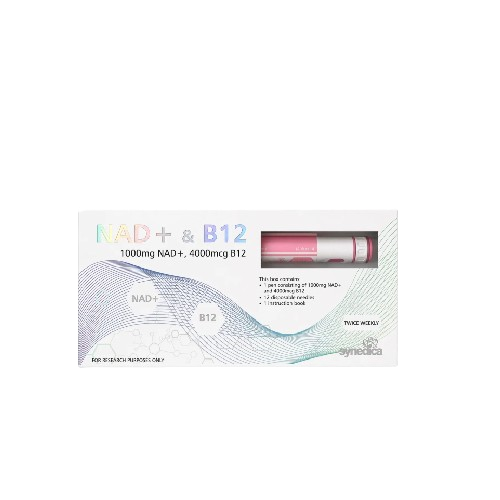
NAD+ benefits is one of the most heavily marketed topics in health research — and one of the most nuanced to navigate honestly. The hype is real, and some of it is justified. NAD+ does have legitimate research support across multiple domains. The challenge is that the popular narrative consistently outruns what human trials have actually confirmed, and understanding where the evidence is solid versus where it remains promising-but-unproven is what separates informed supplementation from expensive hope.
This guide covers the complete NAD+ benefits evidence picture as of 2026: what human trials have specifically confirmed, what the sirtuin connection actually means, what remains demonstrated only in animal models, the forms that deliver the best results, and how NAD+ benefits relate to metabolic health and weight management. The National Library of Medicine PubMed database holds the primary literature referenced throughout.
Transparent sourcing, COA documentation, 24/7 support — available now.
Explore NAD+ →NAD+ Benefits — fact 1: what NAD+ actually does in the body
Before evaluating NAD+ benefits in clinical terms, understanding NAD+’s biological role provides the essential foundation. Nicotinamide adenine dinucleotide (NAD+) is a coenzyme found in every living cell that participates in over 500 enzymatic reactions. Unlike vitamins or hormones — which trigger downstream effects through receptor signalling — NAD+ is a molecular workhorse that directly participates in metabolic chemistry.
NAD+ serves in two primary roles. As an electron carrier, it shuttles electrons through the mitochondrial respiratory chain — the process that converts fuel into ATP energy. Every cell in the body relies on this function continuously. As a signalling substrate, it is consumed by three classes of enzymes: sirtuins (SIRT1-7, involved in ageing and metabolism), PARPs (involved in DNA repair), and cyclic ADP-ribose synthases (involved in cellular calcium signalling). These consumption pathways are why NAD+ levels can become depleted — the molecule is used up during these processes and must be continuously regenerated or replenished.
NAD+ levels decline with age — by some estimates falling 40-50% between ages 20 and 60 across multiple tissues. This decline is associated with reductions in mitochondrial function, insulin sensitivity, and cellular stress resilience. The central premise of NAD+ supplementation is that replenishing these declining levels restores the enzymatic activity that depends on them.
NAD+ Benefits — fact 2: the sirtuin connection
The most widely cited NAD+ benefits mechanism is sirtuin activation — and the connection is both real and frequently oversimplified. Sirtuins (SIRT1-7) are enzymes that require NAD+ as a co-substrate to catalyse reactions. This means they literally cannot function without NAD+. The relationship is direct and well-established at the molecular level.
Each sirtuin has distinct biological roles relevant to different NAD+ benefits:
- SIRT1 — regulates fat oxidation in adipose tissue, promotes mitochondrial biogenesis, involved in insulin signalling. Most relevant to metabolic NAD+ benefits.
- SIRT3 — mitochondrial deacetylase that activates fatty acid oxidation enzymes and improves respiratory chain efficiency. Directly relevant to energy metabolism.
- SIRT6 — DNA repair and genome stability, inflammation control, glucose metabolism regulation.
- SIRT4 — mitochondrial function and amino acid metabolism.
The critical nuance in the NAD+ benefits/sirtuin picture: NAD+ availability determines sirtuin capacity, but sirtuins are pieces in a network, not a master switch. Raising NAD+ provides the substrate that sirtuins need — it does not automatically maximise sirtuin activity independent of the other signals that regulate them.
NAD+ Benefits — fact 3: what human trials have confirmed
The most important discipline in evaluating NAD+ benefits is distinguishing between what human trials have specifically confirmed versus what animal studies suggest and marketing implies. The 2026 PRISMA-guided systematic review (80 rodent studies, 33 human studies) reached a clear conclusion: biological activity from NAD+ supplementation is consistently demonstrated; clinical effectiveness for anti-ageing outcomes in humans remains inconclusive.
| NAD+ benefit | Human evidence quality | Key study |
|---|---|---|
| Raises blood NAD+ levels | Strong — multiple RCTs | Dellinger 2017, Igarashi 2022 |
| Improves muscle insulin sensitivity | Good — RCT gold standard method | Yoshino Science 2021 |
| Improves muscle function markers | Moderate — small trial | Igarashi 2022 |
| Neurological biomarker changes | Preliminary — Phase I only | NR in neurological trial 2023 |
| Lifespan extension | Not studied in humans | Animal models only |
| Anti-ageing clinical outcomes | Inconclusive | 2026 systematic review |
NAD+ Benefits — fact 4: insulin sensitivity — the strongest human signal
The most rigorously demonstrated NAD+ benefit in human clinical data is improved insulin sensitivity. The 2021 randomised controlled trial by Yoshino et al., published in Science, is the gold standard reference for this NAD+ benefit. The trial used the hyperinsulinemic-euglycemic clamp technique — the most rigorous method for measuring insulin sensitivity — and found that 250mg NMN twice daily for 10 weeks significantly improved skeletal muscle insulin sensitivity in overweight/obese postmenopausal women with prediabetes.
The mechanism is well-characterised: SIRT1 activation through NAD+ improves insulin signalling in skeletal muscle, while SIRT3 improves mitochondrial efficiency in the same tissue. The result is that muscle cells respond more appropriately to insulin signals — taking up glucose more efficiently rather than leaving it in circulation. This is one of the most clinically relevant NAD+ benefits for people with metabolic syndrome, insulin resistance, or type 2 diabetes risk factors.
The insulin sensitivity NAD+ benefit is also directly relevant to body composition: improved insulin sensitivity means dietary carbohydrates are more efficiently directed toward muscle glycogen rather than fat storage, and that the metabolic environment is better calibrated for fat oxidation during caloric deficit. This is why the NAD+ and retatrutide stack has mechanistic logic — retatrutide creates the deficit, NAD+ optimises how the body responds to it metabolically. For more on this, read our guide on NAD+ and retatrutide.
NAD+ Benefits — fact 5: longevity — animal proven, human unconfirmed
The most marketed NAD+ benefit — longevity and lifespan extension — is also the one with the largest gap between animal evidence and human data. Lifespan extension with NAD+ precursors has been consistently demonstrated in yeast, C. elegans, and mice across multiple independent studies. These are genuinely important findings in longevity biology.
In humans, no lifespan trial has been conducted. A 2026 review concluded that oral precursors show biochemical target engagement but that clinical outcome trials for anti-ageing wellness indications in humans are missing. A 2026 paper by Trętowicz et al. added complexity by finding that whole-blood NAD+ levels do not vary significantly with age or lifestyle interventions in their study population — introducing nuance about the relationship between blood NAD+ and tissue NAD+ levels.
NAD+ Benefits — fact 6: forms and delivery — what 2026 data shows
How NAD+ is delivered significantly affects what NAD+ benefits are achievable:
- IV NR (nicotinamide riboside, intravenous) — a 2024 randomised pilot trial found IV NR raised whole blood NAD+ by 20.7% above baseline, outperforming IV NAD+ itself. A 2026 Frontiers in Aging retrospective confirmed approximately 60% shorter infusion time with better tolerability than IV NAD+.
- Oral NMN (nicotinamide mononucleotide) — multiple human trials confirm that oral NMN reliably raises blood NAD+ and produces metabolic benefits including insulin sensitivity improvement. Typical doses: 250-500mg daily.
- Oral NR (nicotinamide riboside) — the 2017 Dellinger trial confirmed NR raises blood NAD+ in older adults. Both NR and NMN are confirmed to elevate circulating NAD+.
- Injectable NAD+ — widely used in research protocols at 50-100mg SC/IM per dose. Side effects (flushing, nausea, warmth) are rate-dependent and reduced by slower injection.
NAD+ Benefits — fact 7: the metabolic health application
The most directly applicable NAD+ benefits for the metabolic health context:
Confirmed NAD+ benefits for metabolic health:
- Improved skeletal muscle insulin sensitivity (Yoshino 2021 — gold standard human RCT)
- Reliable elevation of circulating NAD+ with oral supplementation (multiple trials)
- SIRT1/SIRT3 activation improving mitochondrial efficiency in fat oxidation (well-characterised at molecular level)
Conditional NAD+ benefits (dependent on existing caloric deficit or fat mobilisation):
- Enhanced fat oxidation efficiency — SIRT1 promotes lipolysis, but only during energy deficit
- Lean mass preservation support — SIRT3-mediated muscle protection during rapid weight loss
NAD+ benefits are real — the molecular foundation is solid, and the insulin sensitivity data is the strongest human metabolic finding in the NAD+ literature. What they are not is magic. NAD+ optimises the cellular machinery that metabolic interventions depend on.
Our research guidanceFor NAD+ in the weight loss context, read our guide on NAD+ and weight loss. For the most powerful application, read our guide on NAD+ and retatrutide. Explore our NAD+ product page.
This article is for informational and research purposes only. NAD+ supplementation is not a licensed medicine and claims about its health effects have not been evaluated by the MHRA. Evidence cited reflects published human clinical trials as of September 2026. Always consult a qualified healthcare provider for personalised guidance.
Common questions — NAD+ benefits
Explore research-grade NAD+ — available now.
Transparent sourcing, COA documentation, 24/7 support. Stack with Synedica Retatrutide for maximum metabolic impact.
Explore NAD+ →