
Epithalon peptide — 7 critical facts, honest UK guide.
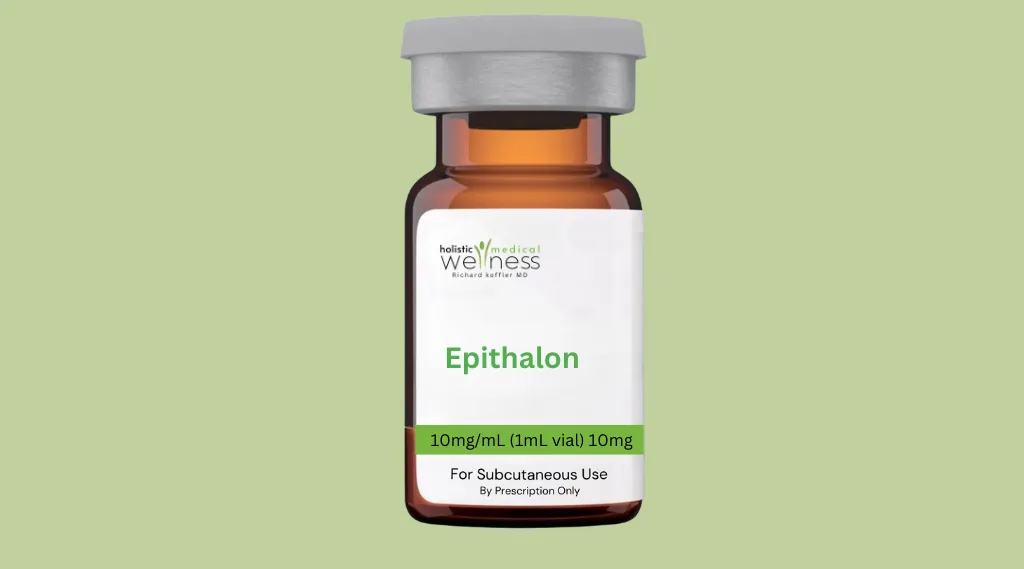
Epithalon is often described online as an “anti-ageing peptide” that can lengthen telomeres and slow the clock. It’s a fascinating compound, but the strongest claims run well ahead of the evidence.
This honest guide covers 7 critical facts about Epithalon: what it is, what the telomere research actually shows, the safety questions, its UK legal status and how to read the claims. It doesn’t give dosing advice, because there’s no established safe human dose.
Epithalon is not a licensed medicine in the UK and is not approved for human use by any regulator. This article is for information only and isn’t medical advice.
Interested in cellular energy and healthy ageing? Mymetabolism’s NAD+ comes with a batch-specific certificate of analysis and free UK shipping. Explore NAD+ →
What is Epithalon?
Epithalon, also spelled Epitalon, is a synthetic tetrapeptide: a chain of just four amino acids, alanine, glutamic acid, aspartic acid and glycine. It’s sometimes called AEDG after those four building blocks.
It was developed by Professor Vladimir Khavinson and colleagues in St Petersburg, Russia, as a synthetic version of epithalamin. Epithalamin is an extract from the pineal gland, the small gland in the brain that produces melatonin.
For decades, the St Petersburg group studied pineal peptides for their effects on ageing. Epithalon became the best known of these, largely because of research linking it to telomeres.
A short history
Research into pineal gland extracts began in the Soviet Union in the 1970s and 1980s, led by teams interested in the biology of ageing. Epithalamin, the natural extract, was studied first.
Epithalon followed as a synthetic version that could be made consistently in a laboratory. Over the following decades, the St Petersburg group published many papers on it, mostly in Russian journals.
That history explains both the depth of the research and its limits. Much of the work hasn’t been independently repeated in large Western trials, which is why scientists remain cautious.
Epithalon: 7 critical facts
These seven facts give an honest picture of where the science stands.
1. It’s a tiny synthetic peptide
With only four amino acids, it’s one of the smallest peptides discussed online. It was designed to mimic a natural pineal extract.
2. The telomere claim comes from cell studies
The best-known study reported that adding the peptide to human cells in a dish switched on telomerase and lengthened telomeres. That’s a laboratory finding, not proof of an effect in the human body.
3. Much of the research comes from one group
A large share of the published work comes from the St Petersburg laboratory that developed it. Independent replication has been limited, although some newer cell studies have reported similar effects.
4. Animal lifespan results are mixed
Some studies in flies and rodents reported longer lifespans or fewer tumours, while others showed smaller or inconsistent effects. Results in animals often don’t carry over to people.
5. Human evidence is limited
Human studies are few, small and mostly older, and some used the parent extract rather than synthetic Epithalon. There’s no large placebo-controlled trial showing it slows ageing.
6. Safety hasn’t been established
Because telomerase is also switched on in many cancer cells, some scientists have raised theoretical concerns about long-term activation. These concerns haven’t been proven, but they haven’t been ruled out either.
7. It isn’t a licensed medicine
Epithalon has no UK licence and is supplied as a research material. Our research peptides UK legal guide explains what that means in law.
Lengthening telomeres in a dish is a fascinating result. It isn’t the same as slowing ageing in a person.
Mymetabolism TeamTelomeres explained
Telomeres are protective caps at the ends of chromosomes, a bit like the plastic tips on shoelaces. Each time a cell divides, they get slightly shorter.
When telomeres become too short, cells stop dividing or die. That’s one reason telomere length is studied as a marker of biological ageing.
Telomerase is the enzyme that can rebuild telomeres. Most adult cells make very little of it, but stem cells and many cancer cells make a lot. That double-edged role is central to the whole Epithalon debate.
What the research shows
The foundational study, published in the Bulletin of Experimental Biology and Medicine in 2003, reported that adding Epithalon to human fetal fibroblast cells switched on telomerase and lengthened telomeres in the dish.
Later work from the same group and others explored effects on cell division limits, melatonin production and gene activity. Animal studies looked at lifespan, tumour rates and hormone rhythms.
What’s missing is strong human evidence. No large, independent, placebo-controlled trial has shown that Epithalon lengthens telomeres, improves health or extends life in people.
| Claim | Main evidence | Strength in humans |
|---|---|---|
| Activates telomerase | Human cells in a dish | Not shown in controlled trials |
| Lengthens telomeres | Cell studies | Not shown in controlled trials |
| Extends lifespan | Mixed animal studies | No evidence |
| Improves sleep and melatonin | Animal studies | Weak |
| Safe human dose | None established | Unknown |
Why telomere tests are tricky
Some people buy telomere tests to track the effect of anti-ageing products. But telomere length varies between cell types, labs and testing methods, and results can shift for reasons unrelated to ageing.
A single test says little on its own, and small changes may be measurement noise rather than real effects. That makes it hard to judge any compound through home testing.
If telomere length were simple to measure and change, it would be a much clearer target. In reality, it’s one imperfect marker among many.
The anti-ageing claims
Online, Epithalon is promoted for longer life, better skin, deeper sleep, sharper thinking and stronger immunity. Few of these claims are backed by solid human data.
The leap usually goes like this: telomeres shorten with age, Epithalon lengthened telomeres in cells, so it must slow ageing. Each step sounds reasonable, but the chain hasn’t been tested properly in people.
Ageing is complex and shaped by many factors at once. Telomere length is only one of many factors, and changing one marker doesn’t guarantee better health or a longer life.
Safety questions
The biggest unknown is long-term safety. Without proper human trials, side effects, interactions and risks over years of use haven’t been measured.
The cancer question is the one researchers raise most often. Telomerase helps many cancer cells keep dividing, so switching it on could, in theory, help abnormal cells survive. Some animal studies reported fewer tumours, which shows how uncertain the picture is.
Quality is another concern. Research-market Epithalon isn’t made to medicine standards, so purity and labelling can vary. Our guide on whether retatrutide is safe shows how to think about safety for any unlicensed compound.
Sleep and the pineal gland
Because Epithalon was modelled on a pineal extract, researchers have looked at its effects on melatonin and daily body rhythms. Some animal studies reported restored melatonin patterns in older animals.
That’s an interesting link, but it isn’t strong evidence that it helps people sleep. Proven sleep habits, and licensed treatments where needed, are the better route. Our guide to sleep on GLP-1 covers practical sleep basics.
Quality and purity
If Epithalon is bought for genuine laboratory research, look for a batch-specific certificate of analysis showing purity, the testing method and the laboratory. The batch number should match the product.
Very cheap products with no paperwork are a warning sign. Peptides also degrade with heat and light, as our guide to storing peptides explains.
Questions to ask a supplier
If you’re sourcing Epithalon for genuine laboratory work, a good supplier should answer these questions clearly:
- Can you provide a batch-specific certificate of analysis?
- Which laboratory tested the batch, and by what method?
- How is the product stored and shipped?
- Is the product presented and sold strictly for research use?
- How do you deal with quality complaints?
Vague answers or missing documents are warning signs. Transparent suppliers are happy to share testing details for every batch.
Cost versus value
Anti-ageing products are often expensive, and research peptides are no exception. Before spending money, weigh the price against the strength of the evidence.
The same budget spent on a gym membership, better food or a session with a dietitian has far stronger evidence behind it. Those choices also carry none of the legal or safety uncertainty.
If you’re drawn to the science, follow the research as it develops. Waiting for better evidence on Epithalon costs nothing, and you lose very little by being patient.
UK legal status
In the UK, Epithalon isn’t a controlled drug, so possessing it isn’t a drugs offence. But it has no medicine licence, so medicines law governs how it can be sold.
Supplied genuinely as a research material, it sits alongside other research peptides. Marketed for human use, with anti-ageing claims or dosing instructions, it can be treated by the MHRA as an unlicensed medicine.
Our research peptides UK legal guide covers the rules in detail, including imports and enforcement.
Athletes and testing
Many research peptides are banned in sport, and rules change regularly. Athletes subject to testing should check any compound with UK Anti-Doping or their governing body before considering it.
Anti-doping rules work on strict liability, so an athlete is responsible for anything found in their sample. When in doubt, the safest choice is not to take it.
How it compares with other peptides
Epithalon is often grouped with other research peptides, but they’re discussed for very different reasons. BPC-157 and TB-500 are linked to recovery, CJC-1295 and ipamorelin to growth hormone, and GHK-Cu to skin.
Each has its own evidence gaps. Our guides to BPC-157, CJC-1295 vs ipamorelin and GHK-Cu cover them in turn.
For skin ageing specifically, topical peptides used in cosmetics are a different and better-regulated product category, as our guide to glow peptides explains.
How NAD+ compares
NAD+ is another compound discussed in the healthy-ageing space. It’s a molecule every cell uses for energy, and levels tend to fall with age.
The two work in completely different ways, and neither should be thought of as a proven anti-ageing treatment. Our guide to NAD+ benefits explains what the research on NAD+ does and doesn’t show.
Reading the evidence critically
When you see a claim about any ageing compound, ask whether it comes from cells, animals or people. Results in a dish are early clues, not conclusions.
Check how many people took part, whether there was a placebo group and who carried out the research. Independent replication by different teams matters a great deal.
Be wary of before-and-after stories and claims that a single compound reverses ageing. Real progress in ageing research tends to be slow, careful and modest.
That’s not a reason to dismiss the science, only a reason to keep expectations realistic while the evidence develops.
Common myths
Myth one: “Longer telomeres mean a longer life.” Telomere length is linked to ageing, but lengthening telomeres hasn’t been shown to extend human life.
Myth two: “It’s natural because it comes from the pineal gland.” Epithalon is synthetic, and being based on a natural extract doesn’t make it safe.
Myth three: “Decades of research prove it works.” Much of the research is in cells and animals, from one group, without large independent human trials.
Myth four: “If it’s sold openly, it must be approved.” Visibility isn’t approval, and no UK regulator has licensed it.
Talking to your doctor
If you’re interested in healthy ageing, a GP can review your risk factors, such as blood pressure, cholesterol and blood sugar. Managing those has far stronger evidence than any research compound.
If you’ve already used Epithalon or another unlicensed product, tell your doctor. It helps them interpret any symptoms and avoid interactions with other treatments.
Who should be especially cautious
Anyone who is pregnant, breastfeeding, under 18 or managing a long-term condition should avoid unlicensed compounds. The risks simply haven’t been studied.
People with a personal or family history of cancer should be particularly careful with anything linked to telomerase. Anyone on prescription medicines should speak to their doctor first.
Proven healthy-ageing habits
The strongest evidence for healthy ageing still comes from everyday habits. Regular exercise, good sleep, a balanced diet, not smoking and staying socially active all have large bodies of research behind them.
Strength training is especially valuable as we age, because it protects muscle, bone and balance. Our guide to GLP-1 and muscle loss explains why muscle matters so much during weight loss.
Maintaining a healthy weight also reduces the risk of many age-related diseases. Licensed weight-management medicines, such as those in our Wegovy vs Mounjaro comparison, are an evidence-based option for people who qualify.
What could change
Ageing research is moving fast, and telomere biology remains an active field. Future independent trials could clarify whether Epithalon has any real benefit in people.
Until then, it remains an unlicensed research material with promising cell data and big unanswered questions.
The bottom line
Epithalon is one of the most intriguing compounds in ageing research, with striking cell studies and a long history in Russian science. But human evidence is thin, safety is unknown and it isn’t licensed in the UK.
Treat bold anti-ageing claims about Epithalon with healthy scepticism. For real-world benefits, proven habits and qualified medical advice remain the best investment in how you age.
For more on the peptide landscape, see our guides to TB-500 and peptides for weight loss.
Common questions — Epithalon
Explore NAD+ from Mymetabolism.
Batch-specific certificate of analysis, free UK shipping and 24/7 support.
Explore NAD+ →